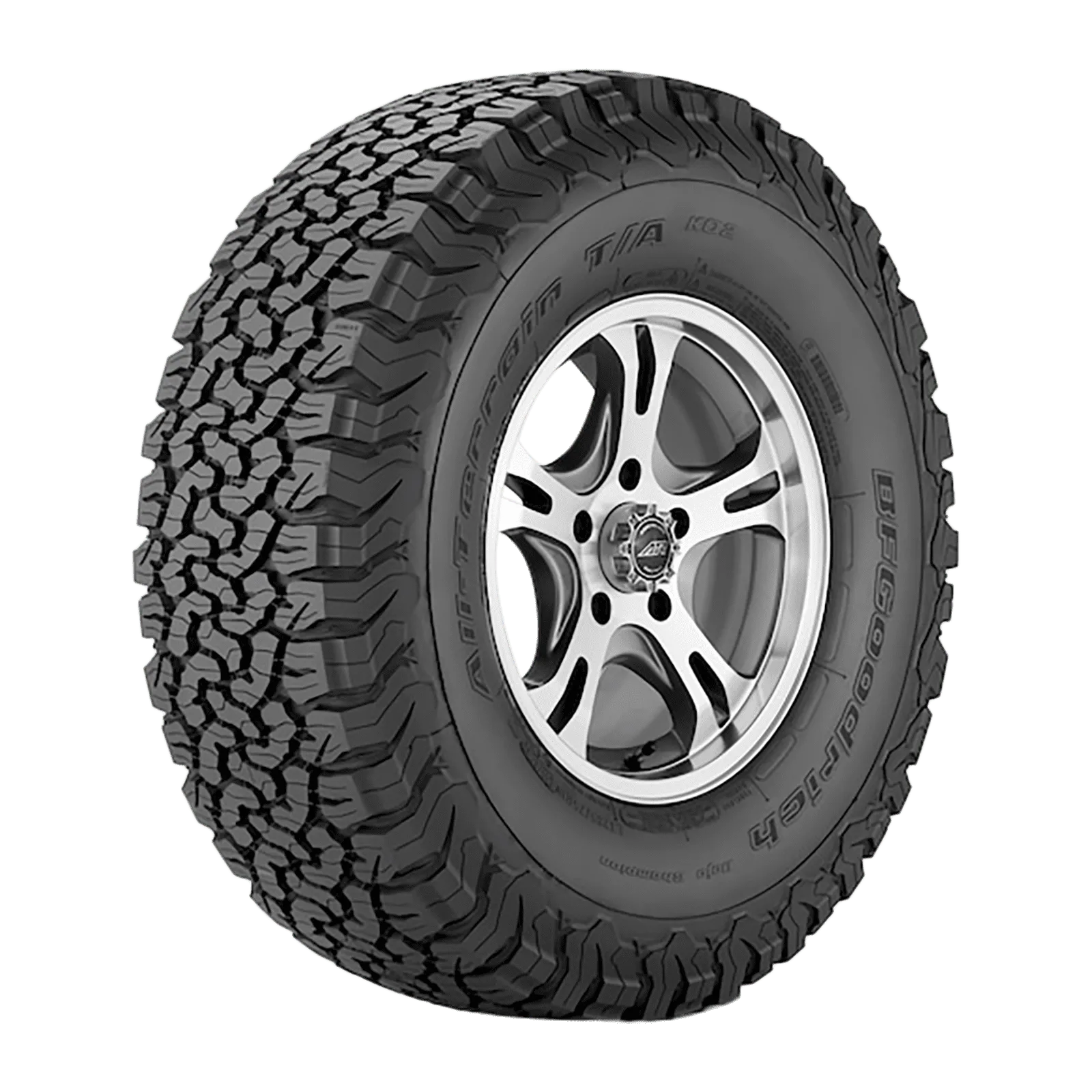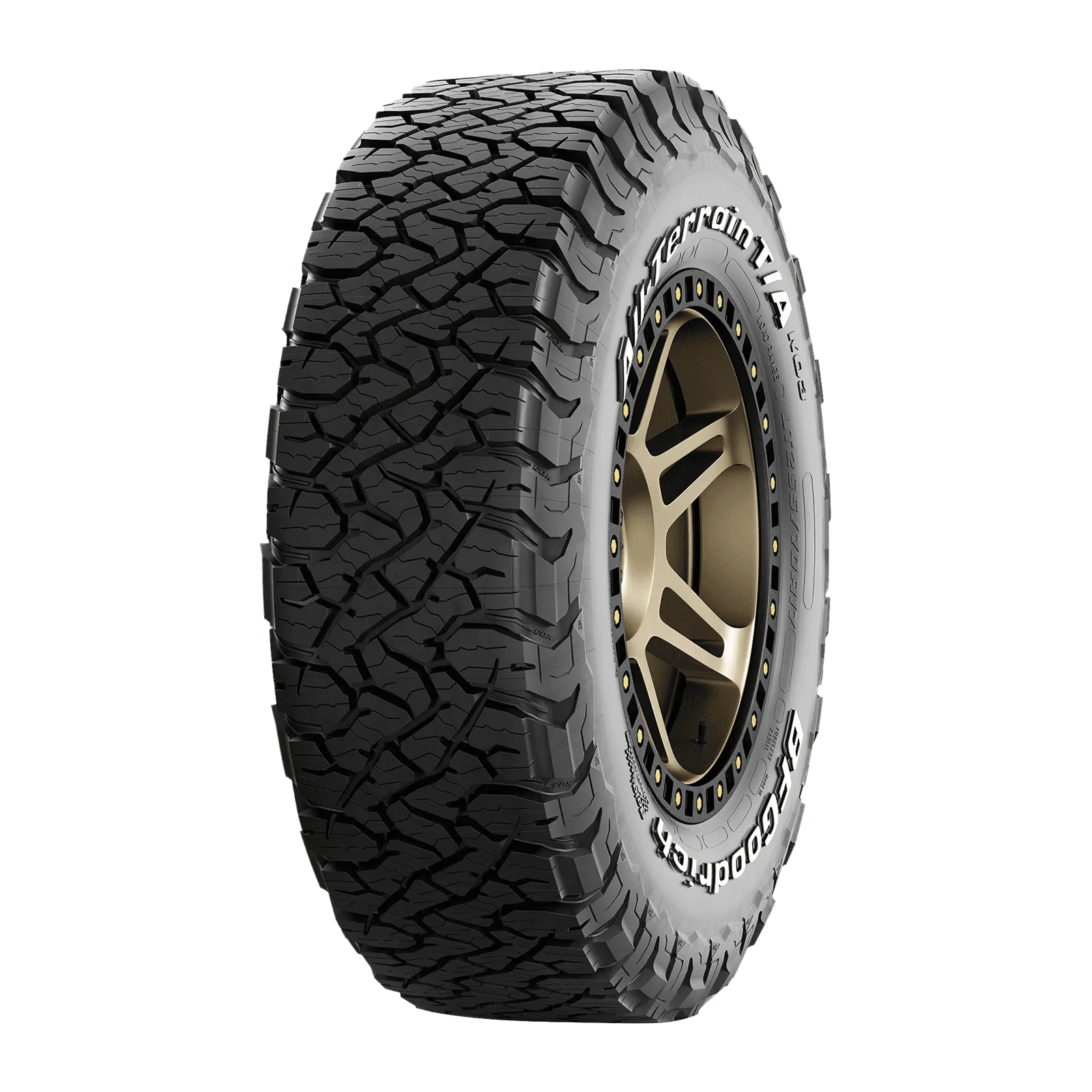

At a glance: The KO2 and KO3 share the same DNA — BFGoodrich's All-Terrain T/A lineage — but they're not the same tire. If you're building a truck or SUV and trying to decide between the two in LT265/70R17, here's what you need to know before pulling the trigger.
Quick spec snapshot
Both tires we're looking at here are LT (Light Truck) all-terrain tires in the same 265/70R17 footprint. Same brand, same wheel diameter, same speed rating. The differences show up in the details.
| Spec | KO2 | KO3 |
|---|---|---|
| Model line | All-Terrain T/A KO2 | All-Terrain T/A KO3 |
| Size | LT265/70R17 | LT265/70R17 |
| Load index | 112/109 | 123 |
| Speed rating | S | S |
A couple of things jump out right away. The KO2 carries a dual load index (112/109), while the KO3 has a single load index (123). We'll break down what that means below.
Key differences — what actually matters for your build
Model lineage
The KO2 has been around for years and built a solid reputation among truck and off-road folks. The KO3 is the newer entry in the All-Terrain T/A family. Both sit under the same BFGoodrich all-terrain umbrella, but they're distinct products with their own design targets.
Load index: 112/109 vs 123
This is probably the biggest spec-level difference between the two.
- The KO2 at 112/109 uses a dual load index — 112 for single-rear-wheel setups, 109 for dual-rear-wheel (dually) configurations. If your truck runs dualies, the per-tire capacity drops slightly because the tires share the load differently.
- The KO3 at 123 carries a single load index, which generally indicates a higher per-tire load capacity in single-wheel applications.
What does this mean for you? If you're hauling heavy payloads or towing regularly, pay attention to these numbers. Make sure whatever you pick meets or exceeds your vehicle manufacturer's load requirements — check the placard on your door jamb or your owner's manual.
Speed rating: S on both
Both tires carry an S speed rating. For most truck and SUV builds, that's more than adequate. You're not taking an LT265/70R17 to a track day.
Understanding LT tire sizing
If you're newer to LT tires, here's a quick primer on the numbers:
- LT at the beginning means "Light Truck" — the tire is built to handle heavier loads and tougher conditions than a standard passenger (P-metric) tire. Thicker sidewalls, stiffer construction.
- 265 is the tread width in millimeters.
- 70 is the aspect ratio — the sidewall height is 70% of the tread width.
- R17 means radial construction on a 17-inch wheel.
- Load index tells you the weight each tire can safely support when properly inflated. A dual number like 112/109 means the tire is rated for both single and dual-rear-wheel use. A single number like 123 applies to single-wheel setups.
- S is the speed rating — the maximum sustained speed the tire is engineered to handle safely.
If you're not sure which load index or speed rating your truck needs, don't guess. Check the vehicle placard or ask a tire shop. Getting this wrong can affect how your truck handles under load.
Fitment & build checklist
Before you order, run through these:
- Wheel size: Both tires fit 17-inch wheels. Confirm your wheel width falls within the recommended range for a 265/70R17.
- Clearance: LT265/70R17 is a common size, but if your truck has stock suspension, double-check that there's enough fender clearance — especially at full steering lock and when the suspension compresses over bumps.
- Lift level: Running a leveling kit or a 2–3 inch lift? This size generally fits well, but every truck is a little different. Measure before you buy.
- Intended terrain: Both are all-terrain tires. If you're mostly on pavement with occasional dirt roads and light trails, either one can handle that. If you're regularly in deep mud, rock crawling, or heavy sand, consider whether an all-terrain is really the right category for your build — sometimes a dedicated mud-terrain makes more sense.
- Load needs: Going back to that load index — if you carry heavy gear, tow trailers, or run a service body, make sure the tire you pick covers the weight.
Who should buy which
The KO2 might be your tire if you:
- Already know and trust the KO2's track record — it's been a go-to for years
- Run a dually setup and need that dual load index rating
- Want a tire with wide aftermarket support and plenty of real-world reviews to reference
- Prefer sticking with a proven product rather than jumping to the latest release
The KO3 might be your tire if you:
- Want the latest in BFGoodrich's All-Terrain T/A development
- Need a higher single-wheel load index for heavy hauling
- Are building a truck that prioritizes payload capacity
- Like being early to a new product line and don't mind less long-term owner feedback (for now)
FAQs
Are the KO2 and KO3 the same size?
In the comparison here, yes — both are LT265/70R17. But each model line comes in a range of sizes. Always confirm the exact size your vehicle requires.
Can I swap from KO2s to KO3s without changing anything else?
If the size, load index, and speed rating meet your vehicle's requirements, generally yes. The wheel diameter is the same (17 inch), and the overall dimensions are very close. That said, the different load index means you should verify the KO3's rating works for your specific truck and how you load it.
What does the dual load index on the KO2 mean?
The 112/109 means the tire is rated for 112 in single-wheel use and 109 in dual-rear-wheel use. The lower number accounts for the slight load distribution differences when two tires share one axle position.
Is the KO3 "better" than the KO2?
Newer doesn't automatically mean better for your situation. The KO3 is a different product with different specs. Whether it's better depends entirely on your truck, your load requirements, and how you drive. We'd avoid blanket statements here — look at what each tire offers and match it to your build.
Do I need a lift to run LT265/70R17?
Not necessarily. Many stock trucks can clear this size, especially half-ton pickups and mid-to-full-size SUVs. But clearance varies by make, model, and year. If you're close to the limit, a leveling kit or minor lift can give you the room you need. Measure your current setup before ordering.
Should I worry about the speed rating for off-road use?
The S rating on both tires covers speeds well beyond what you'd see on a trail. For normal highway driving and off-road use, it's a non-issue. Just don't exceed the rated speed — but that's true for any tire.
Bottom line
The BFGoodrich KO2 and KO3 are both solid all-terrain tires from the same family, but they're built around different specs. The KO2 brings a proven history and a dual load index that works for dually setups. The KO3 steps up with a higher single-wheel load index and represents the newer generation of BFGoodrich's AT line.
There's no wrong choice here — just the choice that fits your build, your payload, and the kind of driving you actually do. Check your vehicle's load requirements, think about how you use your truck, and go from there.
If you want to dig deeper into tire selection basics, our guide to choosing tires for your car covers sizing, load index, and speed ratings in more detail. And if you're noticing uneven wear on your current set, this explainer on tire wear patterns can help you figure out what's going on before you buy new rubber.
The information above is for reference only. Have questions or need help choosing the right tire for your vehicle? Reach out to the FixGo customer service team — we're happy to help.