
 Back
BackHow to Read Tire Size: The Ultimate Guide for Beginners
Confused by the numbers on your tire sidewall? Our guide breaks down tire size, speed rating, and load index so you know exactly what to buy.

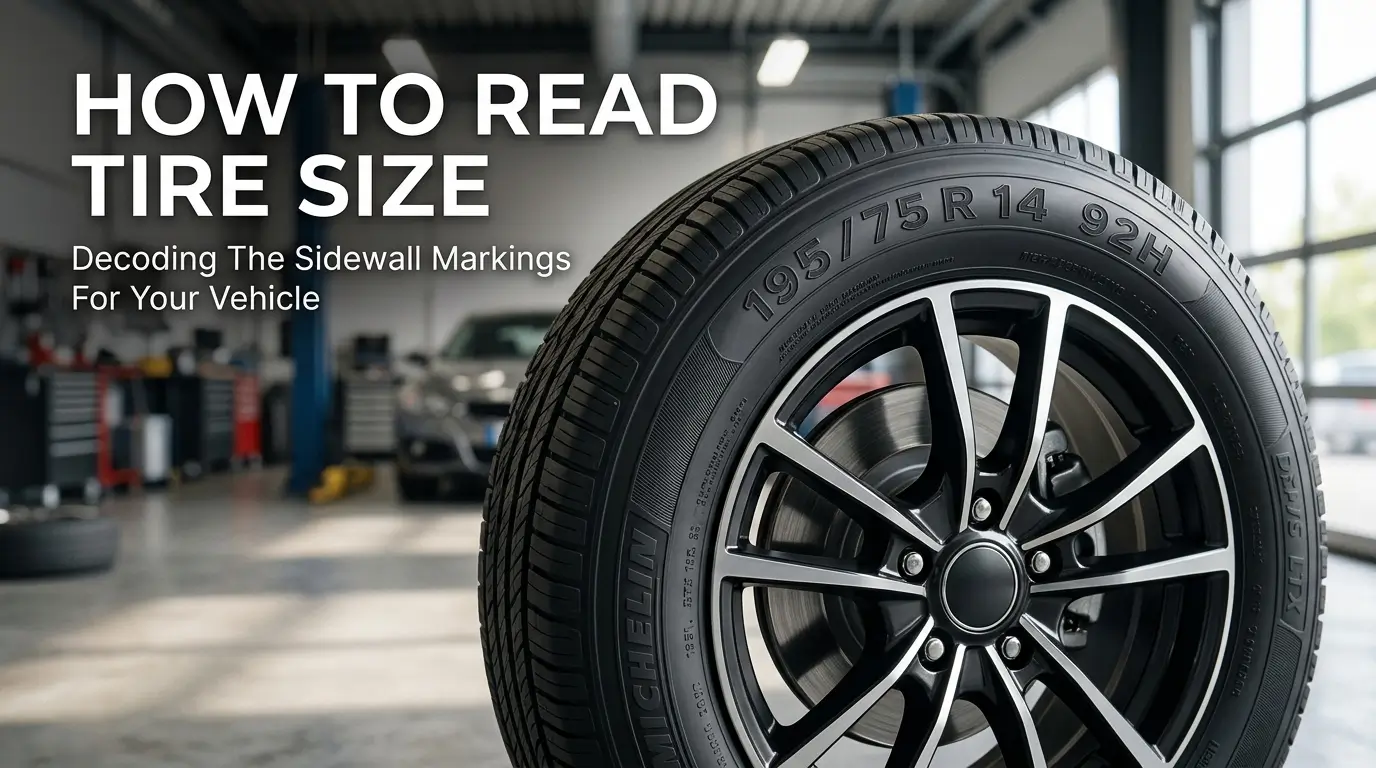
When it's time to buy new tires, the long string of numbers and letters on the sidewall can look like a secret code. Fortunately, reading tire size is easy once you know what each part means.
The Tire Size String Explained
Let's use 195/75R14 as an example. This sequence tells you everything about the physical dimensions of the tire.
1. Tire Width (195)
The first number is the width of the tire in millimeters from sidewall to sidewall. A 195 means the tire is 195mm wide.
2. Aspect Ratio (75)
The number after the slash is the aspect ratio, which represents the height of the tire's sidewall as a percentage of its width. In this case, the sidewall height is 75% of 195mm.
3. Construction Type (R)
The letter "R" stands for Radial, which is the standard construction method for modern passenger vehicle tires.
4. Wheel Diameter (14)
The final number indicates the diameter of the wheel (in inches) that the tire is designed to fit. This tire requires a 14-inch wheel.
Finding the Right Fit
Always check your vehicle's owner's manual or the sticker on the driver's side door jamb for the recommended tire size.
If you are looking for a reliable everyday tire, the HANKOOK KINERGY ST H735 offers excellent all-season performance and durability.
How to evaluate it step by step
- Start with the fixed constraints: Match the width, aspect ratio, and wheel diameter exactly to your car's requirements.
- Consider the speed rating: Ensure the tire meets or exceeds your vehicle's recommended speed capability.
- Check the load index: The tire must be able to support the weight of your vehicle.
FAQ
Do I really need to stick to the exact size?
A: Yes. Changing the tire size without adjusting the wheel or suspension can cause clearance issues and affect your speedometer accuracy.
What if I want wider tires?
A: You can sometimes install wider tires, but you must lower the aspect ratio to maintain the same overall wheel diameter. This is called "plus sizing."
Bottom line
Understanding tire size is the first step to ensuring your vehicle's safety and performance. Always verify the required size for your specific make and model before making a purchase.