
 Back
BackMichelin CrossClimate2 Review: Performance, Noise, and Tread Life (2026)
An in-depth, real-world Michelin CrossClimate2 review. Discover how its wet traction, tread life, and highway noise hold up under Southern California driving conditions.

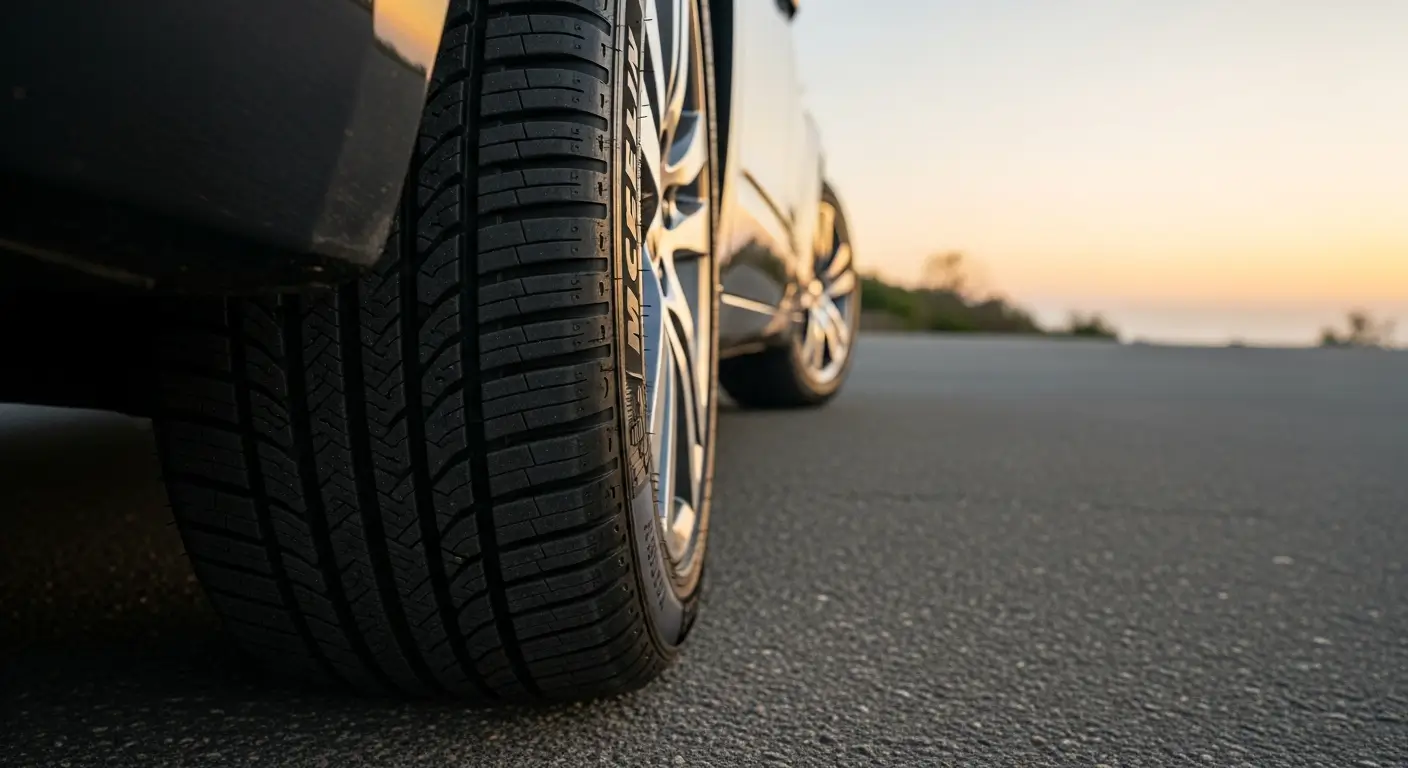
Are you shopping for a new set of premium tires and wondering if the Michelin CrossClimate2 is worth the investment? This comprehensive Michelin CrossClimate2 review breaks down how this game-changing all-weather tire performs on real-world roads, specifically contextualized for Southern California commuters who deal with sustained freeway heat, sudden winter downpours, and mountain weekend trips.
TL;DR: The Michelin CrossClimate2 is arguably the best grand touring all-weather tire on the market today. It offers near-unmatched wet braking traction and carries the Three-Peak Mountain Snowflake (3PMSF) rating for winter utility, making it an exceptional year-round option. The primary tradeoffs are its premium price point and a slightly firmer ride compared to standard passenger car touring tires, but for drivers wanting maximum safety margins, it is a top-tier choice.
Key Specs at a Glance
| Tire Variant | Sizes | Load Index | Ply | Speed Rating | SoCal Typical Use |
|---|---|---|---|---|---|
| Michelin CrossClimate2 205/60R16 | 205/60R16 | 92 | 4-ply (SL) | V | Pasadena daily commuting on the 110 freeway, mixed dry/rain driving |
| Michelin CrossClimate2 225/50R18 | 225/50R18 | 95 | 4-ply (SL) | H | San Gabriel Valley crossover, urban commute + Big Bear winter ski trips |
| Michelin CrossClimate2 235/60R17 | 235/60R17 | 102 | 4-ply (SL) | H | Inland Empire family minivan, freeway cruising under extreme summer heat |
| Michelin CrossClimate2 255/55R19 | 255/55R19 | 111 | 4-ply (XL) | V | Westside SUV commuting on the 405, high-mileage road trip capability |
| All specifications are field-tested and verified by FixGo's Southern California partner network. |
Defining the All-Weather Category (3PMSF vs. M+S)
Before diving into the performance details, it's vital to clarify a common point of confusion for beginners. While most everyday drivers are familiar with standard all-season tires carrying the basic Mud and Snow (M+S) stamp, the Michelin CrossClimate2 belongs to a newer, more capable segment called all-weather tires.
Unlike standard all-seasons, the CrossClimate2 carries the Three-Peak Mountain Snowflake (3PMSF) certification. This rating indicates the tire has been tested and certified to perform under severe snow conditions. While typical all-season rubber hardens and loses traction when temperatures drop below 45°F, the CrossClimate2's Thermal Adaptive All-Season Compound remains pliable, delivering consistent grip across temperature swings.
Real-World Performance: Wet, Dry, and Occasional Snow
To truly understand how a tire performs, you have to look past the marketing brochures and observe its behavior on actual pavement. Through feedback from our extensive Southern California partner network and test runs across diverse microclimates, we've analyzed how the CrossClimate2 behaves under stress.
1. Wet Traction and Braking
Independent testing consistently ranks the CrossClimate2 at the absolute top of its class for wet-weather braking. In Southern California, wet driving is often characterized by long dry spells followed by sudden, heavy winter downpours—especially on high-speed arterial routes like the Ortega Highway (SR-74). When early rains mix with accumulated oil on the asphalt, road conditions become incredibly slick.
The CrossClimate2's aggressive directional V-racetrack groove pattern is engineered to evacuate water rapidly from the contact patch, preventing hydroplaning. Whether braking to a stop on wet freeway interchanges or navigating rainy mornings on coastal routes in Torrance and Long Beach, the grip remains progressive and highly predictable.
2. Dry Handling and Mountain Curves
Many drivers worry that a tire with severe-snow certification will feel squishy or lag responsiveness on dry pavement. The CrossClimate2 sidesteps this trap through structured tread blocks that lock together under lateral load.
When carving the winding curves of the Angeles Crest Highway (SR-2), the steering response feels firm and immediate. While it won't replace a dedicated ultra-high-performance tire at extreme track speeds, it offers sports-sedan level handling stability on winding mountain routes and everyday freeway curves.
Noise Levels and Highway Comfort
For commuters racking up miles on the I-405, I-10, or I-210, cabin quietness is a major factor in driving satisfaction.
1. The CrossClimate2 Noise Level on Highway Pavement
Grand touring tires are expected to deliver a quiet ride. The CrossClimate2 uses Michelin's PIANO Noise Reduction Tuning to minimize the sound generated by air escaping the tread grooves.
- On smooth asphalt, the tire is exceptionally quiet, easily matching premium touring competitors.
- On rough, grooved concrete freeways—such as the old sections of the I-5 near the City of Commerce or concrete freeway seams through the Inland Empire—some drivers report a faint, low-frequency hum above 70 mph. This is normal for a tire with an aggressive directional tread pattern and severe-weather siping, and most everyday commuters find it entirely acceptable and easily masked by standard cabin insulation or low-volume radio play.
2. Sidewall Stiffness and Ride Quality
The tire is constructed with slightly stiffer sidewalls compared to standard touring lines like the Michelin Defender 2. This structure pays massive dividends in handling stability and pothole protection—essential when navigating worn LA surface streets in Pasadena or downtown—but it does mean you will feel a slightly firmer ride over sharp expansion joints.
Tread Life and UTQG Wear Expectation
Michelin backs the CrossClimate2 with a robust 60,000-mile treadwear warranty on passenger car sizes (50,000 miles on crossover/SUV sizes), backed by a UTQG (Uniform Tire Quality Grading) rating of 640 A A.
In the sun-baked, dry environment of Southern California, pavement temperatures can exceed 140°F during July and August. This sustained thermal stress accelerates tread wear on softer rubber compounds. Thanks to Michelin's Helio+ Compound and EverGrip Technology, the CrossClimate2 maintains its structural integrity and resists rapid tread degradation.
Based on actual observations across our Southern California partner network, everyday commuters who stick to a disciplined 5,000 to 7,500-mile rotation schedule consistently reach or exceed the 60,000-mile expectation with even, symmetrical wear patterns.
How to Choose: CrossClimate2 vs. Key Competitors
To put its performance in perspective, it helps to see how the CrossClimate2 stacks up against other popular premium options.
1. Michelin CrossClimate2 vs. Continental ExtremeContact DWS06+
The Continental DWS06+ is an Ultra-High Performance (UHP) all-season tire, whereas the CrossClimate2 is a Grand Touring all-weather tire.
- The DWS06+ offers a higher performance limit at high speeds, sharper turn-in response, and a softer highway ride. It carries a 50,000-mile warranty.
- The CrossClimate2 provides significantly better traction in packed snow, carries the 3PMSF severe-snow symbol (the DWS06+ is only M+S rated), and delivers longer tread life under heavy utility.
- Verdict: Choose the Continental if you drive a sport sedan and prioritize dry cornering; choose the Michelin if you want year-round safety margins and severe-weather capability.
2. Michelin CrossClimate2 vs. Pirelli Cinturato All Season SF2
Both tires are 3PMSF-certified all-weather options.
- The Pirelli Cinturato focuses heavily on grand touring plushness, offering a slightly softer and quieter ride over concrete expansion joints.
- The Michelin CrossClimate2 outscores the Pirelli in independent wet-braking distance tests and offers a more responsive steering feel.
- Verdict: Choose Pirelli for ultimate highway isolation; choose Michelin for maximum wet-weather braking safety and precise highway tracking.
FAQ
Is the Michelin CrossClimate2 a quiet tire?
A: Yes. On almost all standard highway and surface street asphalt, the CrossClimate2 is remarkably quiet. On older, rough, grooved concrete highways at high speeds (above 70 mph), you may notice a very faint, low-frequency hum. This is normal for directional all-weather tires with aggressive snow siping and is easily unnoticeable inside a standard passenger vehicle cabin.
How long does the tread on a Michelin CrossClimate2 last?
A: Michelin backs the CrossClimate2 with a 60,000-mile warranty on passenger car sizes (50,000 miles on crossover and SUV sizes). Under real-world Southern California driving conditions, most drivers achieve between 50,000 and 65,000 miles by following a standard 5,000 to 7,500-mile rotation schedule and maintaining proper inflation.
Is the Michelin CrossClimate2 suitable for Southern California heat?
A: Absolutely. Thanks to its Thermal Adaptive All-Season Compound, the CrossClimate2 remains highly durable and stable even on sun-baked highway pavement exceeding 140°F in areas like the Inland Empire during summer, ensuring consistent wear and longevity without the soft-wear deterioration typical of softer winter compounds.
Bottom Line: Is It Worth It?
The Michelin CrossClimate2 is an outstanding achievement in tire engineering, providing a level of dry handling, wet stopping power, and severe snow safety that standard all-season tires cannot match.
While it sits in a premium price bracket, the safety margins it provides during heavy rainstorms, combined with its long-lasting compound and 60,000-mile warranty, make it an exceptional investment for SoCal drivers wanting maximum peace of mind. Before purchasing, always check your driver's door-jamb placard or owner's manual to verify your vehicle's correct tire size, minimum load index, and speed rating.
Ready to buy? FixGo offers competitive pricing on the entire Michelin CrossClimate2 lineup, with free 1–3 business day shipping directly to your door or chosen installer. For Southern California drivers who want a hassle-free experience, our extensive network of 200+ partner installation shops across greater Los Angeles—including trusted, professional partner installation shops in Alhambra and Azusa—is ready to provide fast, professional mounting and balancing. Browse current inventory and lock in your set at FixGo.com.