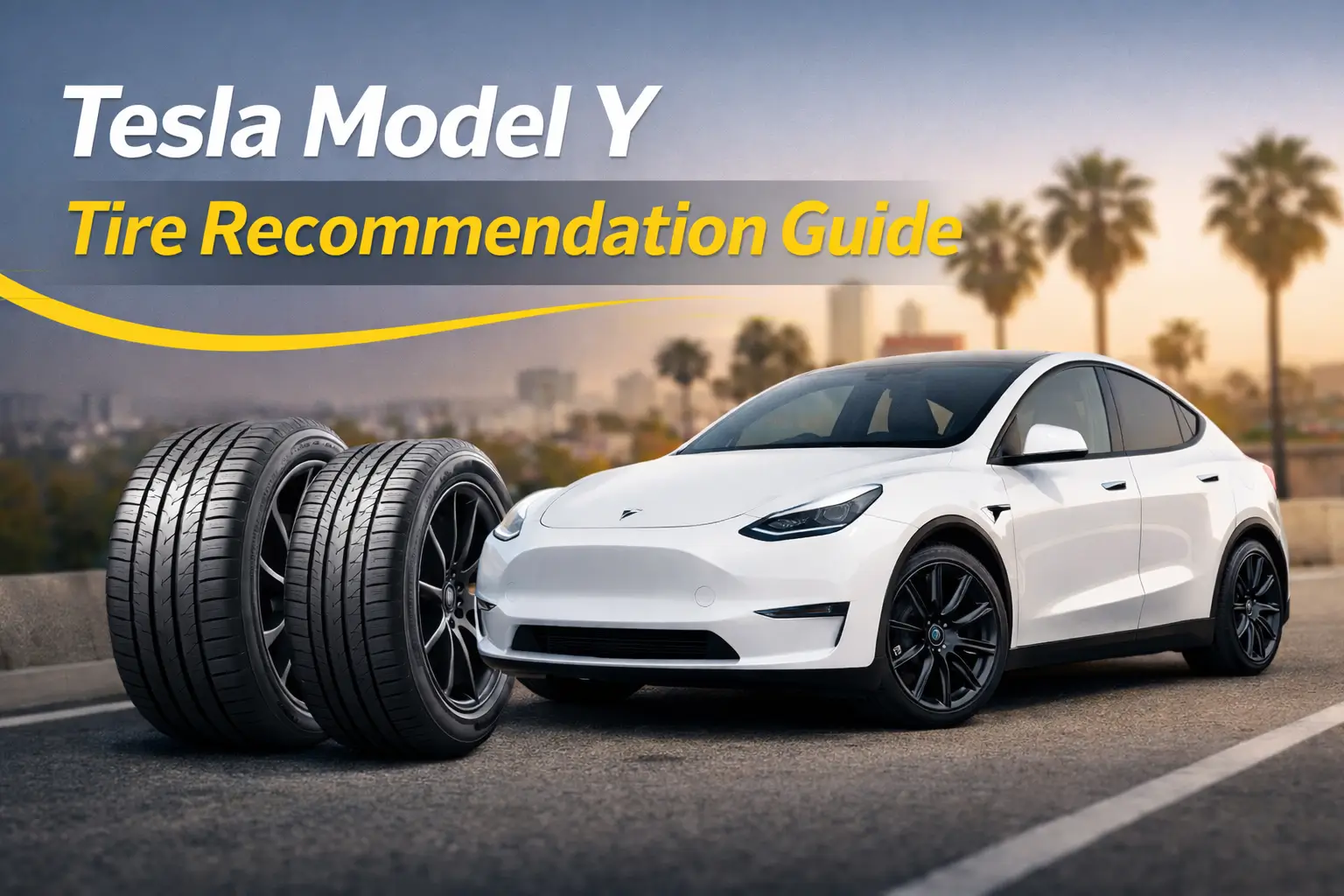
You bought a Tesla Model Y. Now the OE tires are done, and you're staring at a wall of 255/45R19 options wondering which all-season tire actually makes sense for the way you drive in LA.
At a glance: If 80% of your drive is freeway commuting, go Hankook iON evo AS SUV for quiet + range. If you push harder and want grip, go Michelin Pilot Sport All Season 4. If you want one tire that covers LA rain, canyon roads, and the occasional cold-weather trip, go Michelin CrossClimate 2.
Here's the thing: there's no single "best" tire. But there is a best tire for how you use your Model Y. We broke it down into three driver types — commuter, performance-leaning, and all-rounder — so you can skip the noise and just pick.
Before you shop: Model Y fitment basics
All three picks share the 255/45R19 footprint (one is marked 255/45ZR19 — same physical size, different speed classification). But load index and speed rating differ across these tires: 104V, 104W, and 104Y.
Your Model Y's door-jamb placard tells you the minimum load index and speed rating required. Don't go below those numbers — match or exceed them. If you're not sure what your specific trim and model year calls for, check the owner's manual or our tire selection guide.
Quick refresher:
- 255 — tread width in mm. 45 — sidewall height is 45% of the width. R19 — radial, 19-inch wheel.
- ZR — appears on some listings (255/45ZR19). It's associated with higher speed ratings; confirm the actual letter (V/W/Y) matches your OE spec.
- Load index 104 — all three picks share 104, which is the standard load capacity for Model Y 19″ fitment.
- Speed rating (V = 149 mph / W = 168 mph / Y = 186 mph) — match or exceed what your vehicle requires.
Three picks at a glance
| Tire | Rating | Best for | Key strength | Tradeoff |
|---|---|---|---|---|
| Hankook iON evo AS SUV | 104W | Commuters | Low noise, EV-tuned efficiency | Less sporty feel |
| Michelin Pilot Sport All Season 4 | 104Y | Spirited drivers | Dry/wet grip, steering precision | Faster wear, louder |
| Michelin CrossClimate 2 | 104V | All-round / rain | Wet confidence, 3PMSF rated | Not as sharp on dry handling |
Commuter pick: quiet + range + comfort
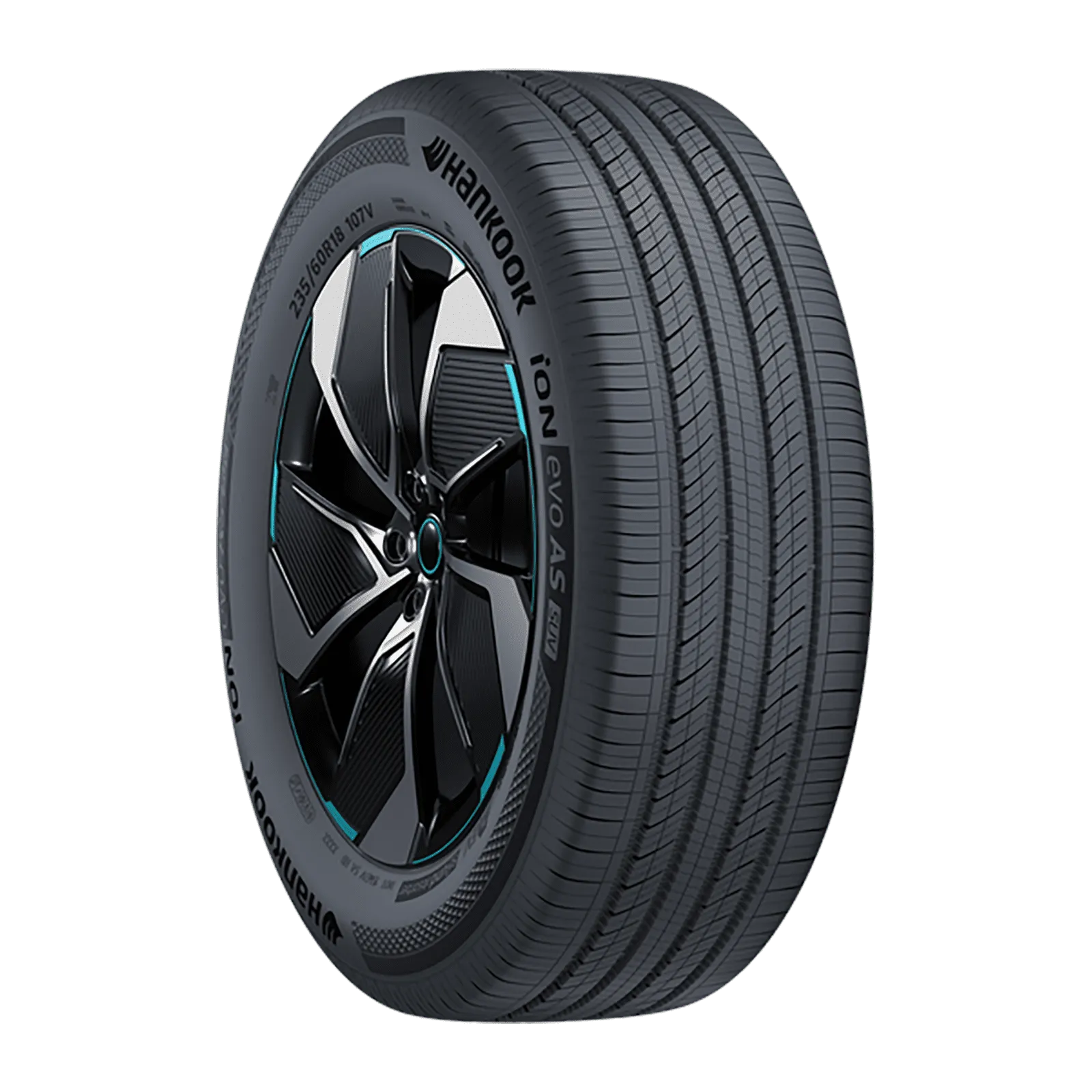
Hankook iON evo AS SUV — 255/45R19 104W
If 80% of your time is on the 10, 210, or 405, and what you really want is a tire that doesn't add road noise to an already-quiet cabin, this is where to start.
Hankook designed the iON evo AS SUV specifically for EVs. It's not just marketing — the tire uses foam-lined noise reduction technology and a compound tuned for lower rolling resistance. For a Model Y commuter, that translates to two things you'll actually notice: less cabin hum at highway speed and a bit more range per charge.
Why it fits the commuter:
- EV-specific tuning with built-in noise-dampening material (Hankook's sound-absorber tech)
- Lower rolling resistance means fewer stops at the Supercharger on your Bakersfield run
- Rated 104W — matches Model Y's load requirements with a healthy speed margin
- Wet braking is stable enough for LA's rainy weeks without being its primary design focus
The tradeoff:
Comfort-first tires don't give you that locked-in, go-kart steering feel. If you're carving Mulholland on weekends, you'll notice the softer response. And that's fine — this tire isn't built for that. It's built for the person who wants to get from Pasadena to El Segundo in peace.
Ideal for: Daily freeway commuters, range-conscious EV owners, anyone who values cabin quietness over cornering sharpness.
Handling pick: grip + precision for the spirited driver
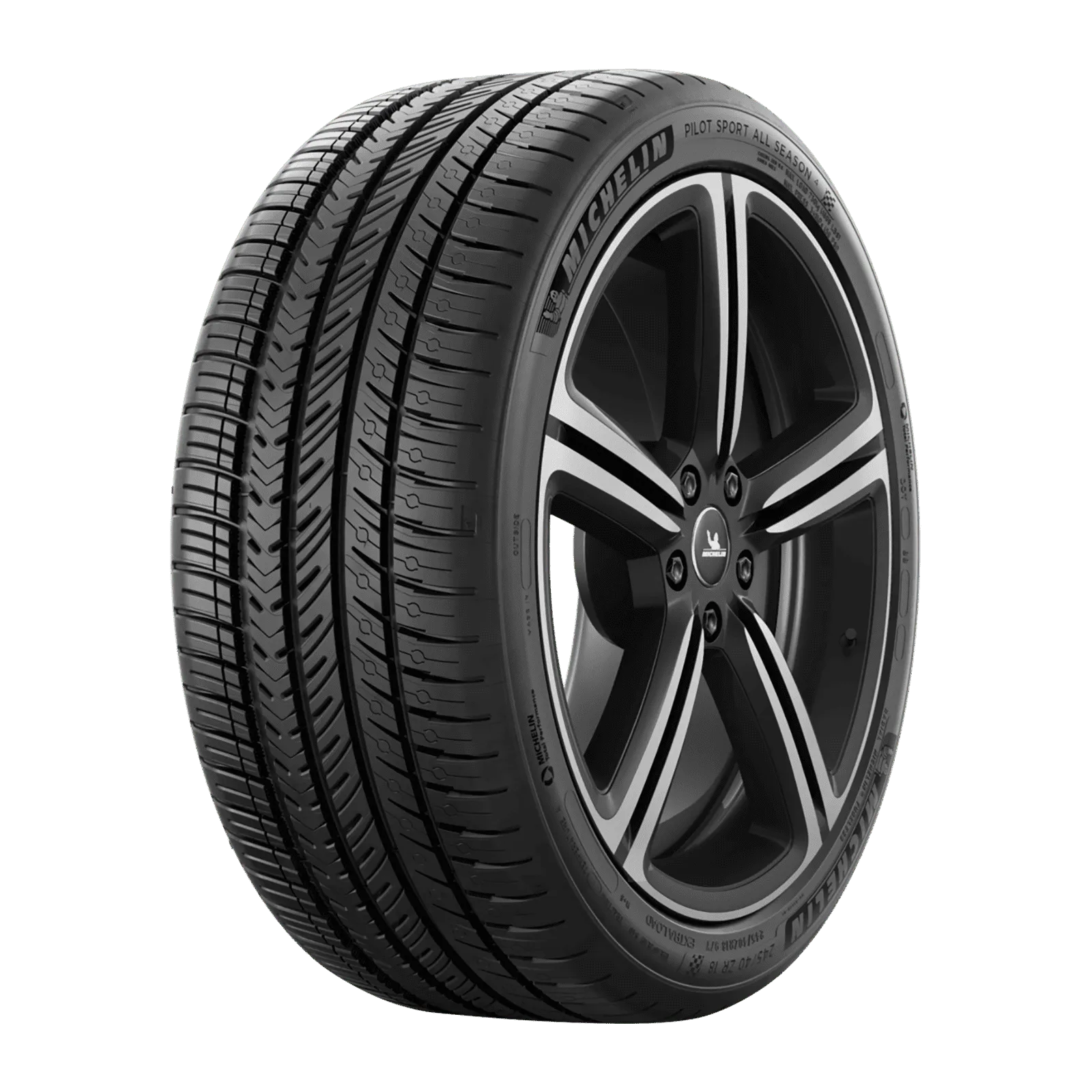
Michelin Pilot Sport All Season 4 — 255/45ZR19 104Y
You bought a Model Y partly because the instant torque is fun. You take on-ramps a little faster than your passenger would prefer. You want your tires to keep up.
The Pilot Sport All Season 4 is Michelin's Ultra High Performance all-season. It's positioned closer to a summer tire than a typical all-season — dry grip is noticeably tighter, wet grip is strong, and steering response is direct. For the Model Y driver who treats their commute like a stage, this is the one.
Why it fits the spirited driver:
- Michelin's UHP all-season flagship — designed for performance-oriented vehicles in all conditions
- Strong dry and wet traction; the kind of grip that inspires confidence on canyon entries
- 104Y speed rating — the highest on this list, and well-matched to the Model Y Performance trim
- Turn-in response is sharper than a standard all-season; the car feels more alive
The tradeoff:
More grip generally means more wear. UHP all-seasons tend to have shorter tread life than comfort-oriented options, and they can be louder — you might hear more road texture at highway speed compared to the Hankook. The price premium is also real. But if driving feel is your priority, you probably already knew you'd pay for it.
One more thing: stronger grip on dry pavement doesn't automatically mean it's the best choice for an LA downpour. It's good in the wet — but the CrossClimate 2 below is designed for the wet.
Ideal for: Drivers who push a little harder, canyon-road regulars, Model Y Performance or Long Range owners who want their tire to match the car's capability.
All-round pick: rain, range, and peace of mind
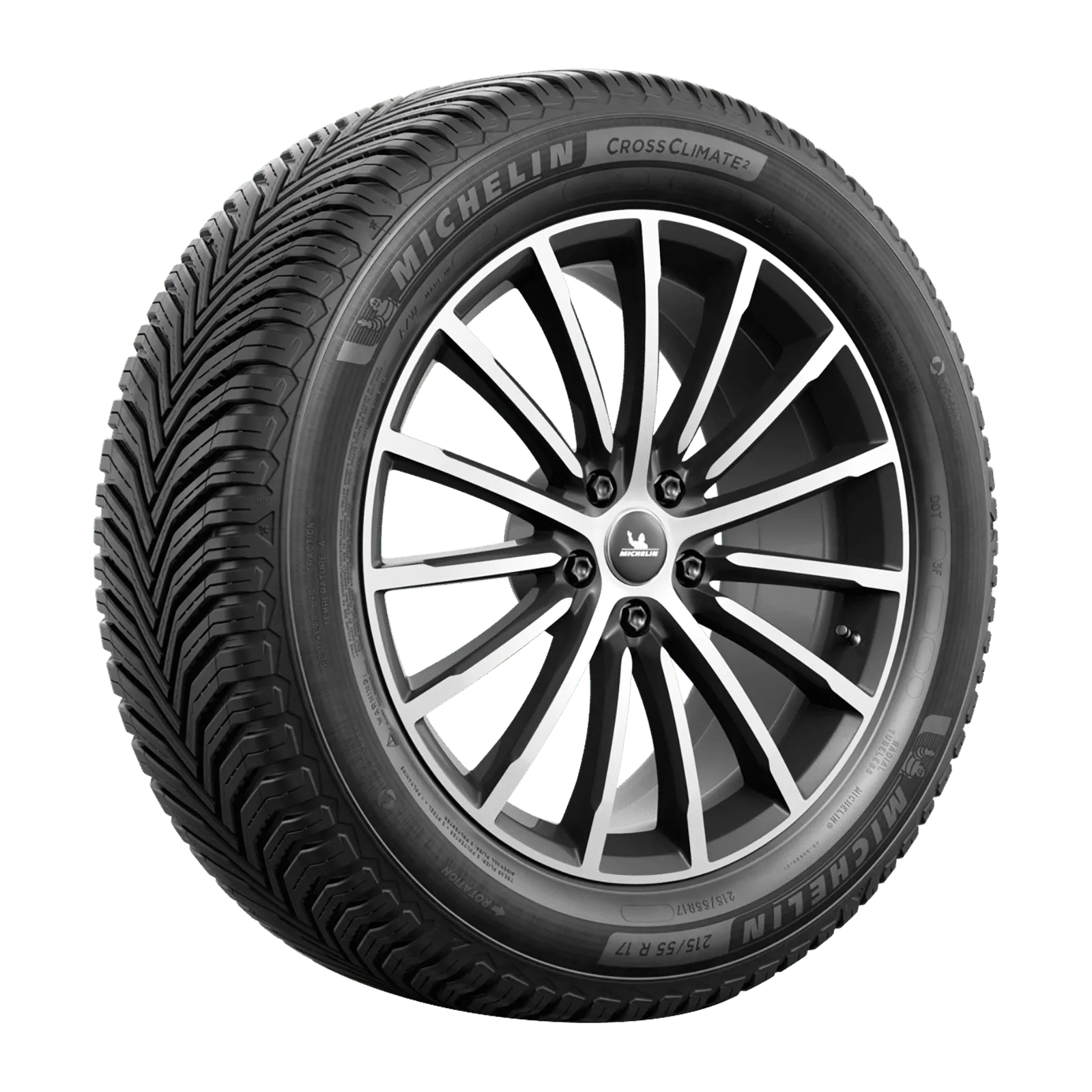
Michelin CrossClimate 2 — 255/45R19 104V
LA doesn't get snow. But it gets weeks of heavy rain, 40°F mornings in January, and the occasional Big Bear or Mammoth trip where the roads go from dry to ugly fast. If you want one tire that handles all of that without making you think about swapping seasonals, the CrossClimate 2 is the answer.
What sets it apart is the 3PMSF (Three-Peak Mountain Snowflake) certification. That symbol means the tire meets a recognized severe-snow-traction standard — not just the M+S marking that most all-seasons carry. In practical LA terms, 3PMSF doesn't mean you need snow. It means: when the temperature drops, when the roads are flooded, when the surface is slick — the compound and tread still have margin that a regular all-season doesn't.
Why it fits the all-rounder:
- 3PMSF rated — genuine severe-weather traction capability, not just a label
- Excellent wet-road drainage and hydroplaning resistance for LA's rainy season
- Usable across a wider temperature range; doesn't get hard and lose grip in cold mornings
- 104V load index matches the Model Y spec; speed rating is adequate for real-world driving
The tradeoff:
The CrossClimate 2 is not a performance tire. Dry handling precision is a step behind the Pilot Sport AS4 — the steering feel is a bit softer, and the tire is a touch more compliant. If you're chasing lap times on Mulholland, you'll feel the difference. But if your priority is "I want to feel safe in the rain without owning two sets of tires," this is the smartest pick on the list.
Ideal for: Drivers who encounter rain regularly, occasional mountain/ski trips, anyone who wants the widest safety margin across conditions without swapping tires.
How LA driving shapes the choice
Los Angeles isn't "mild weather" in the way people assume. Your tires deal with:
- Highway heat: Long freeway stints at speed build heat. Tires with higher speed ratings (W, Y) are engineered to handle sustained thermal load better.
- City potholes: LA surface quality is... variable. A tire with a taller sidewall profile (45-series, which all three share) helps absorb impacts, but compound and construction matter too.
- Rain-season deluges: When it rains in LA, it floods. Standing water on the 101 is real. Wet-road tire performance matters more than most LA drivers think — until it rains.
- No snow — but cold mornings: Winter mornings can dip into the 30s–40s in the Valley. Standard all-season compounds can stiffen; a tire with better low-temp flexibility (like the CrossClimate 2's 3PMSF compound) retains grip where others get harder.
Buying notes for Tesla Model Y owners
- Match OE specs first. Your Model Y's door-jamb placard lists the required load index and speed rating. All three picks carry a 104 load index, but speed ratings vary (V, W, Y). Don't downgrade below what your trim requires.
- EV weight matters. Model Y is heavier than most comparable ICE SUVs due to the battery pack. That extra weight affects braking distance and tire wear. Tires rated for the right load index aren't optional — they're structural.
- Rolling resistance affects range. If maximizing miles per charge is a priority, the Hankook's low-rolling-resistance design will help more than the Michelin UHP. It's a real tradeoff.
- Rotate regularly. EVs are hard on rear tires due to the instant torque delivery. Rotate every 5,000–7,500 miles to keep wear even.
- Fix the cause before replacing tires. If your old set wore unevenly, get alignment and suspension checked first. New tires won't fix a mechanical problem — check our uneven tire wear guide to diagnose the pattern.
FAQs
Which tire gives the best range on a Tesla Model Y?
The Hankook iON evo AS SUV is the most range-friendly option on this list. It's specifically designed for EVs with lower rolling resistance as a priority. The exact range difference depends on your driving style, speed, and climate — but if efficiency is your top concern, this is the pick.
Is the Michelin Pilot Sport All Season 4 too aggressive for daily commuting?
Not at all — it's still an all-season tire, not a track tire. You can absolutely commute on it. The difference is that it's tuned for sharper handling response and stronger grip, which means it may wear slightly faster and produce more road noise than a comfort-focused option. If you enjoy the way the car drives, you'll enjoy this tire. If you just want quiet miles, the Hankook is a better fit.
What does 3PMSF mean, and do I need it in Los Angeles?
3PMSF stands for Three-Peak Mountain Snowflake. It's a certification that means the tire meets a recognized severe-snow-traction standard. You probably won't need snow traction in LA proper, but the 3PMSF compound also performs better in cold temperatures and heavy rain. Think of it as extra safety margin when it's 42°F on a wet morning — the tire stays grippy where a regular all-season might start to feel sluggish.
Can I mix different tire models on my Model Y?
It's not recommended. Mixing tires with different grip levels, tread patterns, or speed ratings can make the car handle unpredictably — especially in the wet. For the most consistent handling, install four of the same model and spec.
How long will these tires last on a Tesla Model Y?
It varies by tire and driving style. EVs tend to wear tires faster than comparable ICE vehicles because of the instant torque and higher curb weight. Comfort-oriented tires like the Hankook typically offer longer tread life than UHP-leaning options like the Pilot Sport AS4. Regular rotation (every 5,000–7,500 miles) and keeping the correct tire pressure will help maximize the life of any option.
My Model Y came with Gemini wheels and different-sized tires. Do these still fit?
These picks are specifically for the 255/45R19 fitment, which is the standard 19-inch wheel option on many Model Y trims. If your car has 20-inch wheels (Induction) or a different tire size, these won't be the right fit. Always verify your specific wheel and tire size before ordering.
Bottom line
If you want the simplest answer for your Tesla Model Y:
- Quiet commuter life → Hankook iON evo AS SUV
- More driving feel → Michelin Pilot Sport All Season 4
- Rain + versatility → Michelin CrossClimate 2
Start with your OE spec. Then pick the bucket that matches how you actually drive. The best tire is the one that fits your Model Y's requirements and your real life — everything else is noise.
The information above is for reference only. Have questions or need help choosing the right tire for your Model Y? Reach out to the FixGo customer service team — we're happy to help.