
 Back
BackSlashed Tire vs. Blowout: How to Identify the Cause and What to Do Next
Compare Michelin, Goodyear, and high-quality alternatives to identify a slashed tire vs blowout. Learn the key visual differences, understand the causes, and get clear next steps on safety and replacement.

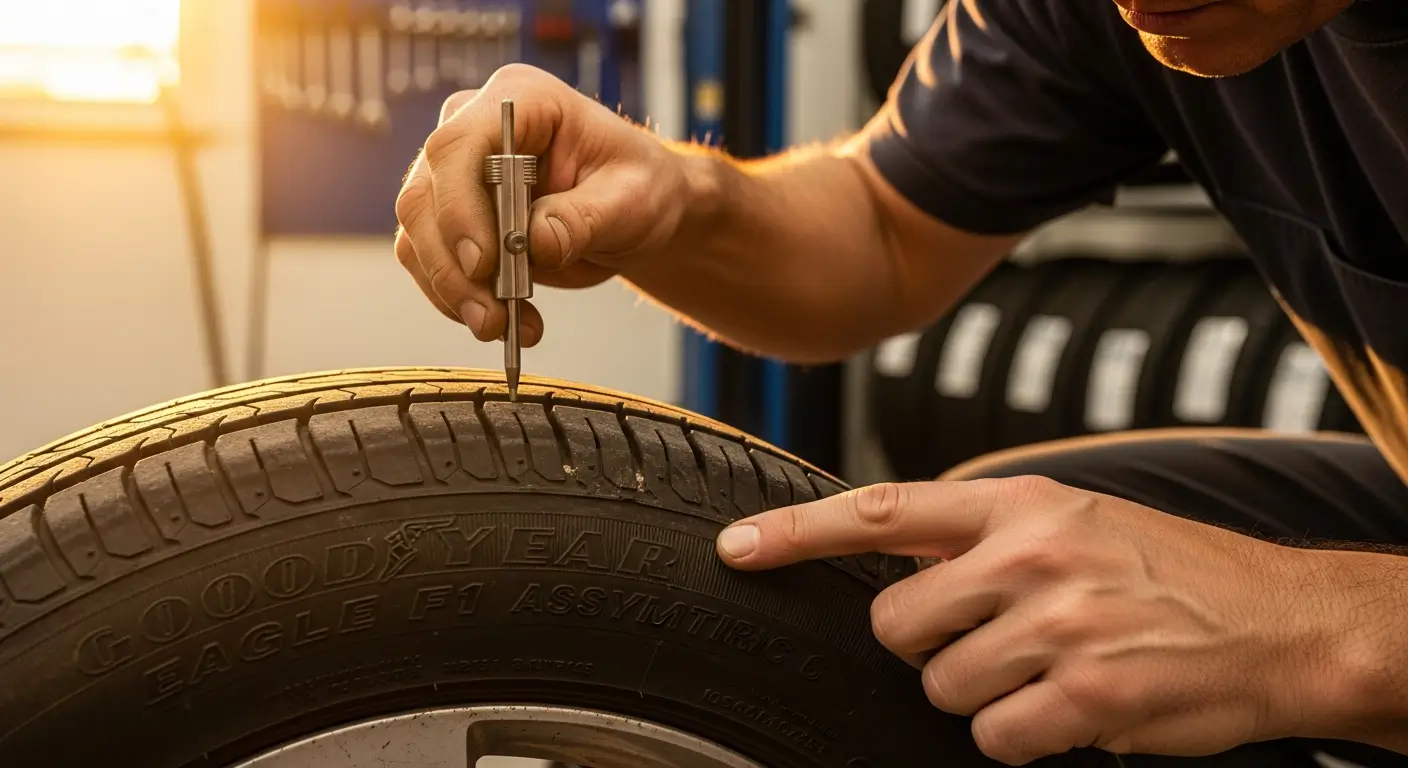
This guide reflects FixGo's hands-on experience operating a network of 200+ partner shops across greater Los Angeles. Our technical content is reviewed by installation professionals who see these issues firsthand, every day.
Understanding the key visual differences of a slashed tire vs blowout is crucial for every driver. You walk out to your car and find a flat. Or you're driving at speed when something goes suddenly, violently wrong. Either way, the first question is the same: what actually happened? A slashed tire and a blowout both leave you stranded, but they have very different causes, very different next steps, and different insurance implications. This guide helps you tell them apart and act correctly in each scenario.
TL;DR:
- A slashed tire has clean, deliberate cuts — usually discovered while parked. A blowout produces a ragged rupture and a loud bang while driving.
- Neither is repairable: sidewall damage cannot be patched by any legitimate tire shop.
- Your next steps depend on which you have — vandalism requires a police report; a blowout requires a calm vehicle-control response first.
What this guide helps you decide
- You need to determine whether your flat tire was caused by vandalism or a mechanical failure
- You want to know the correct safety response to a blowout while driving
- You need clear next steps for insurance, replacement, and getting back on the road
The plain-language answer
A slashed tire is an act of vandalism. Someone used a sharp object — typically a knife or box cutter — to puncture or cut your tire while the vehicle was parked. The result is a clean incision, usually on the sidewall, and a tire that deflates slowly or overnight without any noise.
A blowout is a sudden mechanical failure. The tire loses air pressure explosively — you hear a loud bang, feel the vehicle pull sharply, and see shredded rubber on the road. Blowouts are caused by factors like severe underinflation, road hazard impacts (pothole, nail, debris), aging tires past six years, or operating above the tire's load rating.
The distinction matters because the response is completely different: a slashed tire is a crime that requires documentation and a police report, while a blowout is a driving emergency that requires vehicle-control technique first.
Evaluate Your Tire Damage Step by Step
Step 1 — Examine the Cut or Rupture Pattern
Get close to the tire with good light and look at the damaged area.
| What you see | Likely cause |
|---|---|
| Clean, straight or slightly curved cut on the sidewall | Slashed — vandalism |
| Multiple deliberate cuts, often 1–3 per tire | Slashed — vandalism |
| Ragged, explosive rupture with torn rubber folds | Blowout |
| Shredded tread pieces missing or scattered | Blowout |
| Visible inner liner or cords through a hole | Blowout |
Run a finger carefully along any cut edge. A slashed tire has a sharp, consistent edge — like a knife wound. A blowout rupture is uneven, with rough torn surfaces and often exposed cord fibers in multiple directions.
At FixGo, our partner technicians across LA consistently see these same patterns — the clean incision of a slash versus the explosive tear of a blowout is nearly unmistakable once you know what to look for.
Step 2 — Reconstruct where you were when it happened
- Found flat while parked with no memory of any noise or pull: almost certainly slashed, especially if you were parked overnight in an urban area.
- Happened while driving with a loud pop and sudden pull to one side: almost certainly a blowout.
- Multiple tires affected on the same vehicle: strong indicator of deliberate vandalism.
Step 3 — Check the surrounding scene
A blowout leaves evidence: rubber debris on the pavement where the tire failed. Look at the road surface near where you were driving. If there is nothing there, the failure happened at rest — another sign of slashing. If you were driving and remember hitting a pothole or debris just before the event, that's consistent with a blowout caused by road hazard impact.
Step 4 — Understand repairability
This is where both scenarios converge: neither a slashed tire nor a blowout is repairable. Per USTMA (U.S. Tire Manufacturers Association) standards, sidewall damage — whether from a knife or an explosive rupture — cannot be safely patched. The sidewall flexes hundreds of times per mile; any patch applied there fails quickly and without warning. See the tire sidewall damage guide for a full breakdown of why sidewall repairs are never legitimate.
Based on what we observe across our partner shop network, this is one of the most misunderstood aspects of tire damage — customers sometimes arrive hoping for a patch, but any reputable shop will decline.
The only tire damage that can be repaired is a small puncture (under 1/4 inch) in the central tread zone — and neither a slash nor a blowout produces that type of damage.
What to do next: slashed tire
- Do not drive on it. Even slowly — a flat sidewall can damage your rim.
- Photograph everything. Document the cuts, the tire position, and the surrounding area before touching anything. Multiple angles.
- File a police report. Vandalism is a crime. A police report number is required by most insurers to process a comprehensive claim.
- Call your auto insurer. Comprehensive coverage (not collision) typically covers vandalism including slashed tires, subject to your deductible.
- Arrange roadside assistance. Have your spare mounted or the vehicle towed — do not drive on the flat rim.
- Replace the tire. Order a matching replacement for your vehicle. If one tire is slashed on an axle, inspect the other tires closely — targeted vandalism sometimes affects more than one.
What to do next: blowout while driving
A blowout feels alarming, but the correct response is counterintuitive — you need to resist the instinct to brake hard.
- Grip the steering wheel firmly with both hands. The vehicle will pull to the affected side.
- Ease off the accelerator — do not brake suddenly. Sudden braking destabilizes the vehicle further.
- Steer straight. Let engine braking and rolling resistance slow the vehicle naturally.
- Signal and guide the vehicle to the shoulder or a safe area away from traffic.
- Turn on hazard lights as soon as you are safely slowed.
- Call roadside assistance once stopped. Do not attempt to drive on a blown tire — even to the next exit. The shredded tire can damage the rim and potentially the wheel well.
Replacement options for LA drivers
Both scenarios end in the same place: you need a new tire. The right choice depends on your vehicle.
Passenger cars and daily commuters
For sedans, compact SUVs, and everyday LA commuters, an all-season passenger tire handles stop-and-go freeway driving, moderate summer heat, and light rain. For these vehicles, the EngineX DuraGuard HP — a high-quality, budget-friendly all-season tire offered on FixGo — is purpose-built for exactly this use case, delivering reliable performance at a competitive price point. It ships to LA-area partner shops in 1–3 business days for same-week installation.
SUVs, crossovers, and light trucks
For larger vehicles — crossovers, SUVs, or pickup trucks used as daily drivers — an H/T (highway terrain) tire provides the load rating and ride comfort these vehicles need. The EngineX MaxTour H/T, available on FixGo.com, is purpose-built for SUVs and light trucks on highway and city roads, with sizing that covers common vehicles like the F-150, Tacoma, and Silverado. Feedback from our Southern California partner installation network shows that local owners of these trucks frequently choose the MaxTour H/T for mixed highway commuting and light off-pavement weekend trips. It handles both high-speed freeway travel and the abrasive terrain of SoCal's regional foothills exceptionally well.
Key Specs at a Glance
Comparing product specifications is essential to choosing the right tire for your driving habits and vehicle requirements. Below are the key specifications for our recommended replacement options:
| Model | Sizes | Load Index | Ply | Speed Rating | SoCal Typical Use |
|---|---|---|---|---|---|
| ENGINEX DURAGUARD HP | 205/55R16 | 91 | 4-Ply | V | Daily commute on the 110 Freeway, Alhambra to downtown LA, heat-resistant |
| ENGINEX MAXTOUR H/T | P225/65R17 | 102 | 4-Ply | T | SUV / Inland Empire freeway commuting |
Fitment notes
- Match your load rating. When replacing a blown or slashed tire, the replacement must meet or exceed the load index of the original tire. Downgrading load rating on a truck or SUV is not safe.
- Replace in pairs when practical. If one tire on an axle fails, the remaining tire has often absorbed similar wear or stress. Replacing both avoids handling imbalance.
- Check your spare. After any tire emergency, inspect your spare before storing it — pressure and sidewall condition both matter. For more on tire wear patterns that signal aging, see uneven tire wear explained.
FAQ
Can a slashed tire be repaired?
In our experience at FixGo, a slashed tire cannot be safely repaired. Slashes are almost always on the sidewall, and the sidewall cannot be safely patched. USTMA industry standards prohibit sidewall repairs because the sidewall flexes continuously during driving and any patch will fail — sometimes without warning at highway speed. The tire must be replaced.
Does insurance cover a slashed tire?
Our technicians recommend checking your policy — comprehensive coverage (not collision) typically covers slashed tires, since vandalism falls under comprehensive claims. You will need a police report number to file the claim, and you pay your deductible. Check your specific policy for exclusions.
Does insurance cover a blowout?
In our experience, standard comprehensive and collision insurance generally does not cover blowout damage to the tire itself, as it is considered wear or mechanical failure. However, if the blowout causes a collision or rim damage, those costs may be covered depending on your policy. Some roadside assistance add-ons cover towing from a blowout.
How can I tell if multiple tires were slashed?
We recommend walking around the entire vehicle and checking all four tires before calling anyone. Deliberate vandalism often targets more than one tire — a pattern of clean cuts on multiple tires confirms intentional damage and strengthens an insurance claim.
What causes most blowouts?
Across our LA partner network, we find that severe underinflation is the most common blowout cause — it forces the tire's sidewall to flex beyond its design limits, generating heat that weakens the rubber until a sudden failure occurs. Southern California’s local roads and extreme temperatures accelerate this wear. For instance, commuting on high-temperature asphalt like the Ortega Highway under the summer sun, or driving on rugged, abrasive surfaces like Cleghorn Trail's weathered sandstone or Rowher Flats' decomposed granite, puts massive stress on tire sidewalls.
Road hazard impacts (potholes on the 405, sharp debris) are the second most common cause, especially at freeway speeds. Tires older than six years and those operated above their load rating are also at elevated risk.
Should I replace just one tire or both?
We advise replacing both tires on the same axle when budget allows, to maintain balanced handling. At minimum, make sure the replacement tire matches the remaining tire's brand, model, and size as closely as possible. Mismatched tires on the same axle can cause uneven wear and handling issues, especially on all-wheel-drive vehicles.
Bottom line
- Slashed tire: look for clean cuts on the sidewall, vehicle was parked, no noise during failure — photograph everything, file a police report, and call your insurer before ordering a replacement.
- Blowout: loud bang while driving, ragged rupture, rubber debris on the road — stay calm, grip the wheel, ease off the gas, pull over safely, then call roadside assistance.
- In both cases, the tire must be replaced — sidewall damage is never repairable regardless of cause.
- For everyday passenger cars, the EngineX DuraGuard HP is a straightforward replacement starting point. For SUVs and trucks, the EngineX MaxTour H/T covers the load and size requirements most larger vehicles need.
When you're ready to replace, FixGo makes it straightforward: competitive pricing, free delivery to Southern California in 1–3 business days, and a broad network of local installation partners across LA and the surrounding area. For professional, same-day tire mounting and balancing, you can schedule an appointment at our partner installation locations in Alhambra or Azusa. Our trusted SoCal installation partners are equipped to handle quick replacements and get you back on the road safely. Whether you had a blowout on the 405 or discovered a slash in your driveway this morning, we are here to help.