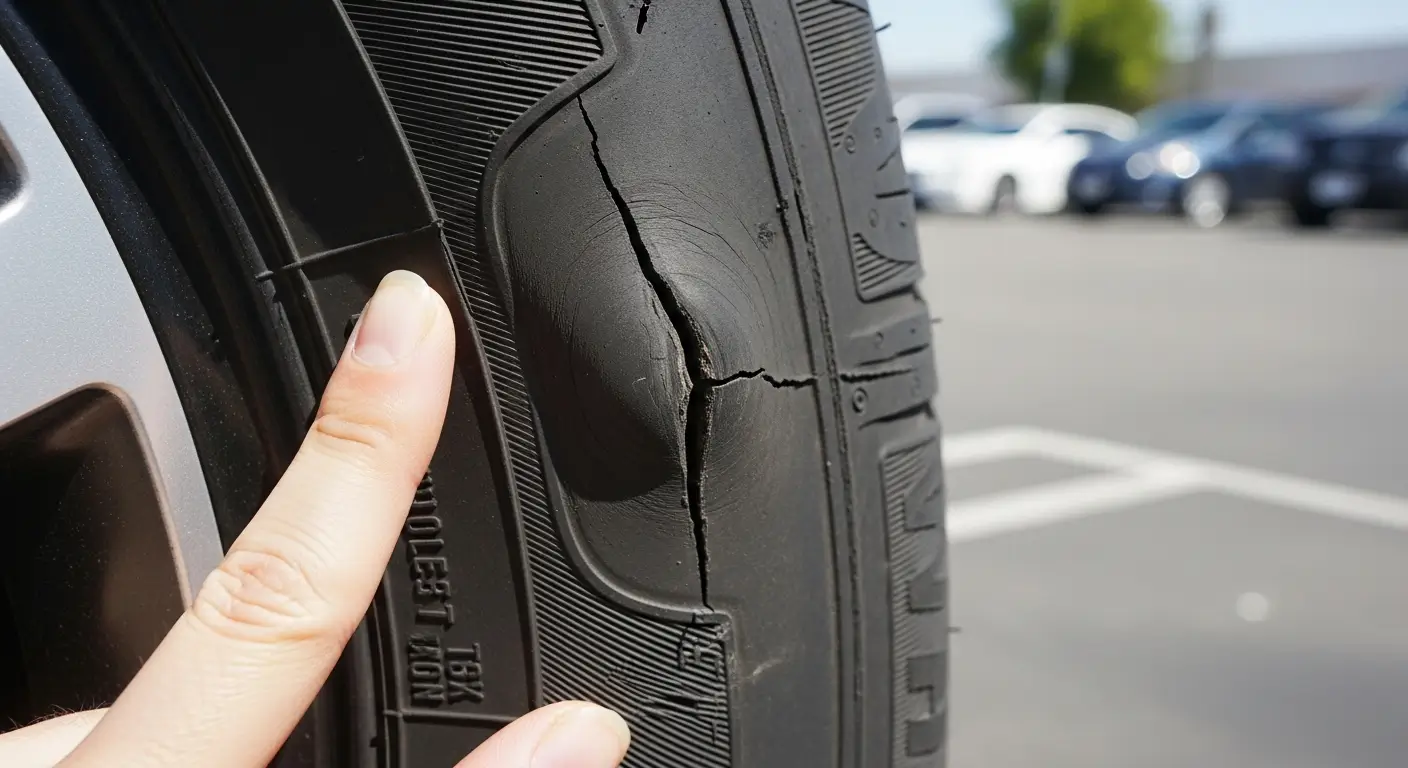
Tire sidewall damage needs a different assessment from a small puncture in the tread. An outward bulge, exposed cords, or a flat tire calls for stopping use and arranging professional help; do not decide that a damaged tire is safe simply because it still holds air.
How to evaluate what you can see
Inspect the visible tire only while the vehicle is safely parked away from traffic. Photograph the mark and note whether it appeared after an impact or alongside pressure loss. Avoid probing damaged rubber or touching exposed cords.
Michelin distinguishes normal inward indentations from outward bulges. A confirmed bulge indicates damaged internal cords and requires replacement. Other cuts, cracks, or abrasions need an assessment of their depth and extent; a photograph cannot establish the complete internal condition.
Why the repair location matters
USTMA's passenger tire repair guidance limits potential repairs to qualifying tread-area punctures no larger than 1/4 inch (6 mm). The tire must be removed for inspection. Shoulder and sidewall injuries are outside the repair zone, and manufacturer restrictions or additional damage may rule out a repair.
A qualifying repair fills the injury and seals the inner liner; an outside plug by itself is insufficient. Do not treat a shoulder puncture as a borderline exception or assume that every small hole can be repaired.
After an impact on your commute
If you hit a pothole or curb and notice a bulge, air loss, vibration, or changed steering, stop somewhere safe and arrange an inspection or roadside assistance as needed. Do not continue a normal freeway journey on a tire with visible structural damage.
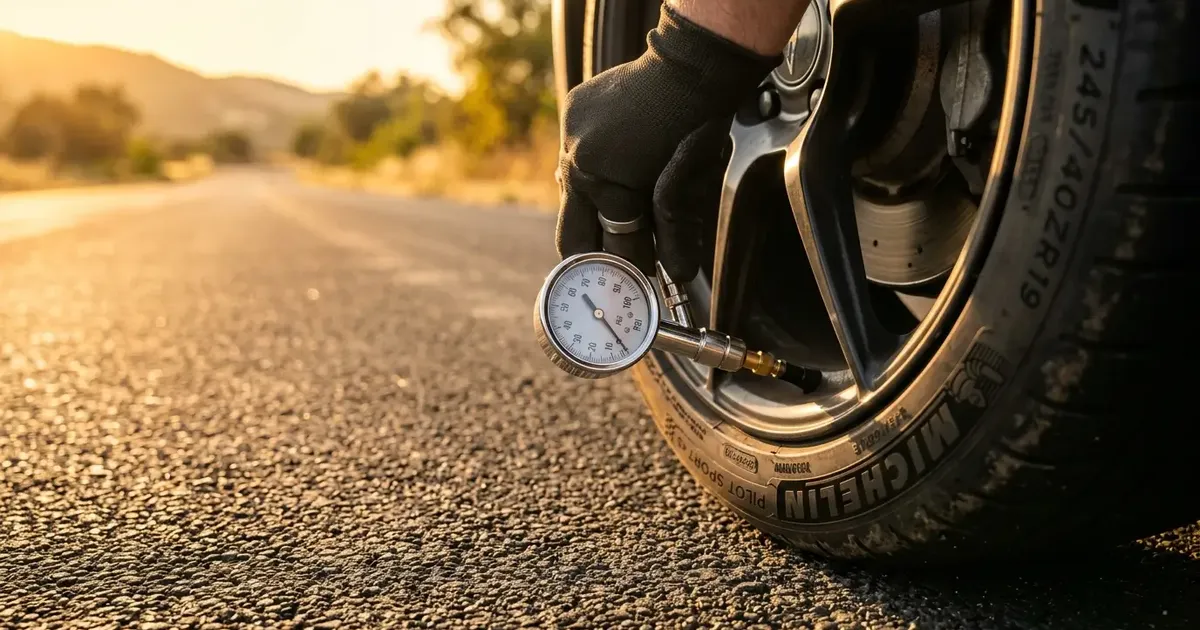
For prevention, use the vehicle manufacturer's cold pressure and inspect condition regularly. NHTSA's care guidance explains why pressure, tread, and visible damage all deserve attention. Avoid relying on one assumed pressure increase for every warm Southern California day.
Choosing a replacement
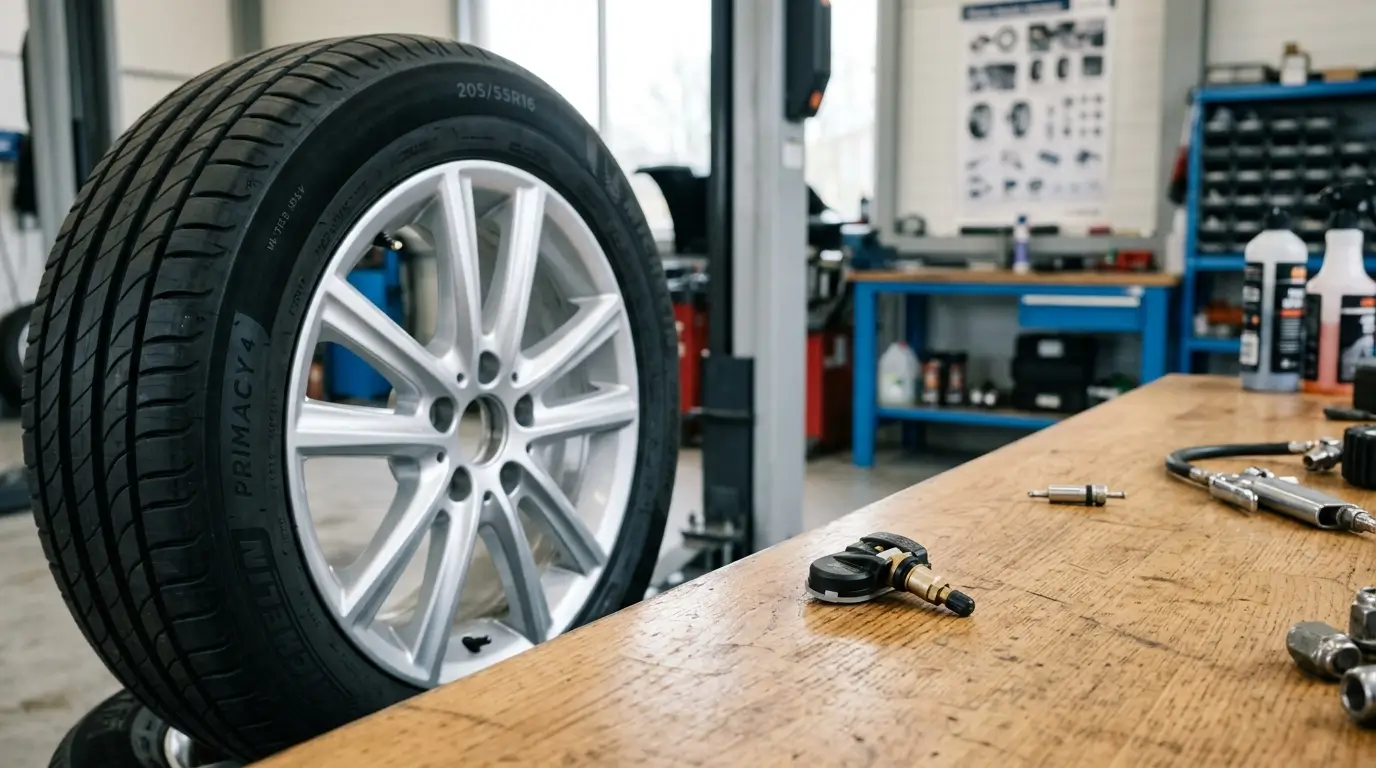
Use the vehicle placard and owner's manual for the required size and service description. If replacing fewer than all four tires, check the manufacturer guidance for matching the remaining set, including any AWD requirements. A tire intended for off-road use is not automatically the right replacement for a commuter vehicle.
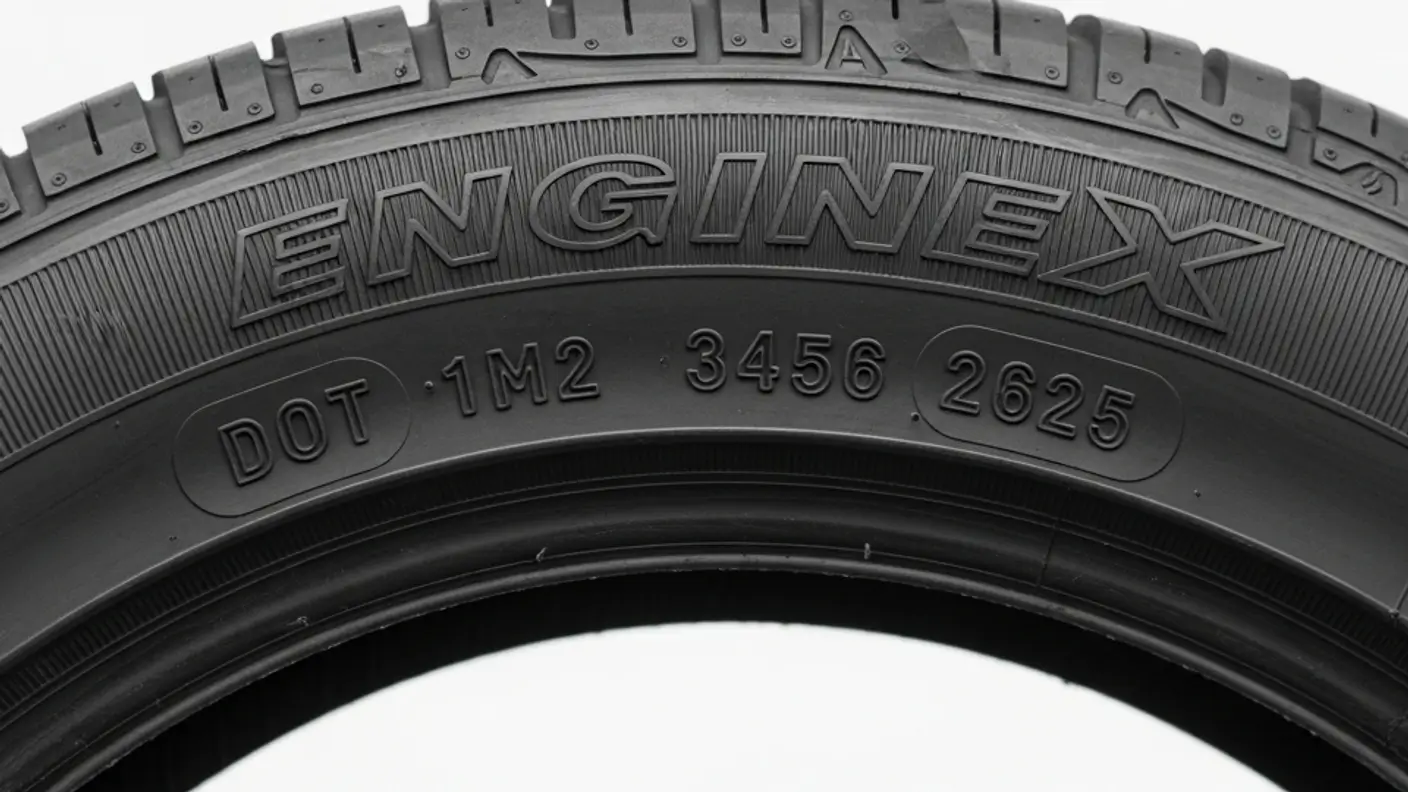
Our tire size guide explains the markings to compare. If there are handling symptoms as well as damage, have the cause assessed before expecting a new tire to solve everything.
FAQ
Can a sidewall puncture be patched?
It is outside USTMA's repairable tread area. Have the tire assessed for replacement instead of accepting an external patch as a solution.
Is every sidewall mark a bulge?
No. An outward bubble is different from an inward indentation. When the shape or damage is unclear, ask a professional to inspect it rather than guessing from appearance.
Should I keep driving if pressure seems normal?
Normal pressure does not establish that the structure is sound. Do not drive on a confirmed bulge or exposed cords; arrange help.
Bottom Line
Use visible signs to identify when help is needed, and leave the final condition assessment to a tire professional. When replacement is needed, FixGo offers competitive tire pricing and installation through 200+ partner shops across greater Los Angeles. Choose the correct specification and eligible installation location when ordering.