
Choosing 225/45R17 UHP all-season tires means balancing steering response, wet-road confidence and the comfort you want on the daily commute. EngineX SpeedTrac UHP, Lexani LXUHP-207 and Dcenti DC55 offer three ways to approach that decision, with vehicle fitment and local installation planning just as important as the tread design.
Three picks at a glance
Start with the exact size and service description. These three versions share a 94 load index and W speed rating, while their treadwear grades and design emphasis differ.
| Tire | Sizes | Load Index | Speed Rating | UTQG* | Mileage warranty |
|---|---|---|---|---|---|
| EngineX SpeedTrac UHP | 225/45ZR17 | 94 | W | 500 / A / A | 50,000 miles |
| Lexani LXUHP-207 | 225/45ZR17 | 94 | W | 500 / A / A | 50,000 miles |
| Dcenti DC55 | 225/45R17 | 94 | W | 460 / A / A | 50,000 miles |
*UTQG columns show treadwear / traction / temperature. The mileage figures are warranty coverage figures, subject to the applicable terms; they are not predicted replacement intervals. Exact-size specifications: EngineX at FixGo, Lexani at FixGo and Dcenti at FixGo.
For a quick shortlist, consider EngineX when local delivery timing and handling are both priorities, Lexani when its wet-water-channeling design appeals, and Dcenti when you want a symmetric-tread UHP alternative. Match all three against your vehicle requirements before choosing by driving preference.
The three tires in detail
EngineX SpeedTrac UHP: handling with a local delivery advantage
The SpeedTrac UHP uses large tread blocks designed to support cornering stability and steering precision. EngineX also emphasizes wet traction, resistance to hydroplaning and everyday ride comfort. Those priorities make it worth considering for a driver who wants one set for commuting and a more responsive feel on ordinary paved roads. These are the manufacturer's design characteristics. EngineX SpeedTrac UHP overview.
The 225/45ZR17 version carries 94W XL, a 500/A/A UTQG grade and a 50,000-mile mileage warranty. Its FixGo listing includes Road Hazard coverage. The concrete local advantage is that qualifying EngineX tire orders support next-day delivery in Greater Los Angeles; check the delivery eligibility shown for your location. View this EngineX size.
Choose it when that combination fits your needs. A delivery benefit should follow the fitment decision, especially if your BMW has particular original-equipment tire requirements.
Lexani LXUHP-207: a focus on dry cornering and water evacuation
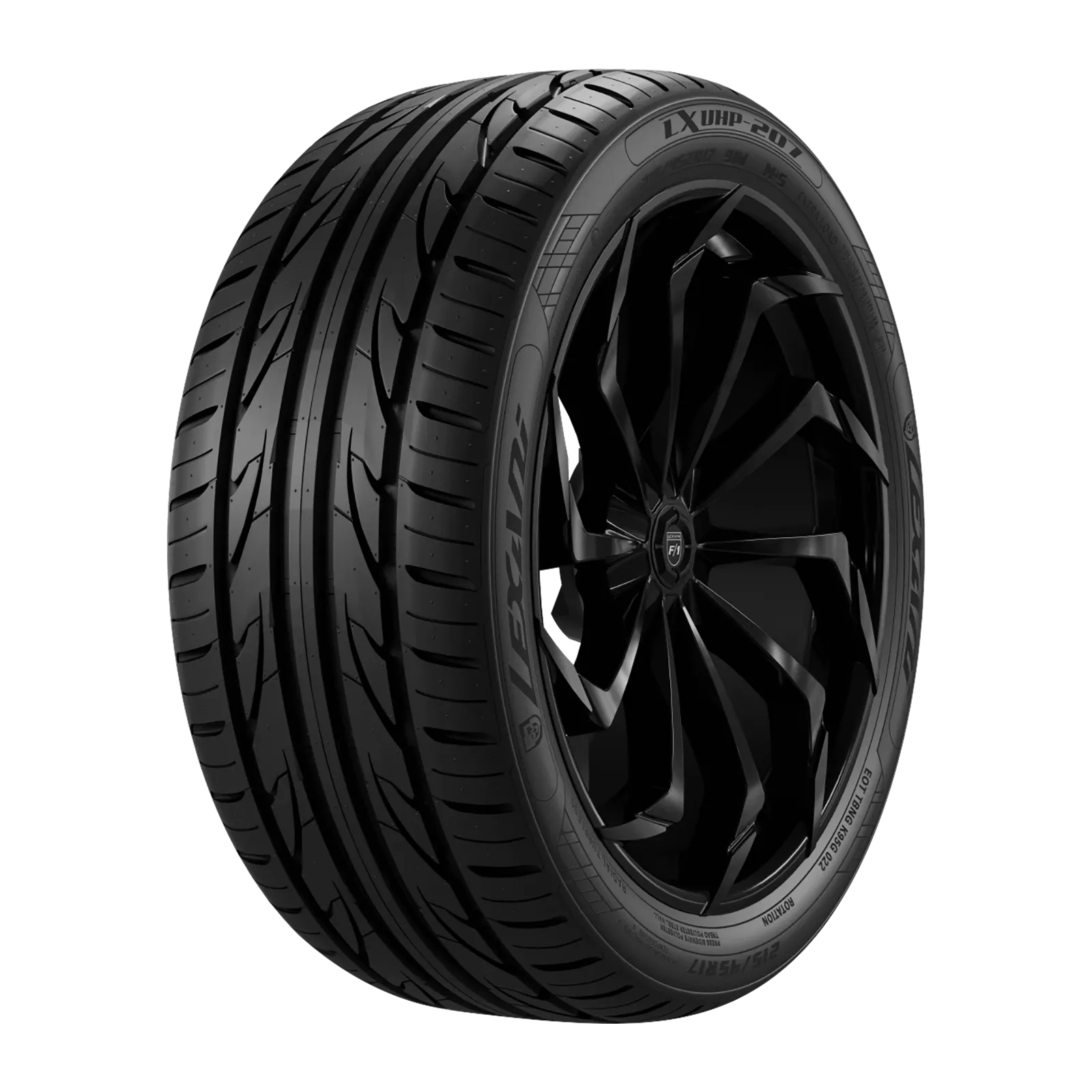
Lexani describes the LXUHP-207 as a UHP all-season tire designed for precise handling and consistent dry cornering. Four longitudinal grooves channel water, while lateral V-shaped grooves are designed to improve wet grip and hydroplaning resistance. The exact LXST2071745020 version is 225/45ZR17 94W XL, with 500/A/A grades and a 50,000-mile limited mileage warranty. Lexani specifications and design.
This is an appealing option when your shopping priorities center on dry steering response and wet-weather tread design. It also matches the EngineX's listed treadwear grade and mileage coverage, so choosing between them should include fitment, your comfort preferences and the delivery estimate for your order. View this Lexani size.
Dcenti DC55: a symmetric-tread performance alternative
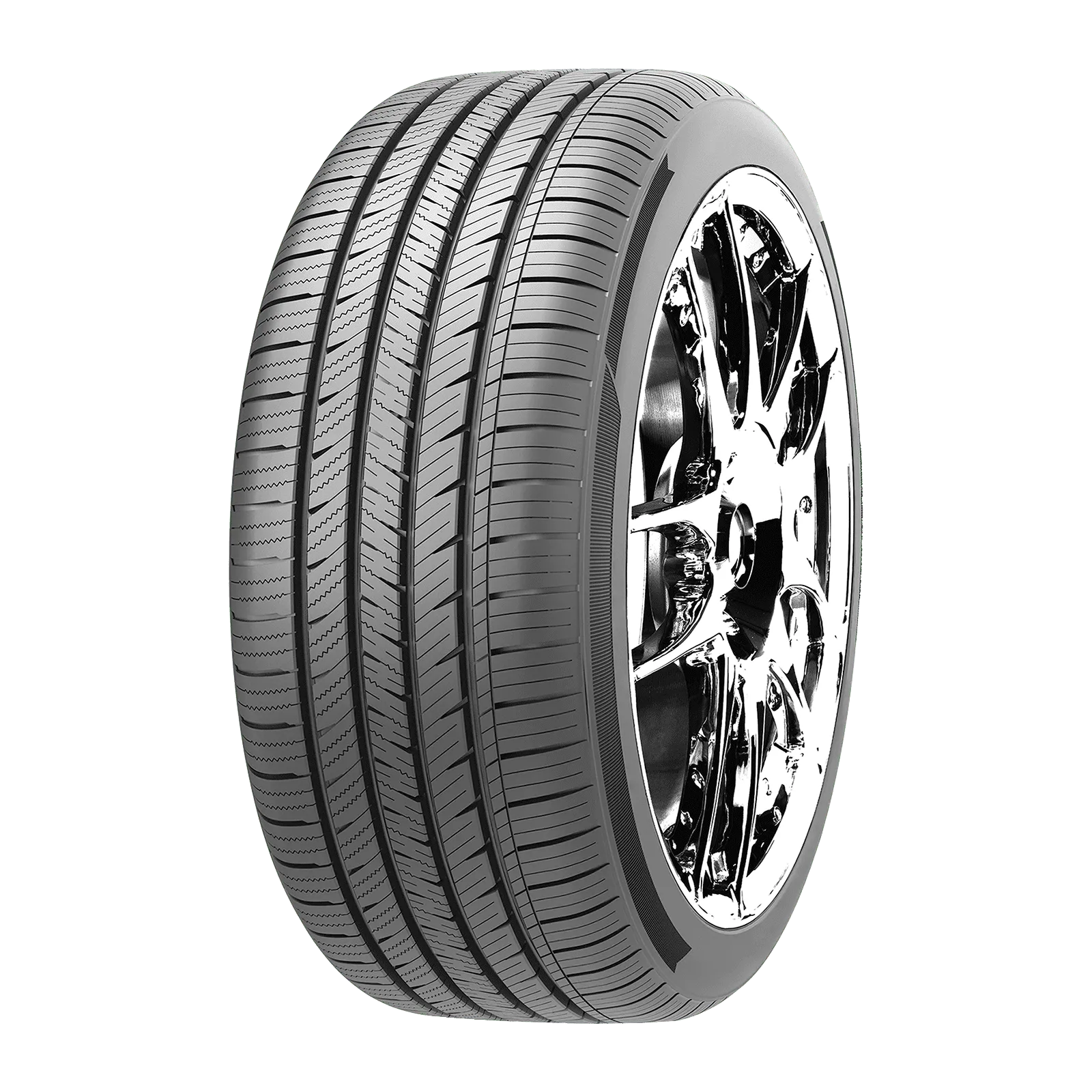
The DC55 takes a symmetric-tread approach, with four circumferential grooves. Dcenti's distributor describes the design as targeting wet and dry grip for passenger-car use. That gives it a distinct tread-layout choice alongside the other two tires. Dcenti DC55 product overview.
The FixGo 225/45R17 version is 94W, with 460/A/A UTQG grades and a 50,000-mile mileage warranty. Its treadwear grade is lower than the other two, but its listed warranty mileage is the same. Keep both figures in view rather than turning the 460-versus-500 difference into a percentage prediction of tire life. View this Dcenti size.
It belongs on the shortlist for buyers who want to compare a symmetric UHP design against the SpeedTrac and LXUHP-207 while keeping the same dimensional size and 94W service description.
Wet and dry grip: read the design and the grades separately
For dry-road steering, EngineX emphasizes tread-block stability, while Lexani specifically highlights cornering precision. Dcenti adds another approach with its symmetric layout. Use those design priorities to frame your choice: quick steering response, confidence during a wet commute, and comfort on the route you drive most often.
All three carry traction grade A. NHTSA explains that the UTQG traction grade addresses stopping on wet pavement, while the temperature grade addresses heat resistance. Neither is a road-noise score. A matching grade is one comparison point, not a complete description of how each tire will feel. NHTSA tire-rating guidance.
Their shared W rating is also a specification to match, not a reason to drive faster. Speed symbols describe laboratory-tested speed capability, and replacement selection should preserve the vehicle manufacturer's requirements. Bridgestone speed-rating guidance.
Highway comfort: focus on the ride you want every day
A comfortable commute has two separate parts: how the tire absorbs bumps and how much tread noise reaches the cabin. Michelin explains that tire construction influences cushioning, while tread-groove layout influences noise. A UHP tire's steering emphasis therefore deserves consideration alongside comfort, rather than allowing the performance label to make the decision for you. Michelin's tire-comparison guide.
For the SpeedTrac, everyday comfort is part of EngineX's stated design aim. With the Lexani and Dcenti, weigh the tread designs and handling emphasis against the ride you want on your usual freeway commute. When comparing driving impressions, look for the same vehicle and size, and distinguish impact harshness from a steady road hum.
After installation, correct pressure and balance matter too. Use your vehicle's specified cold pressure; a tire's maximum pressure is not the target for everyday driving. NHTSA notes that balancing helps prevent shaking and vibration. NHTSA tire care.
Longevity: what 50,000 miles and UTQG actually tell you
All three list 50,000-mile mileage coverage, but the ownership question is broader than the headline number. Read the applicable warranty terms and keep the purchase and maintenance records they require.
EngineX and Lexani have a 500 treadwear grade; Dcenti has 460. UTQG describes relative wear characteristics under the grading system. Actual performance and longevity also depend on the car, driving style, road conditions and maintenance, so the grades do not promise a particular odometer reading at replacement. NHTSA's explanation of tire grades.
For a daily driver, build tire care into the routine: check cold pressure and tread monthly, and follow the vehicle manufacturer's rotation guidance. A mileage warranty should support your ownership plan, not replace those checks. NHTSA maintenance guidance.
BMW 3 Series, Golf GTI and Lexus IS fitment
The model name alone is not enough. Check the door label, owner's manual, model year, wheel package and requirements for each axle. Size, load capacity and speed rating all belong in the replacement decision. Bridgestone replacement guidance.
BMW 3 Series: check the wheel package and original tire type
BMW's U.S. 2009 3 Series Sedan guide includes 17-inch packages with 225/45R17 tires, including an all-season run-flat configuration. It also lists a mixed 17-inch setup with 225/45R17 front and 255/40R17 rear. Check your actual package and discuss the original run-flat requirement before changing tire type. BMW's U.S. 2009 package guide.
Volkswagen Golf GTI: confirm your market and wheel specification
Volkswagen's 2013 Spanish launch specification paired 17-inch Brooklyn wheels with 225/45 tires. Treat that as a specific historical configuration; a California GTI buyer should use the U.S. car's own label and manual to confirm the intended tire size and ratings. Bring the model year and wheel details to the fitment check before selecting one of these 94W versions. Volkswagen's 2013 Golf GTI announcement.
Lexus IS: front and rear sizes can differ
For the 2013 U.S. IS 250 and IS 350, Lexus lists standard rear-wheel-drive tires as 225/45R17 front and 245/45R17 rear. The standard AWD configuration uses 225/45R17 at both ends, and 18-inch wheels were also available. A 225/45R17 shortlist therefore serves different purposes depending on the car's drivetrain and wheel package. Lexus's 2013 IS specifications.
For a confirmed staggered setup, order each size separately on FixGo: complete checkout for the first size, then start and complete a new order for the second size, or contact customer service for help. Before ordering, use our tire-size reading guide to identify the complete sidewall specification.
Plan Southern California delivery and installation
FixGo offers local next-day delivery for qualifying EngineX tire orders in Greater Los Angeles. Standard Greater LA tire delivery is usually 1–3 days; San Diego delivery is usually 3–5 business days. Check the estimate for your exact tire and location, then coordinate the installation visit after arrival. FixGo delivery and installation guide.
- Confirm the correct specifications for every tire you intend to replace.
- Open the chosen product, enter your location and review the order's delivery estimate.
- Select an eligible FixGo partner installation shop during checkout.
- Coordinate mounting and balancing after the tires reach the shop.
Next-day delivery describes tire arrival, not a reserved next-day installation appointment. FixGo has more than 200 partner installation shops across Greater LA; choose the available location that works for your schedule.
FAQ
Is a 500 treadwear grade a 50,000-mile lifespan?
No. Treadwear grade and mileage warranty describe different things. Use the grade for relative wear context, the warranty for its coverage terms, and tread condition and maintenance guidance for replacement decisions.
Can I choose only by the 94W marking?
No. Also match the dimensional size, wheel configuration and manufacturer requirements. Higher load or speed capability is not an overall comfort or quality ranking. Michelin's specification guidance.
Are these an automatic choice for winter mountain trips?
Match the tire to the conditions you expect. NHTSA identifies winter tires as more effective than all-season tires in deep snow, so an all-season label alone should not decide a snow-focused purchase. NHTSA tire-type guidance.
Bottom line
Choose the tire that matches your exact vehicle configuration and the balance of handling, comfort and ownership needs you value most. Use the specifications to narrow the decision, then confirm delivery and installation timing for your location.
Compare the three options at FixGo for competitive pricing, and select an eligible FixGo partner shop for tire installation. If timing is central to the decision, review the EngineX delivery eligibility for your Greater LA address alongside the other products' order estimates.