Choosing 265/70R17 all-terrain tires means deciding what your truck needs during the week as well as on the trail. If your routine combines the I-5 or I-405 commute with Southern California weekend outings, start with vehicle requirements, then weigh comfort, load capacity and seasonal traction.
Quick take: Compare the Supermax ATX-1 for everyday driving with light trails, the BFGoodrich KO3 for more demanding off-pavement and loaded use, and the EngineX MaxTour H/T as the paved-road comfort reference. First match the exact vehicle requirements; these three specifications are not interchangeable.
How to choose for your truck and your actual driving
Start with the vehicle, not just the size
For a Toyota Tacoma, Toyota 4Runner, Ford F-150 or Jeep Wrangler, treat the model name as the start of the conversation. Check your exact vehicle's tire placard and owner's manual before shopping by size; 265/70R17 is not a blanket fitment recommendation for all four models. NHTSA's tire guide explains where to find the vehicle's size and inflation information.
Bring those requirements into the comparison: the full size designation, required load capacity and speed rating, plus whether the vehicle calls for passenger-type or LT tires. A numerically higher load index does not make a tire the better choice by itself. The important question is whether the replacement carries the required load at the correct inflation pressure. Toyo's replacement bulletin explains that relationship.
Need help reading the sidewall? Use FixGo's tire-size guide before comparing listings.
Describe a normal week and a realistic weekend
Write down which of these best describes your use:
- Freeway first: Quiet commuting matters most; trail visits are occasional.
- Frequent trail use: Off-pavement traction deserves more weight in the decision.
- Loaded travel: Include your usual passengers, cargo and towing needs in the fitment discussion.
- Winter mountain trips: Make snow capability a separate selection requirement.
All-terrain tires aim to balance road and trail driving. Compared with more aggressive mud-terrain designs, they generally offer quieter highway operation. That makes the category relevant to a truck that must return to the commute after the weekend. BFGoodrich's terrain-selection guide describes this tradeoff.
Comparison specs table: three tires, three priorities
The comparison below uses the Supermax ATX-1 265/70R17 115T, BFGoodrich All-Terrain T/A KO3 LT265/70R17 123S E, and EngineX MaxTour H/T 265/70R17 113T. KO3 represents the BFGoodrich option here; KO2 is its predecessor, with its own size-specific specifications. The H/T entry provides a highway reference for deciding whether your driving actually calls for an all-terrain tread.
| Comparison | Supermax ATX-1 | BFGoodrich KO3 | EngineX MaxTour H/T |
|---|---|---|---|
| Sizes | 265/70R17 | LT265/70R17 | 265/70R17 |
| Load Index | 115 | 123, single | 113 |
| Speed Rating | T | S | T |
| Construction / Load Range | Passenger-type / SL | Light-truck / E | Passenger-type / SL |
| Tread category | All-terrain | All-terrain | Highway-terrain |
| Scenario recommendation | Commute + light trails | Demanding trails + loaded travel | Paved commute + road trips |
| Noise / ride focus | Quiet-ride positioning | Off-road durability focus | Quiet, comfortable highway positioning |
| Fuel-economy decision | Balance A/T traction needs | Balance LT load and trail needs | Highway comparison baseline |
| Seasonal designation | All-season | 3PMSF severe-snow rated | All-season |
| UTQG temperature grade | B | Not applicable to LT size | A |
Ratings note: The specifications and ratings in this table cannot be used as a direct ranking for desert-driving safety among these three tires. The compared BFGoodrich KO3 is a Light Truck (LT), Load Range E tire: UTQG ratings do not apply to LT tires and are not required for them under U.S. regulations, as BFGoodrich also explains. Its lack of a UTQG grade does not indicate poorer heat resistance. The passenger-car UTQG Temperature grade describes heat-generation resistance and heat dissipation in controlled indoor laboratory testing; it is not a desert-use certification. 49 CFR 575.104.
Size, service description and load-range details come from the Supermax, KO3 and EngineX product pages. BFGoodrich identifies the KO3's 3PMSF qualification and explains that UTQG does not apply to its light-truck sizes. The scenario rows are recommendations based on those designs, not a measured performance ranking.
Supermax ATX-1: an entry A/T candidate for mixed driving
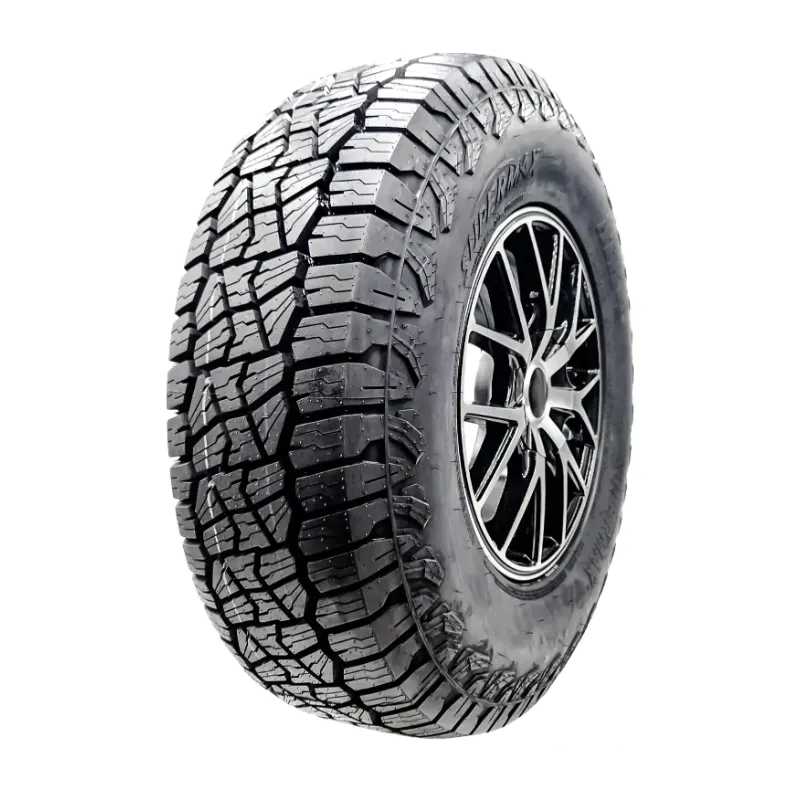
For a budget-conscious driver whose week is mainly commuting with occasional light trail outings, the ATX-1 is worth comparing. Its all-terrain tread and SL construction make it a candidate when 265/70R17 115T meets the vehicle's requirements. FixGo describes a quieter-ride focus and wet/dry traction; those characteristics make sense for a truck that spends more time reaching the trail than tackling difficult obstacles. Supermax ATX-1 details.
Choose it for that balance, rather than assuming every A/T tire is a heavy-load expedition tire. When the vehicle calls for LT E, keep that requirement. For regular rough-terrain travel, compare the KO3's dedicated sidewall-protection features alongside your needs.
BFGoodrich KO3: prioritize trail durability and the required LT capacity
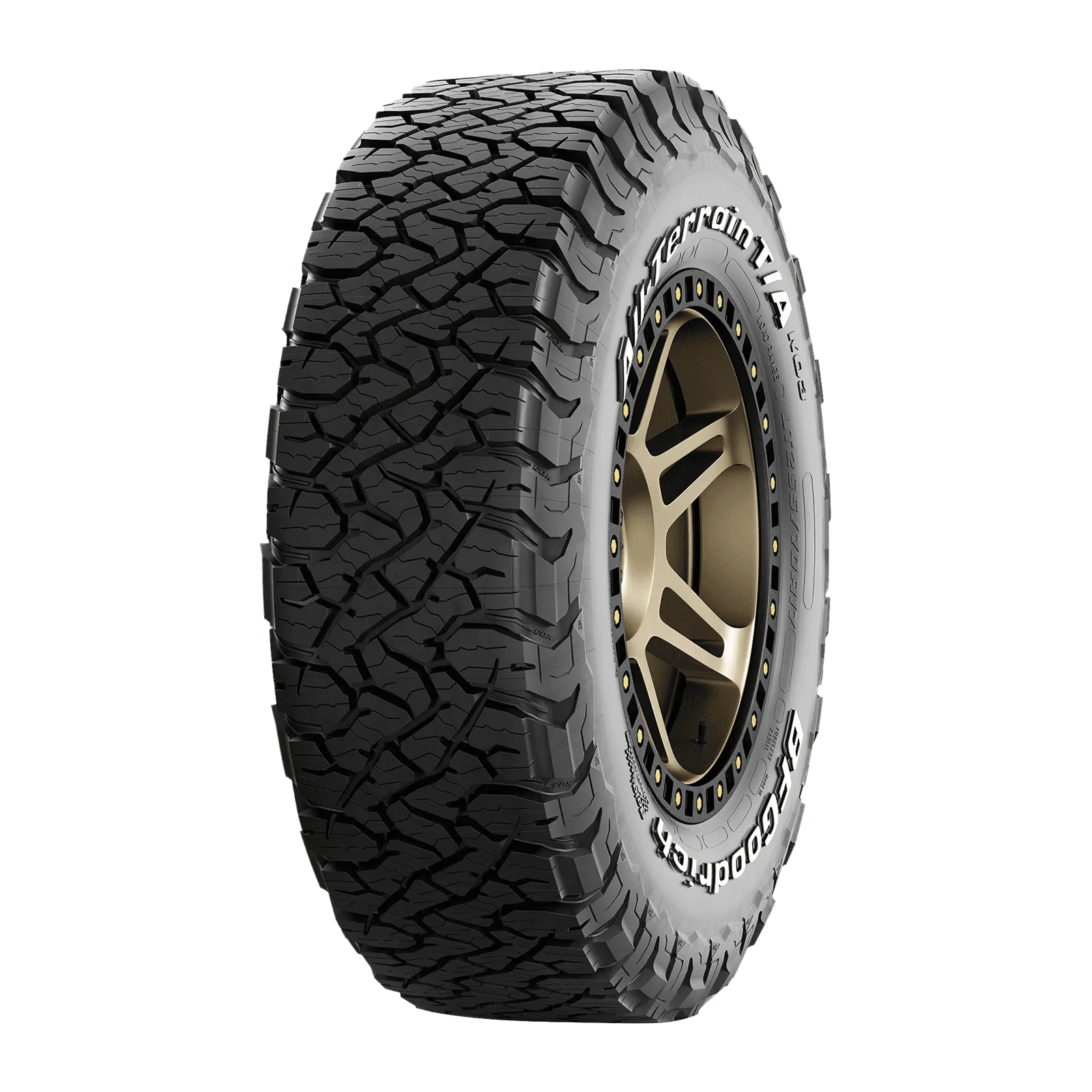
For more demanding trail travel, the KO3 brings specific protection features to the comparison: CoreGard sidewall rubber and Advanced Deflection Design, which BFGoodrich describes as helping resist snagging and splitting from sticks and stones. Its 3PMSF designation adds a snow-traction qualification. Those features make it the option to prioritize here for an appropriate vehicle used on rougher routes. BFGoodrich KO3 technology.
The compared KO3 listing is LT265/70R17, Load Range E, with a displayed single-tire load index of 123 and speed rating S. Use that exact version in a load-and-inflation assessment for passengers, camping equipment and towing needs. Other KO2 or KO3 versions must be checked separately. Sidewall protection does not make any tire immune to damage, as BFGoodrich's tire guidance makes clear.
EngineX MaxTour H/T: the highway reference
If your driving stays on paved roads, compare the MaxTour H/T before committing to an A/T tread. EngineX positions it around quiet, comfortable SUV and light-truck travel, including daily commuting and longer road trips, with wet/dry handling. That gives this H/T a distinct role for I-5 or I-405 driving when trail traction is not a regular requirement. EngineX MaxTour H/T.
The 265/70R17 113T SL version has a lower load index than the Supermax's 115. If the vehicle requires 115 or greater, do not substitute 113T merely because the dimensions match. Highway comfort is a reason to compare suitable tires, not to relax the vehicle's required specification.
SL versus LT E: comfort, noise and fuel economy
SL means Standard Load; LT identifies a light-truck tire, and E identifies a load range. The two SL tires and the LT E tire serve different load applications. Keep the vehicle's required capacity and speed rating; a higher number or letter is not an overall quality score.
An LT conversion can require higher inflation to carry an equivalent load, which can make the ride harsher. Have a tire professional calculate it from the proper load-and-inflation tables. Do not copy the old pressure or reduce it for softness. Toyo's replacement bulletin.
For noise, both Supermax and EngineX emphasize quietness in their product descriptions. That does not establish which will be quieter on your particular truck. The KO3's appeal here is its trail protection and snow qualification; weigh those features against the ride you want during the commute.
For fuel economy, treat the H/T as the paved-use comparison baseline and ask whether you need the extra terrain capability of an A/T. Tread and construction affect rolling resistance, and underinflation increases energy loss. Neither SL nor LT E is an MPG rating: compare the exact models and keep pressures appropriate for the vehicle and load. A highway label alone does not establish a fuel-saving amount or a winner among these three. BFGoodrich's fuel-economy guidance.
3PMSF and desert heat answer different questions
For winter mountain travel, look for the three-peak mountain snowflake, or 3PMSF, on the exact tire. USTMA defines it through a snow-traction performance threshold tested against reference tires on medium-packed snow. An all-season or all-terrain label alone does not establish that qualification. The snow test also does not establish desert heat resistance or guarantee ice braking. USTMA severe-snow definition.
For a hot-weather freeway or desert trip, focus on inflation and loading. NHTSA identifies sustained high temperature as a tire-damage risk and explains that UTQG temperature grades describe heat resistance. Check pressure cold—after at least three hours without driving—and use the applicable vehicle guidance rather than the sidewall maximum. NHTSA TireWise.
If you lower pressure for trail driving, restore the appropriate road pressure before returning to pavement. Carry the equipment to reinflate rather than making the freeway journey on trail pressures. BFGoodrich's pressure guidance. FixGo's inflation-pressure guide offers a useful pre-trip refresher.
Tacoma, 4Runner, F-150 and Wrangler: apply the fitment check
Use the following as a selection checklist for your exact year and trim, after checking the vehicle placard and manual:
- Toyota Tacoma: If the specified size is 265/70R17, compare the required load and speed ratings before choosing either SL model. Include your normal cargo when discussing an LT conversion.
- Toyota 4Runner: Match the actual wheel and tire specification first. An EngineX 113T is not interchangeable with a required 115-rated tire just because both show 265/70R17.
- Ford F-150: Check the configuration's tire type and load requirements alongside your loaded use. When LT E is required, compare within LT E; neither SL entry replaces that requirement.
- Jeep Wrangler: Confirm the original or modified wheel/tire setup with a tire professional. A trail-oriented model name does not establish clearance or suitability for a particular modification.
These checks follow NHTSA's vehicle-specific size and pressure guidance. Changing size or tire type requires additional assessment; BFGoodrich's sizing guide explains why larger tires and vehicle modifications need care.
Plan local delivery and installation together
FixGo offers local tire installation through its Southern California partner network, with free delivery from the Commerce distribution hub for eligible local orders. Enter your ZIP code and confirm the selected installation partner and order details before paying.
For Greater Los Angeles drivers, FixGo's September 14, 2026 network snapshot included 258 active installation partners, excluding San Diego County cities. Choose the location that works for your weekday schedule as well as your weekend departure. Free delivery is separate from installation: confirm the mounting-and-balancing charges for your chosen order and shop. Read more about FixGo's local installation process.
FAQ
Should every Tacoma or 4Runner use SL for a smoother commute?
No. First establish the vehicle's required specification and loaded-use needs. Comfort is a preference to weigh among suitable tires, not a reason to substitute a lower-capacity tire.
Is an E-rated tire automatically the best trail choice?
Choose E when the vehicle and load call for it. Then compare the actual terrain design and on-road priorities; the load-range letter alone does not select the whole tire.
Does a snowflake symbol make a tire better for desert heat?
It identifies snow-traction qualification. Evaluate hot-weather operation separately, including correct inflation and loading.
Bottom line
For an appropriate 265/70R17 application, shortlist the Supermax ATX-1 for commuting with occasional light trails, the BFGoodrich KO3 LT E for demanding terrain and relevant load requirements, and the EngineX MaxTour H/T for paved-road comfort. Choose the specification your vehicle needs, then decide how much of your driving benefits from an A/T tread and whether 3PMSF belongs on your checklist.
Compare these three options through FixGo's product links above, review FixGo's competitive pricing, and plan delivery to a convenient FixGo installation partner. Match the tire to your weekday driving and your actual weekend route before placing the order.