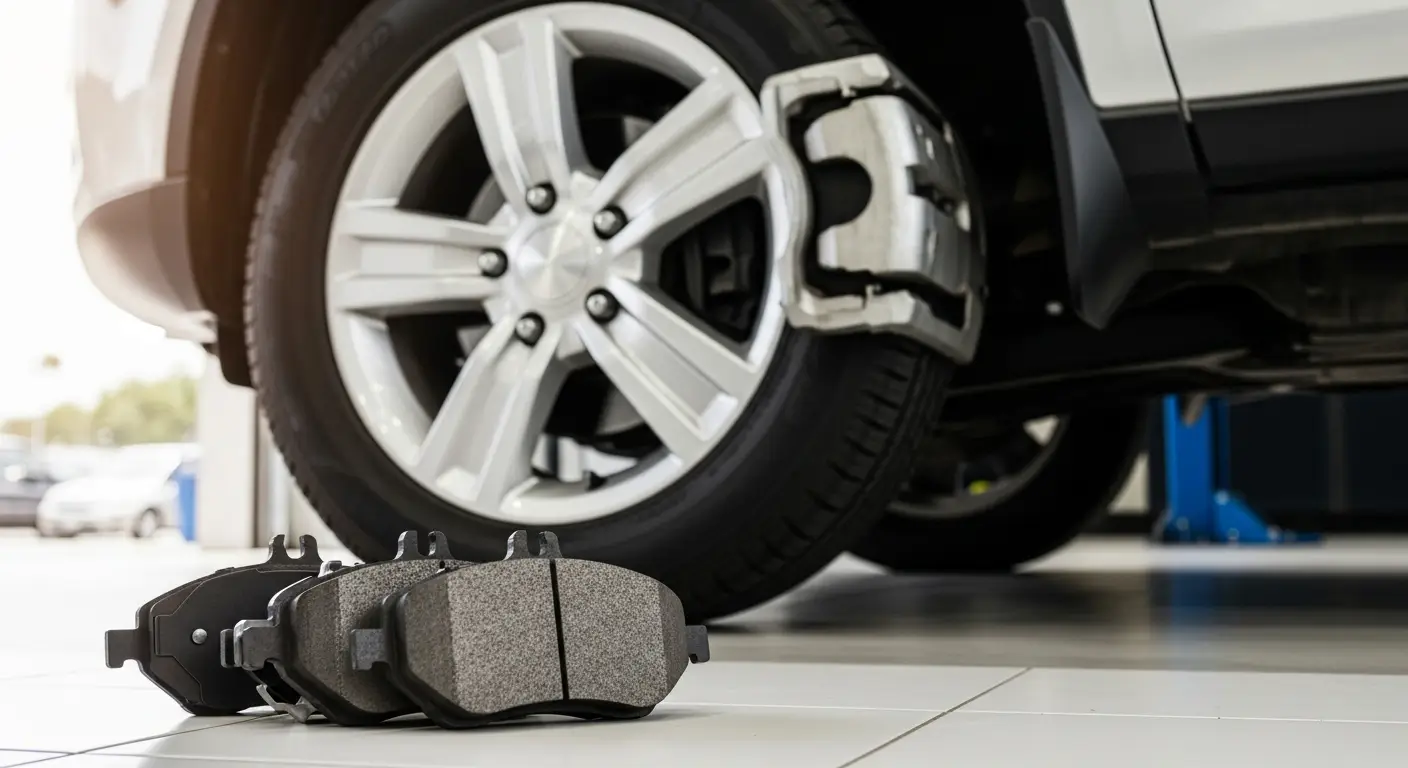
Choosing brake pads starts with recognizing urgent braking problems, then matching the replacement to your vehicle and driving needs. This guide covers warning signs, material choices, and a fitment checklist for planned purchases through FixGo.
How to decide whether you need brake pads
Start with the symptom, then have the cause checked before buying parts. A noise, a soft pedal, and a longer stop can point to different problems.
Squealing or grinding
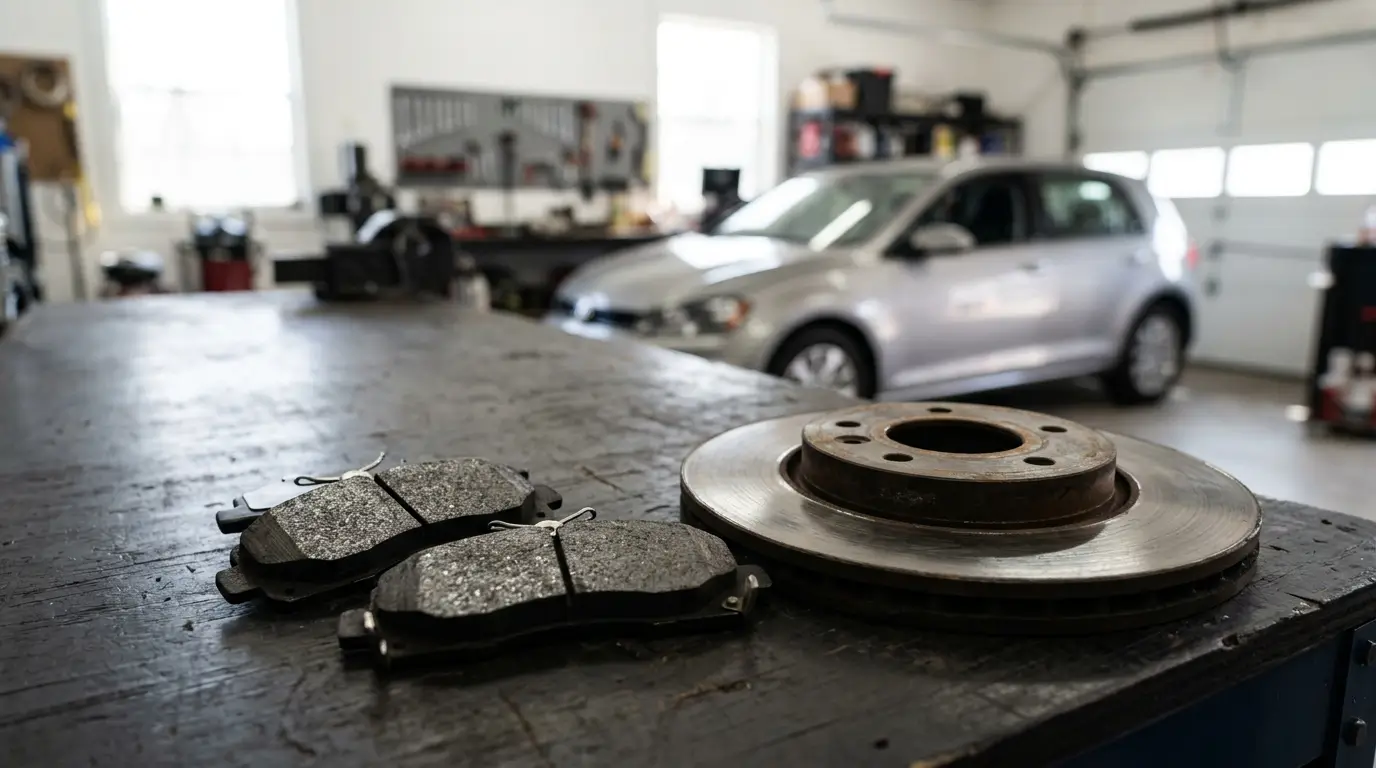
A persistent squeal may come from a pad’s wear indicator, although moisture and temperature can also produce brake noise. Grinding is more urgent: severely worn pads can let the backing plate contact the rotor, damaging other components. Arrange an immediate inspection for grinding, and have persistent squealing checked rather than choosing a replacement compound just to silence it. Firestone’s brake-problem guide explains these distinctions.
A soft or spongy pedal
A newly obvious soft or spongy brake pedal is an urgent safety hazard: immediate professional inspection is required. Pull over safely, stop driving, and arrange professional assistance or towing to a local repair shop. Do not wait for your next routine maintenance visit, even if the brakes still seem to work.
Air in the hydraulic lines, fluid loss, or a master-cylinder fault may be involved. New pads alone do not resolve these causes. Tell the technician when the change began and whether pedal travel has increased. Wagner’s soft-pedal guidance calls for immediate inspection.
More distance needed to stop
Markedly weaker braking or suspected brake failure also requires a safe stop and immediate professional help. Heat can cause brake fade after prolonged downhill or repeated heavy braking. Do not keep driving to test another hard stop. Wagner’s overheating guidance explains the loss of response and the need to stop driving.
Before buying: resolve urgent brake faults locally
If braking ability has clearly declined, the pedal has become noticeably soft, or brake failure is a concern, have a local physical repair shop diagnose and resolve the fault first. Do not wait for online parts to arrive before deciding what to do. Arrange towing rather than driving with suspect brakes. The shopping steps below are for a planned replacement after urgent faults have been addressed. This follows the immediate-inspection and stop-driving guidance above.
Fitment Verification Checklist
Before ordering, work through these checks with the vehicle details and the official vehicle-manufacturer or brake-brand catalog in hand:
- Year, Make, Model, Trim, Engine / Drive Type. Record the complete configuration, including the exact trim, engine and drivetrain. Use the catalog’s application notes to resolve variants; a model name alone is insufficient. Brembo’s lookup guide explains vehicle identification and technical-data checks.
- Front vs. Rear Axle. Confirm which axle needs replacement and select that installation position. Replace the pads on both wheels of the affected axle, following Brembo’s axle-set instructions.
- Brake System Code, Package, or Caliper Spec. Check every applicable catalog restriction: the original brake-system code, optional brake package, caliper specification and rotor diameter. Have the shop identify the installed system if the details are unclear. Official catalogs use application-specific conditions; Bosch’s brake catalog includes engine, axle and caliper notes.
- Exact Part Number. Match the complete OEM or brake-brand part number, including suffixes. For an aftermarket replacement, confirm the official cross-reference and all application notes. Brembo’s lookup guide links product codes to technical specifications and OE references.
- Pack Quantity, Wear Sensors, and Hardware Clips. Verify how many pads are in the box and which wheels they cover. A conventional axle set typically contains four pads for the left and right wheels of one axle; confirm the actual package rather than assuming one box covers all four wheels. EBC describes the four-pad axle-set arrangement. Check whether the required wear sensors and anti-rattle/abutment hardware clips are included, and arrange any separately required items. Brembo’s label guide shows where to find pad quantity and accessory/wear-indicator flags.
Ceramic vs. semi-metallic brake pads
For ordinary driving, ceramic pads are often attractive when quiet operation and cleaner wheels matter. Semi-metallic pads offer effective heat dispersion, with potential tradeoffs in noise, dust, and rotor wear. These are material-family tendencies. Wagner’s material comparison provides the basis for the comparison below.
| Buying priority | Ceramic | Semi-metallic |
|---|---|---|
| Noise | Usually quieter | Can be noisier |
| Wheel dust | Usually less | Usually more |
| Heat management | Suitable formulations for normal driving | Efficient heat dispersion |
| Rotor wear | Generally rotor-friendly | Can be more aggressive |
| Selection check | Vehicle-approved application | Vehicle-approved application |
Daily commuting in a sedan, minivan, or crossover
If your driving is primarily routine road use, consider a compatible ceramic formulation for its low-noise, low-dust character. For a value-focused purchase, weigh pad wear and rotor friendliness alongside those comfort benefits. A material label alone cannot tell you the ownership cost of an exact part.
Towing, heavy loads, and performance use
Ask for a formulation intended for the vehicle and its actual workload. AISIN’s material guide identifies semi-metallic pads as a common choice for towing and performance use because of their heat-handling characteristics. AISIN’s ceramic and semi-metallic guide.
A commuter crossover and a tow vehicle can have very different braking demands. Include hills, traffic, climate, and towing or hauling in the conversation with your technician. Wagner’s buying checklist identifies these as selection factors.
How often should brake pads be replaced?
Use inspections to plan replacement. Remaining friction-material thickness and the manufacturer’s minimum limit are more useful than a single mileage deadline for every car. Have the pads measured when symptoms appear or a technician recommends a check. Firestone’s replacement guidance explains why the measurement matters.
For routine maintenance, follow your vehicle’s schedule. Firestone recommends a brake check at least annually. Ask for front and rear pad measurements, rotor condition, and a brake-fluid check; follow the vehicle manufacturer’s fluid-service recommendations. Brake inspection and service guidance.
Uneven wear deserves attention too. The inner and outer pads should wear at similar rates; a sticking slide pin or caliper piston can leave one much more worn. Correcting that cause matters to the life of the replacement set. Wagner’s pad-inspection guide explains why replacing pads alone will not resolve the underlying fault.
Brake-pad options to consider on FixGo
Use your completed checklist to compare these different rear-pad applications:
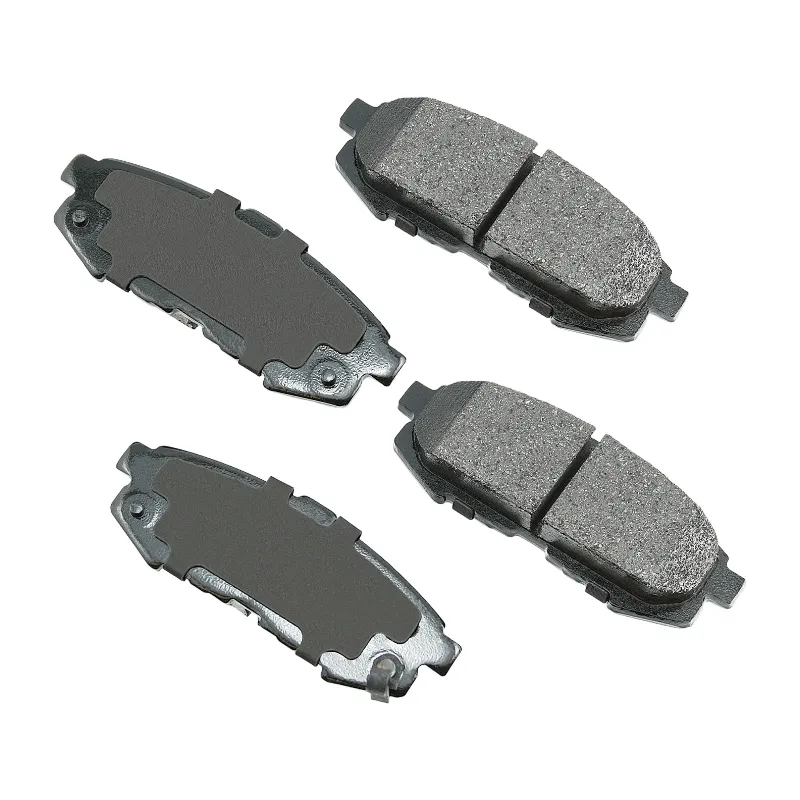
- Akebono ACT1073: a four-piece ceramic rear brake-pad set. Consider it when the official application matches and a ceramic replacement suits your driving needs.
- Bosch BE1473H: a four-piece semi-metallic rear brake-pad set. Consider it when this exact part is specified for your vehicle’s rear brake system.
How FixGo online ordering and home delivery work
FixGo offers online auto-parts shopping and nationwide home delivery in the United States. For a planned replacement with the checklist completed:
- Open the selected product page and use Add Vehicle to review your saved vehicle details against the application you identified.
- Choose Home Delivery and add your shipping address to review the available delivery information.
- Confirm the required quantity, add the parts to the cart, and review checkout before paying.
The Akebono and Bosch pages provide these shopping controls. Use the order’s delivery information to schedule the planned replacement.
For more regional driving context, see our Southern California replacement brake-pad guide.
FAQ
What should happen after replacement?
Have the rotors checked against the vehicle manufacturer’s condition and thickness requirements, and follow the applicable pad and rotor bedding instructions. Bedding helps establish proper contact between the new friction surfaces; the repair should include the required functional checks and road test. Brembo’s maintenance guidance.
Bottom line
For a planned replacement, use the fitment checklist to identify the correct part, then weigh noise, dust and heat management against your driving needs. Compare the matching Akebono or Bosch option on FixGo for competitive pricing and U.S. home delivery.
.jpg)