How to Choose Replacement Brake Pads for SoCal Daily Driving
Akebono, EngineX, and fitment-first brake pad guidance for everyday cars and SUVs in Southern California traffic, heat, and mountain-road driving.
Choosing replacement brake pads for an everyday car or SUV in Southern California is not just a brand decision. The right choice starts with exact vehicle fitment, front-versus-rear position, and the way the vehicle is actually used in LA traffic, Inland Empire heat, and weekend canyon drives.
This guide reflects FixGo's hands-on experience operating a network of 200+ partner shops across greater Los Angeles. Our technical content is reviewed by installation professionals who see these issues firsthand, every day.
TL;DR:
- Match brake pads by year, make, model, trim, and axle position before comparing brands or materials.
- For daily drivers, quiet operation, predictable cold bite, low dust, and steady freeway-stop performance matter more than track-style heat capacity.
- Southern California adds two stress tests: long stop-and-go freeway crawls and downhill heat on routes like Angeles Crest Highway and Ortega Highway.
What this guide helps you decide
- You need to replace worn pads and want a practical way to choose without guessing.
- You drive a commuter car, crossover, SUV, or light truck around greater Los Angeles.
- You are comparing ceramic-style, semi-metallic-style, and OE-style brake pad options but do not want to sacrifice quiet daily braking.
- You want to know when a product listing is actually relevant to your vehicle instead of just seeing a familiar brand name.
The plain-language answer
The best replacement brake pads are the pads that match your vehicle first and your driving pattern second. A front pad for one SUV will not necessarily fit the rear axle of the same vehicle, and a pad designed for a full-size truck is not automatically better for a compact crossover. Start with the vehicle catalog, confirm front or rear installation position, then choose the pad characteristics that fit your driving.
For most Southern California daily drivers, the sweet spot is a quiet, low-dust pad with consistent cold response. That matters on school drop-offs, grocery runs, and morning starts before the brakes are warm. For heavier SUVs or trucks, add repeated-stop stability to the list because freeway congestion on the I-405, I-5, and CA-91 can stack many low-speed brake applications into one commute.
If your tires, pressure, or suspension are also questionable, fix those issues as part of the same safety picture. Brake pads create stopping force, but the tire contact patch is still what transfers that force to the road. The tire problem self-diagnosis guide is a useful companion if the vehicle pulls, vibrates, or feels unstable under braking.
How to evaluate it step by step
1. Start with the fixed constraints
- Vehicle fitment: Confirm year, make, model, trim, engine where applicable, and whether you are buying front or rear pads.
- Axle position: Front and rear pads are separate fitment decisions. Never assume a front listing also covers the rear.
- Hardware and sensors: Check whether the listing includes wear sensors, shims, clips, or hardware. If the vehicle uses a sensor and the pad set does not include the needed part, installation becomes more complicated.
- Driving pattern: A quiet commuter pad and a high-temperature performance pad solve different problems.
- Vehicle weight: Heavier SUVs and trucks ask more from the pad during repeated stops, especially when carrying passengers or cargo.
This is why a phrase like "best brake pads for SUVs" is incomplete by itself. A Nissan Rogue, GMC Terrain, Chevrolet Tahoe, and Ford F-150 all live in the SUV-or-truck shopping universe, but the correct pad shape, axle position, and hardware are vehicle-specific.
2. Match the right option to the real use case
- If the vehicle is an everyday sedan or crossover, prioritize low noise, low dust, predictable pedal feel, and correct rear/front fitment.
- If the vehicle is a full-size SUV or pickup, prioritize stable repeated-stop feel and the correct front pad listing for the heavier platform.
- If the vehicle sees canyon descents, avoid judging pads only by dust or noise. Controlled downhill driving on Angeles Crest Highway or Ortega Highway can heat pads quickly when the driver rides the brake.
- If the vehicle mostly sits in city traffic, choose a pad that behaves well at low temperature and low speed. LA stop-and-go braking is repetitive, but not always high-speed.
Southern California is unusual because the same vehicle may crawl through downtown traffic on Friday and descend a hot mountain road on Saturday. On Angeles Crest Highway, repeated braking before paved corners can build heat even when the driver is not driving aggressively. On Ortega Highway, summer pavement and long downhill sections punish drivers who stay on the brake pedal continuously. Inland Empire commutes add another layer: hot afternoon pavement, heavy traffic, and larger family SUVs carrying passengers.
The practical move is not to buy the most aggressive pad you can find. It is to choose a correctly fitted pad that stays quiet and predictable in daily use, then drive descents with controlled speed and appropriate gearing so the brakes are not doing all the work.
3. Watch for common mistakes
- Buying by brand alone: A good brand in the wrong axle position is still the wrong pad.
- Ignoring front/rear differences: Many listings are clearly front or rear. Match the axle being serviced.
- Assuming every listing includes hardware: Clips, shims, lubricant, and sensors vary by product.
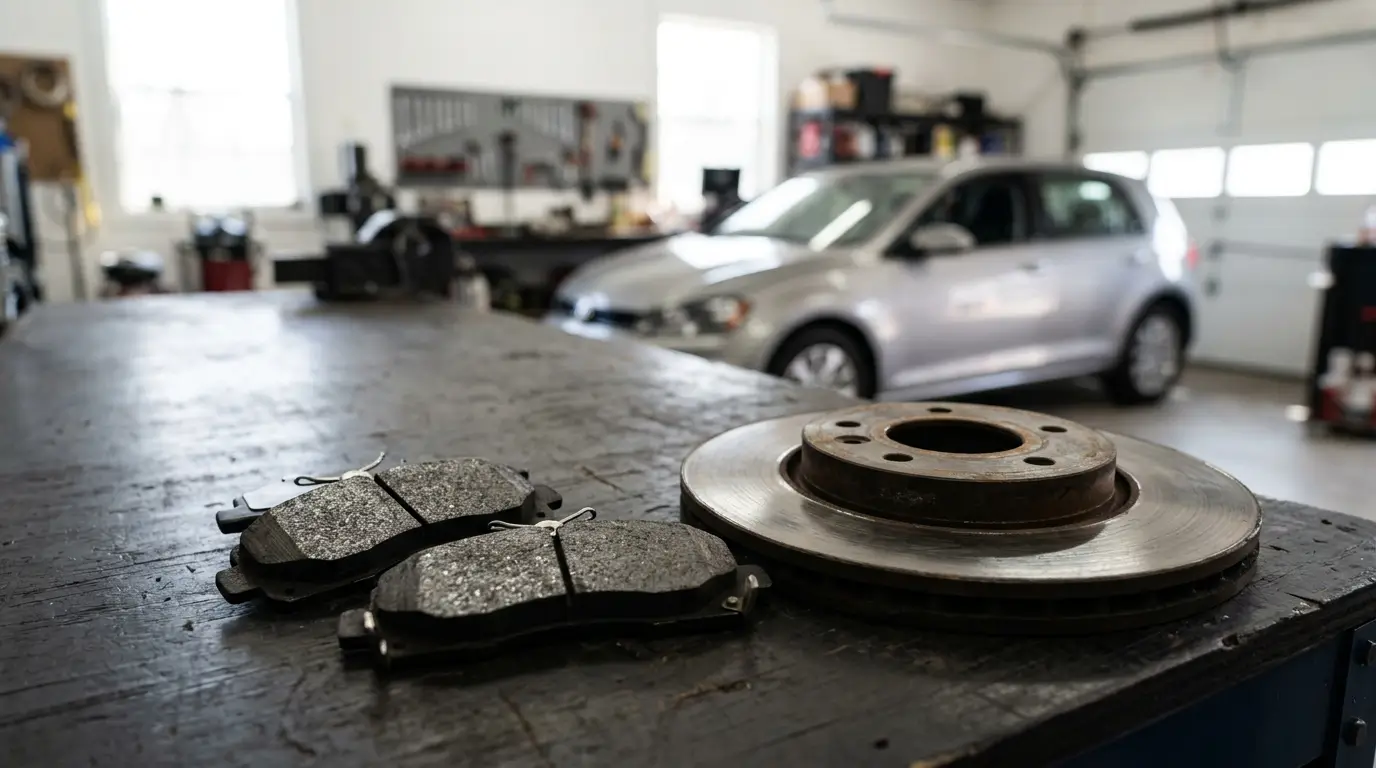
- Waiting for grinding: Grinding usually means pad material is gone and the rotor may already be damaged.
- Replacing pads while ignoring tires: Old, underinflated, or unevenly worn tires reduce braking confidence. The correct tire inflation pressure guide explains why door-jamb pressure matters more than sidewall maximum pressure.
Brake pad specs at a glance
Brake pads do not use tire sizing, load index, ply, or speed ratings. Those tire columns are included here as non-applicable safety fields so the table stays explicit about what does and does not govern brake pad fitment.
| Product | Sizes (Position) | Load Index | Ply | Speed Rating | SoCal Typical Use |
|---|---|---|---|---|---|
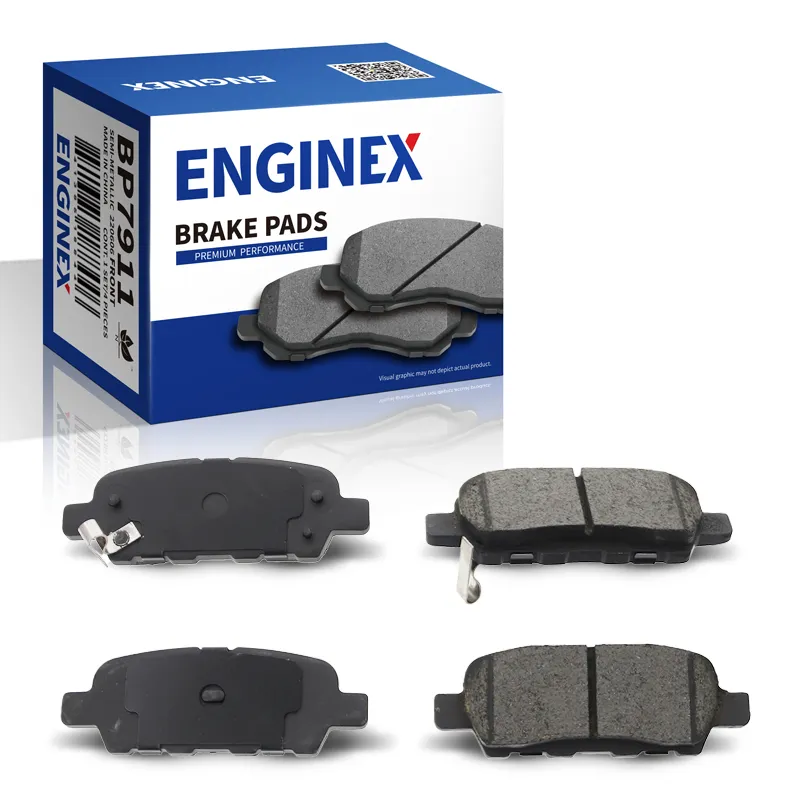
| EngineX CE2002 Rear Nissan/INFINITI set. |
Rear (OEM Fit) | N/A | N/A | N/A | SGV Nissan commute; quiet, low-dust I-10/I-605 traffic. |
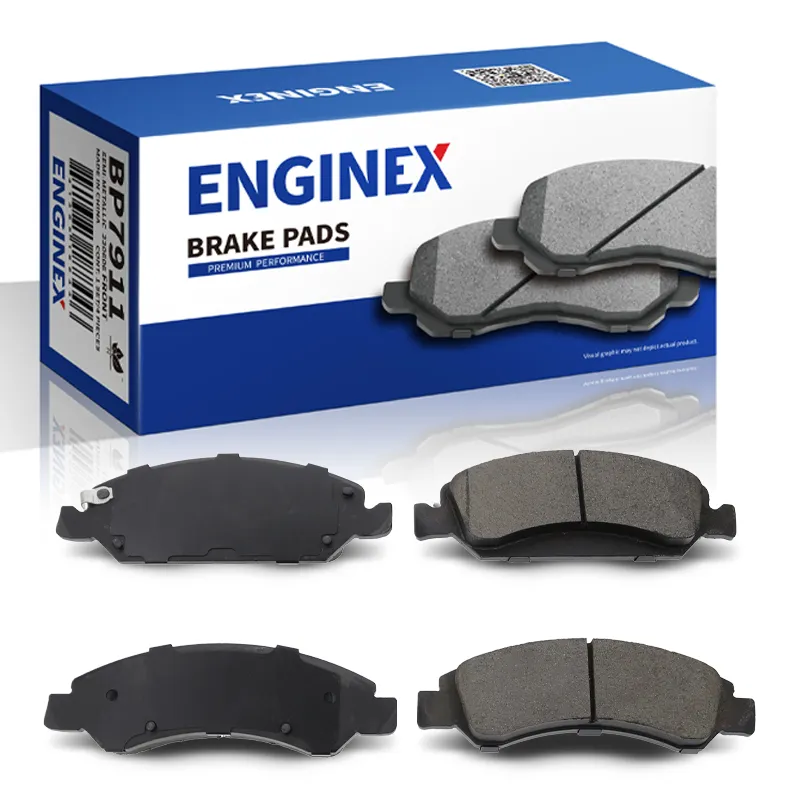
| EngineX CE1001 Front GM truck/SUV set. |
Front (OEM Fit) | N/A | N/A | N/A | Inland Empire GM SUV/truck; CA-91/I-15 slowdowns. |
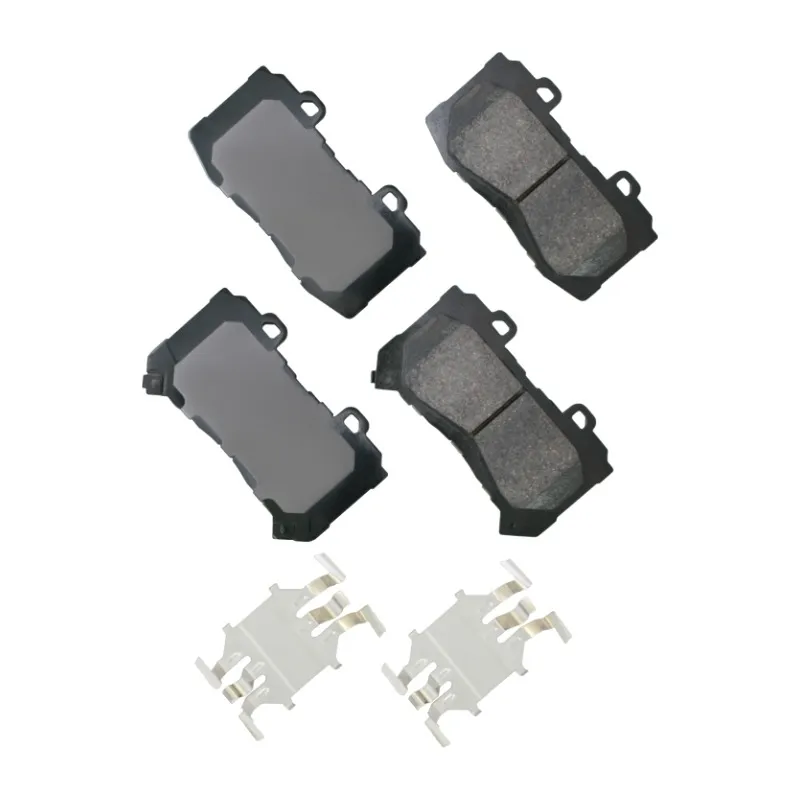
| Akebono ACT1802 Front Colorado/Terrain/Canyon set. |
Front (OEM Fit) | N/A | N/A | N/A | OC/Riverside compact SUV or truck; daily streets/freeways. |
Practical recommendations
Best fit for common Nissan commuters and crossovers
The ENGINEX BRAKE PADS CE2002 4 Pcs listing is a rear brake pad set with fitment examples that include Nissan Altima, Rogue, Sentra, Pathfinder, Murano, Maxima, LEAF, and related INFINITI applications. The product page lists noise-free braking, long pad wear, and dust-free positioning, which matches what many LA daily drivers ask for: a pad that behaves cleanly in traffic without making every stop feel like a performance event.
- Why it fits: It lines up with a common SoCal vehicle pattern: sedans and crossovers used for long commutes, errands, and family driving.
- Tradeoffs: It is rear-position specific. Confirm the rear axle and vehicle fitment before ordering.
- Best for: Drivers replacing rear pads on compatible Nissan or INFINITI applications who want a value-focused daily-use option.
Best fit for full-size SUVs and pickups
The ENGINEX BRAKE PADS CE1001 4 Pcs listing is a front brake pad set for selected Chevrolet Silverado 1500, GMC Sierra 1500, Chevrolet Tahoe, GMC Yukon, Chevrolet Suburban, Cadillac Escalade, and related applications. The verified listing identifies front installation position, 4-piece quantity, standard series, iron backing material, mechanical wear sensor type, and pad wear sensor inclusion.
- Why it fits: Full-size SUVs and pickups place more demand on the front brakes during repeated freeway slowdowns.
- Tradeoffs: It is not a universal truck pad. Confirm the exact model year and application on the product page.
- Best for: Compatible Silverado, Sierra, Tahoe, Yukon, Suburban, and Escalade drivers who want a practical front-pad option for daily SoCal use.
Better fit when OE-style brand familiarity matters
The AKEBONO BRAKE PADS ACT1802 4 Pcs listing is a front brake pad set with fitment examples including Chevrolet Colorado, GMC Terrain, and GMC Canyon. The listing emphasizes superior stopping power, OE-level quality, and longer life.
- Why it fits: Some drivers prefer a familiar OE-style brand when replacing pads on a daily-use compact truck or SUV.
- Tradeoffs: Fitment is still the first filter. Do not choose it unless the catalog confirms your vehicle and front axle position.
- Best for: Compatible Colorado, Terrain, and Canyon owners who want a familiar brand reference point.
Fitment, maintenance, or ownership notes
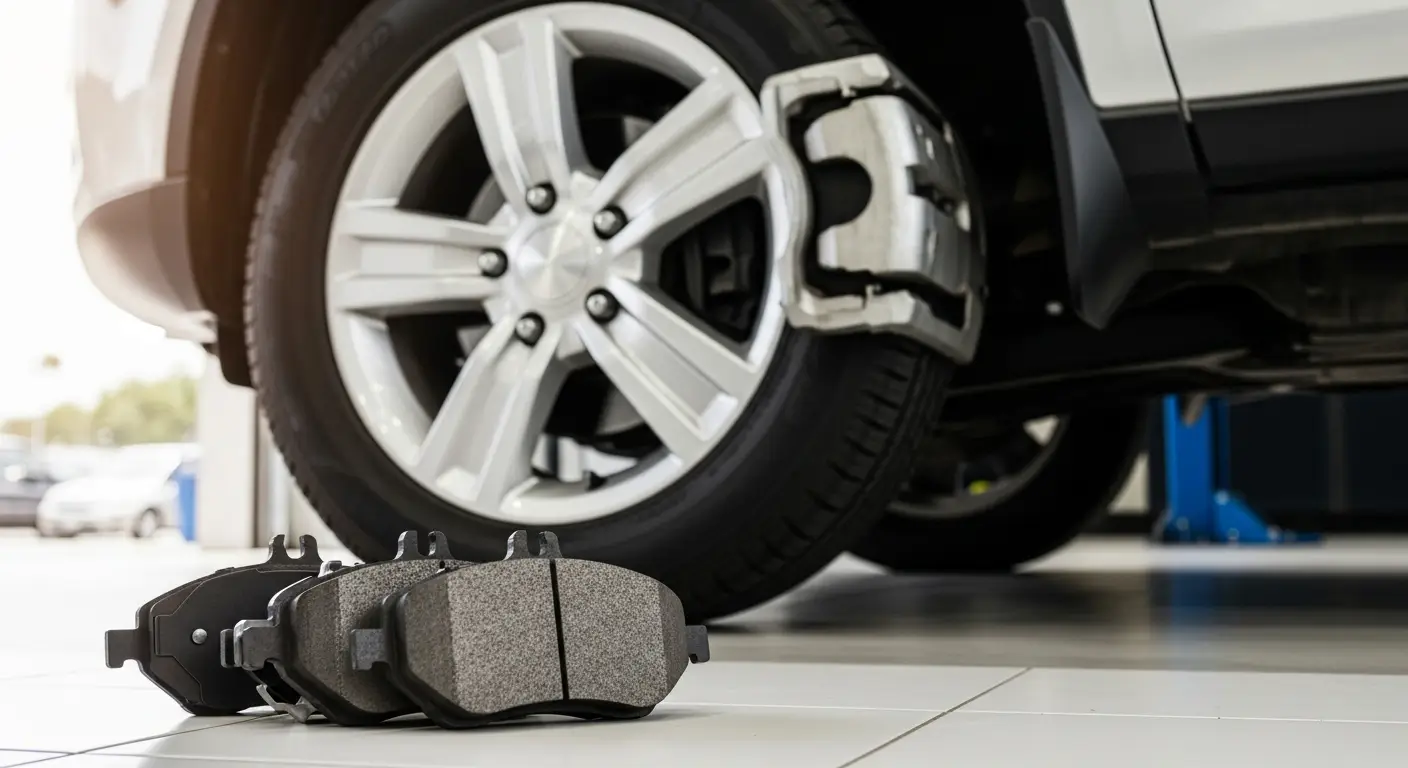
Check the axle position before checkout. Brake pads are usually listed as front or rear. If the vehicle needs pads on both axles, treat that as two fitment checks.
Use symptoms as timing clues, not product selectors. Squeal, a wear light, longer pedal travel, or visible thin pad material can tell you it is time to inspect. They do not tell you which pad fits.
Pair pad replacement with a rotor inspection. New pads on damaged rotors can still make noise or vibrate. If you feel pulsing under braking, have the rotor and caliper hardware checked before assuming the new pad is the issue.
Think about the whole stopping system. Tires, pressure, alignment, and suspension all affect how the vehicle feels during braking. If your tire tread is old or uneven, read when to replace tires for LA drivers before treating brake pads as the only safety item.
Adjust for SoCal routes. Downtown LA traffic is mostly repeated low-speed heat cycles. Angeles Crest Highway adds sustained downhill braking into corners. Inland Empire summer traffic adds ambient heat. A good daily pad should stay predictable across those normal use cases, not just look good in a catalog.
FAQ
Are ceramic brake pads always better for everyday cars?
A: Not always. Ceramic-style pads are often chosen for quiet operation and lower dust, which can be helpful for commuters, but the correct fitment and vehicle use case matter first. A properly matched daily-use pad is better than a premium-sounding pad that does not match the axle or hardware.
Should I replace front and rear brake pads at the same time?
A: Not automatically. Front and rear pads can wear at different rates, and each axle uses its own fitment. Inspect both axles, replace what is worn, and confirm each pad set by exact vehicle application.
What matters more for SUVs: brand or heat resistance?
A: Brand reputation helps, but correct fitment and repeated-stop stability matter more. A heavier SUV descending Ortega Highway or slowing repeatedly on CA-91 needs pads that stay consistent under normal heat load. The product must still match the vehicle, axle position, and hardware needs.
Can I install brake pads myself?
A: Some experienced owners can, but brake work is safety-critical. If you are unsure about caliper hardware, sensors, rotor condition, or bedding procedure, use a professional installation partner. A brake pad job is not the place to learn by trial and error.
Bottom line
- Choose ENGINEX CE2002 if your confirmed fitment is a compatible Nissan or INFINITI rear brake application and you want a value-focused daily-use pad.
- Choose ENGINEX CE1001 if your confirmed fitment is a compatible full-size GM front brake application and your priority is practical SUV or pickup braking for Southern California commuting.
- Choose AKEBONO ACT1802 if your confirmed fitment is a compatible Colorado, Terrain, or Canyon front application and you prefer a familiar OE-style brand option.
- If unsure, start with the vehicle catalog and axle position before comparing brands, materials, or claims.
FixGo helps Southern California drivers compare current brake pad options at competitive prices, ship eligible auto parts directly, and arrange service through partner shops when installation support is available. If you are replacing pads for a commuter car in Alhambra, a family SUV in the San Gabriel Valley, or a pickup that sees Inland Empire freeway traffic, start with exact fitment, then use FixGo's partner network and customer support to schedule the right next step.