A cabin air filter replacement starts with identifying the symptom and ends with checking the vents after installation. Work through these five questions to choose the right part, prepare the complete package, and plan your replacement.
1. Is the cabin air filter failing?
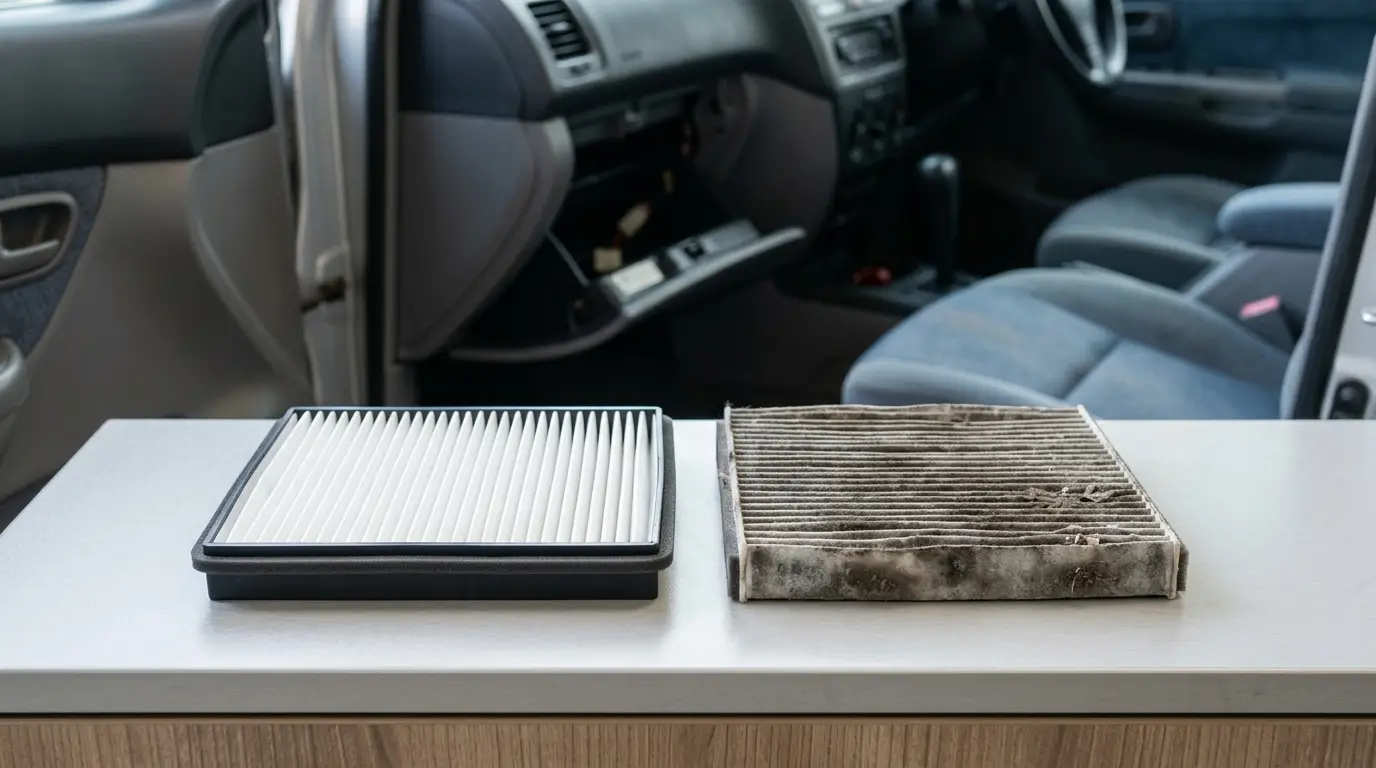
Reduced HVAC airflow: Compare vent output at the same fan setting you normally use. Inspect the filter for heavy dirt or debris when airflow becomes weak; restriction can reduce ventilation. Follow the vehicle's maintenance schedule, and investigate airflow that stays weak after replacement. FRAM's symptom guide identifies reduced airflow, dusty vents, and louder fan noise as warning signs.
Musty AC odors: Check the filter, but do not assume it is the only cause. Moisture on AC components can support mold and bacteria, particularly around the evaporator. If an appropriate filter replacement does not clear the smell, arrange an AC inspection. DENSO explains recurring AC odors.
Whistling noises: Note which fan speeds produce the sound and whether it started after a filter change. Include filter seating and the housing cover in your inspection; a whistle alone does not identify the failed part. Recheck installation before buying another filter.
Seasonal pollen and dust: Use a seasonal reminder to inspect accumulated debris and review the replacement history. Cabin filters capture dust and pollen, and dusty driving can require earlier replacement. Follow your vehicle's interval rather than assuming one schedule fits every car. FRAM's cabin-filter overview covers these conditions.
2. How to choose the exact part and position
Identify the cabin filter, then check fitment
The cabin filter serves the passenger-compartment HVAC system, often behind the glovebox; other locations include under the dashboard or near the windshield base. The engine air filter sits near the engine intake and filters air for the engine. Confirm the location in your manual before opening a housing. FRAM explains the two locations and functions.
Use FixGo's vehicle filter to narrow the catalog by Year, Make, Model, AND Engine. Before ordering, verify:
- Part and position: Match the cabin-filter part number and listed installation position to your vehicle's application.
- Dimensions: Compare the listed length, width, and thickness with the specified replacement; a similar photograph is insufficient.
- Tray and connections: Check the frame shape, retaining tabs, and tray fitment. If access involves a glovebox electrical connector, check the vehicle's release and reconnection procedure; do not treat that connector as a filter specification. FRAM's installation guide illustrates this distinction.
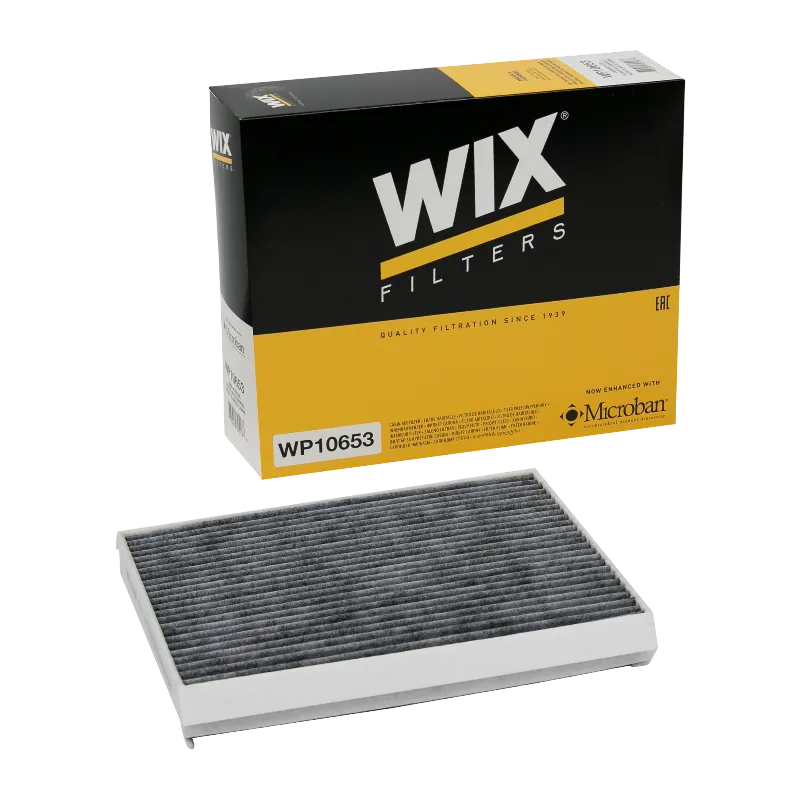
The WIX Cabin Air Filter WP10653 on FixGo requires an exact Year, Make, Model, AND Engine match. WIX's application list includes Ford Expedition 2018–2024 with a 3.5L V6 engine and Lincoln Navigator 2018–2024 with a 3.5L V6 engine, plus compatible F-150 applications with specific year and engine combinations. Verify your engine displacement before ordering; a matching model name or year alone does not confirm fitment.
Read the arrow's label
An AIR FLOW arrow follows the air's direction through the filter. An UP arrow identifies the upright orientation. These markings are not interchangeable: use the housing markings and vehicle-specific instructions, rather than assuming every arrow points down. FRAM explains filter orientation.
3. What is included in the package?
Check the exact listing's contents before ordering and compare the box contents on arrival:
- Single element or paired set: Confirm both the number of pieces your vehicle requires and the number supplied. Some systems use one element; others use two sections, as shown in WIX's two-section installation instructions.
- Installation instruction sheet: Check that the sheet matches your part and vehicle. If absent, obtain the matching manufacturer's instructions before starting.
- Tray or additional hardware: Confirm what is included and what must be reused. For example, FRAM's frame-style instructions reuse the filter frame. Do not assume a new tray, housing cover, or clips come with an element.
For WP10653, confirm the package quantity and included instructions on the exact listing or with FixGo before checkout.
4. Can you replace it yourself?
Read the vehicle's procedure first and check the required tools. The following sequence is for glovebox-access layouts; use your exact instructions if the housing is elsewhere or the glovebox fasteners differ.
- Prepare the access area. Empty the glovebox, protect the footwell, and switch off the HVAC blower before opening the filter housing. Follow any vehicle-specific preparation steps.
- Lower or remove the glovebox. Where specified, detach the damper arm, release the side stops, and lower the box. Remove screws or disengage hinges only as directed; support the box and follow instructions for any electrical connector.
- Release the filter-cover latches. Locate the housing, disengage its retaining tabs, and lift away the cover without forcing it. WIX's glovebox example shows the stop, hinge, and cover-tab sequence.
- Withdraw the old filter carefully. Support it as you pull it out; avoid tipping or shaking debris into the housing or footwell. Clear accessible loose debris around the opening. DENSO warns that careless removal can spill contaminants into the intake or cabin.
- Fit the replacement and close up. Compare its shape with the specified part, seat it in the correct tray or housing, and follow its labeled orientation. Latch the cover fully, then restore the glovebox, damper, connectors, and fasteners according to the manual.
FixGo delivers WIX WP10653 to your home only; this item does not support Greater Los Angeles partner-shop installation. Review the home-delivery timing below when planning your replacement.
5. How do you verify the job is complete?
With the filter, cover, and glovebox reassembled, run the HVAC blower through all fan speeds, from low to high. Use this final checklist:
- Check for clean, unobstructed airflow without visible dust blowing from the vents.
- Compare airflow and odor with your observations before replacement.
- Listen for whistling, rattling, or vibration at each speed.
If a new noise appears, switch the blower off before rechecking filter seating and cover latches. Persistent weak airflow, noise, or musty odor needs further diagnosis; do not assume another filter will solve it. This checks operation, not measured air purity.
FAQ
Does an UP arrow show airflow direction?
No. UP describes physical orientation; AIR FLOW follows the air through the filter. Match each label to the vehicle's instructions.
Should the box contain one filter or two?
Confirm the vehicle's required quantity and the exact package contents before ordering; a two-section system needs both sections.
Bottom line
Inspect the symptom, confirm fitment and contents, install with the correct orientation, and check every fan speed before calling the job complete.
Order the matched filter through FixGo
FixGo offers free nationwide U.S. home delivery for this cabin air filter, with home delivery only. Fitment-confirmed orders dispatch in 1–2 business days, with delivery generally 3–7 days after dispatch, depending on carrier transit and your address. Keep dispatch time separate from delivery time when planning the job.
FixGo also offers 90-day hassle-free returns with a free return shipping label. Check the part number, dimensions, and package contents when your order arrives, before beginning installation.
If your vehicle calls for WP10653, view the WIX cabin filter on FixGo, confirm its exact Year, Make, Model, Engine, and package contents, and order it for home delivery.