
 Back
BackCan You Mix Tire Sizes? The Complete Guide to Staggered Tire Setups
Learn about staggered tire setups, why some performance vehicles use wider rear tires, and how to safely order and rotate staggered tires.

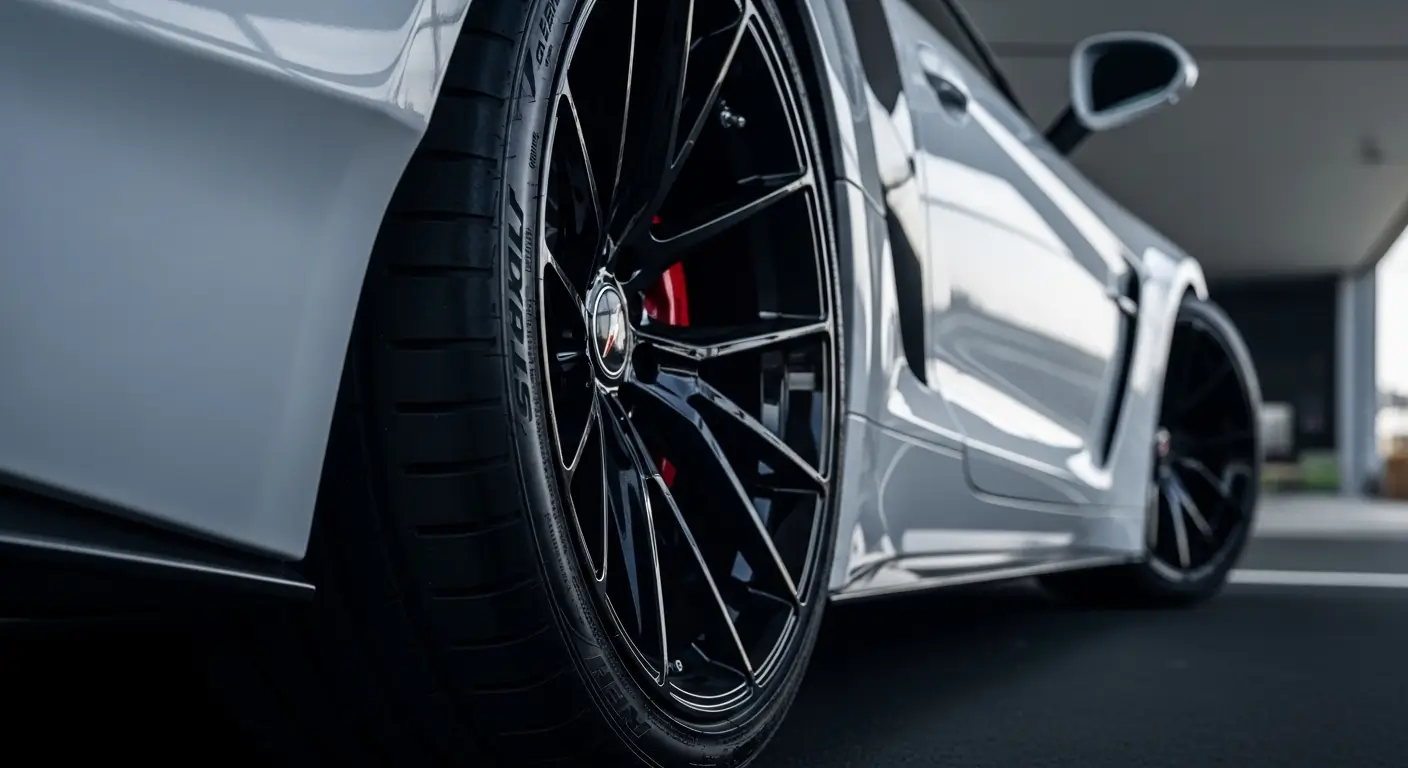
If you are shopping for new rubber or diagnosing handling issues on your vehicle, you might be wondering: Can You Mix Tire Sizes on the same car?
This guide reflects FixGo's hands-on experience operating a Southern California partner network, including 200+ partner shops across greater Los Angeles and 20+ partner shops in the San Diego area. Our technical content is reviewed by installation professionals who see these issues firsthand, every day.
What this guide helps you decide
This guide is designed to clarify the physical requirements, risks, and ordering rules associated with mixing tire sizes on various vehicles.
- Learn whether mixing tire sizes is ever acceptable.
- Understand the mechanical reasons behind staggered setups.
- Avoid critical mistakes that could destroy your drivetrain or electronic systems.
- Master the precise rules for rotating and purchasing staggered tires.
Plain-language answer: Can you mix tire sizes?
The direct, definitive answer is: No. You should never randomly mix different tire sizes, brands, or tread patterns on your vehicle, unless your vehicle was originally engineered from the factory with a staggered tire setup (wider rear tires).
Mixing mismatched tire sizes on a standard, non-staggered car is highly dangerous. It can severely damage your All-Wheel-Drive (AWD) or 4WD drivetrain, corrupt your ABS and traction control calibrations, and lead to unpredictable, hazardous handling on high-speed Southern California freeways.
How to evaluate staggered tire setups
A staggered tire setup (also known as a staggered fitment) means that the wheels and tires on the rear axle of the vehicle are physically wider than those on the front axle.
This configuration is engineered by vehicle manufacturers for specific performance reasons:
- Maximum Power Delivery: Wider rear tires provide a larger contact patch with the road. This is critical for high-horsepower rear-wheel-drive sports cars, luxury sedans, and high-performance electric vehicles (such as the Tesla Model Y Performance) to put their power down without spinning the tires.
- Precise Steering: Narrower front tires maintain agile, responsive steering feel with reduced rolling resistance, helping you carve through the paved switchbacks of the Angeles Crest Highway (SR-2) or navigate tight coastal corners on the Ortega Highway.
- SoCal Asphalt Performance: On hot Southern California highways, asphalt temperatures can soar. Staggered setups optimize load and heat distribution, keeping high-torque vehicles stable and planted during intensive driving.
The Critical Dangers of Mixing Tires on Standard Vehicles
If your car was originally designed with identical tires on all four corners (a square setup), trying to mix tire sizes can cause immediate physical and electronic failures:
- ⚙️ Drivetrain Destruction (AWD / 4WD): On All-Wheel-Drive and Four-Wheel-Drive vehicles, all four tires must rotate at virtually identical speeds. Even a tiny difference in tire diameter (for example, putting 225/65R17 tires on the front and 235/65R17 on the rear) forces the center differential or transfer case to work constantly to make up for the rotational speed difference. This generates extreme friction and heat, which can destroy a multi-thousand-dollar transfer case within a few miles of driving on the freeway.
- 🧠 ABS and Traction Control Malfunctions: Modern vehicles use wheel speed sensors to monitor traction. When you mix different tire sizes, they rotate at different speeds. The onboard computer detects this speed discrepancy and mistakes it for tire slippage. This causes the Anti-lock Braking System (ABS), Traction Control (TCS), and Electronic Stability Control (ESC) to malfunction, trigger dashboard warning lights, or engage unexpectedly, which is extremely dangerous.
- 🏎️ Severe Handling Imbalances: Mixing different brands or models of tires—even if they are technically the same size—results in mismatched grip levels. If your front axle has high-grip touring tires and your rear axle has budget tires, your vehicle will exhibit dangerous handling characteristics, such as sudden oversteer or understeer under emergency braking on the coastal I-5.
Standard Staggered Configurations & Key Specs
Below is a quick reference table of standard factory-staggered configurations commonly serviced across our Southern California network:
| Sizes | Load Index | Ply | Speed Rating | SoCal Typical Use |
|---|---|---|---|---|
| F: 255/35R21 R: 275/35R21 |
F: 98 R: 103 |
XL | Y (186 mph) | Model Y / I-15 heat |
| F: 225/40R19 R: 255/35R19 |
F: 93 R: 96 |
XL | W (168 mph) | BMW 3-Series / Ortega |
| F: 235/40R19 R: 265/35R19 |
F: 96 R: 98 |
XL | Y (186 mph) | Model 3 / Coastal I-5 |
| F: 205/55R16 R: 225/50R16 |
F: 91 R: 92 |
Standard | V (149 mph) | Miata / Angeles Crest |
Golden Rules of Staggered Tire Rotation
Tire rotation is essential for extending tread life, but staggered setups have extreme mechanical limits that must be followed.
⚠️ CRITICAL ROTATION WARNING: Before performing any tire service, you must always consult your Vehicle Owner's Manual, inspect the Directional Tread Markings (arrows on the tire sidewall), and strictly verify your Front-to-Rear Sizing Configurations.
Depending on your tires' design, follow these strict physical rotation rules:
Rule 1: Non-Directional Staggered Tires
If your tires are non-directional (the tread pattern is symmetrical or asymmetrical but not directional), you cannot rotate them front-to-back due to the different sizes. However, you can rotate them side-to-side:
- Move the front-left tire to the front-right position.
- Move the rear-left tire to the rear-right position.
Rule 2: Directional Staggered Tires
If your tires are directional (they have an arrow on the sidewall showing they must only roll in one forward direction), they cannot be rotated at all under normal circumstances.
- Swapping them front-to-back is blocked because the front wheels are narrower than the rears.
- Swapping them side-to-side is blocked because it would force the directional tread to rotate backward.
- The only way to rotate them is to physically unmount the tires from the wheels, flip them, and remount them on the opposite side of the vehicle. This is usually not recommended or cost-effective.
Platform Ordering Rules for Staggered Sizing
Because staggered tire setups require two different tire specifications (front and rear), purchasing them online requires a specific workflow to guarantee fitment accuracy and safety.
On the FixGo platform, tire transactions are processed via a direct, single-specification checkout. To prevent ordering errors, tire products do not support shopping cart accumulation. This means you cannot add two different tire sizes to the same cart and check out together.
For staggered setups, you must place two entirely separate orders on our website:
- Locate your front tire size ➡️ Select quantity (usually 2) ➡️ Click "Buy Now" and complete the checkout and payment.
- Return to the product listing ➡️ Locate your rear tire size ➡️ Select quantity (usually 2) ➡️ Click "Buy Now" and complete the second payment.
Both orders will be shipped directly to your selected partner shop, where our installation partners will mount and balance them for you during your service.
FAQ
Can I mix tire brands if I have a staggered setup?
A: It is highly recommended to keep the same brand, model, and tread pattern across all four wheels to maintain predictable traction, braking, and handling balance, especially during wet road conditions.
Can I order staggered tires in a single transaction?
A: No. Because our tire checkout does not support cart accumulation, you must place two entirely separate orders on our website (one for the front size, one for the rear size) or contact our customer support team for help.
What happens if I rotate staggered tires front-to-rear by mistake?
A: The wider rear wheels will rub against the front wheel arches, suspension components, and steering linkages during turns, causing dangerous handling and physical damage to your car. Always check the vehicle owner's manual first.
Bottom line
- Never mix tire sizes on standard, square-fitment vehicles.
- For factory staggered setups, keep the same tire brand, model, and tread depth on all four corners to maintain optimal handling safety.
- Emphasize the Vehicle Owner's Manual, directional markings, and sizing limits whenever executing or scheduling tire rotation.
- Place your staggered purchase as two separate orders on our platform to complete your transaction smoothly.
If you are ready to replace your staggered tires, FixGo offers competitive pricing and hassle-free local installation. In the greater Los Angeles area, tire delivery usually takes 1-3 days, with EngineX tires offering next-day delivery to our extensive partner network. For customers in the San Diego area, tire delivery is typically completed within 3-5 business days. All of our orders are shipped directly to our partner network, including 200+ partner shops across greater Los Angeles and 20+ partner shops in the San Diego area. Please note that tire pickup is only supported at dedicated warehouses and designated pickup points; we encourage you to use our online locator map to find your nearest pickup-supported location. For direct assistance from our technical experts, feel free to call our friendly support line at 888-693-4946.