Short Answer
Directional tires mounted backwards can lose some of their intended wet-road performance and hydroplaning resistance. Incorrect direction alone does not normally ruin the tire immediately, but the orientation should be corrected promptly.
Bridgestone's tread guidance explains the water-clearing design; Continental's mounting guidance recommends correction as soon as possible.
What Changes When a Directional Tire Runs Backwards?
Reduced Water Evacuation and Hydroplaning Resistance
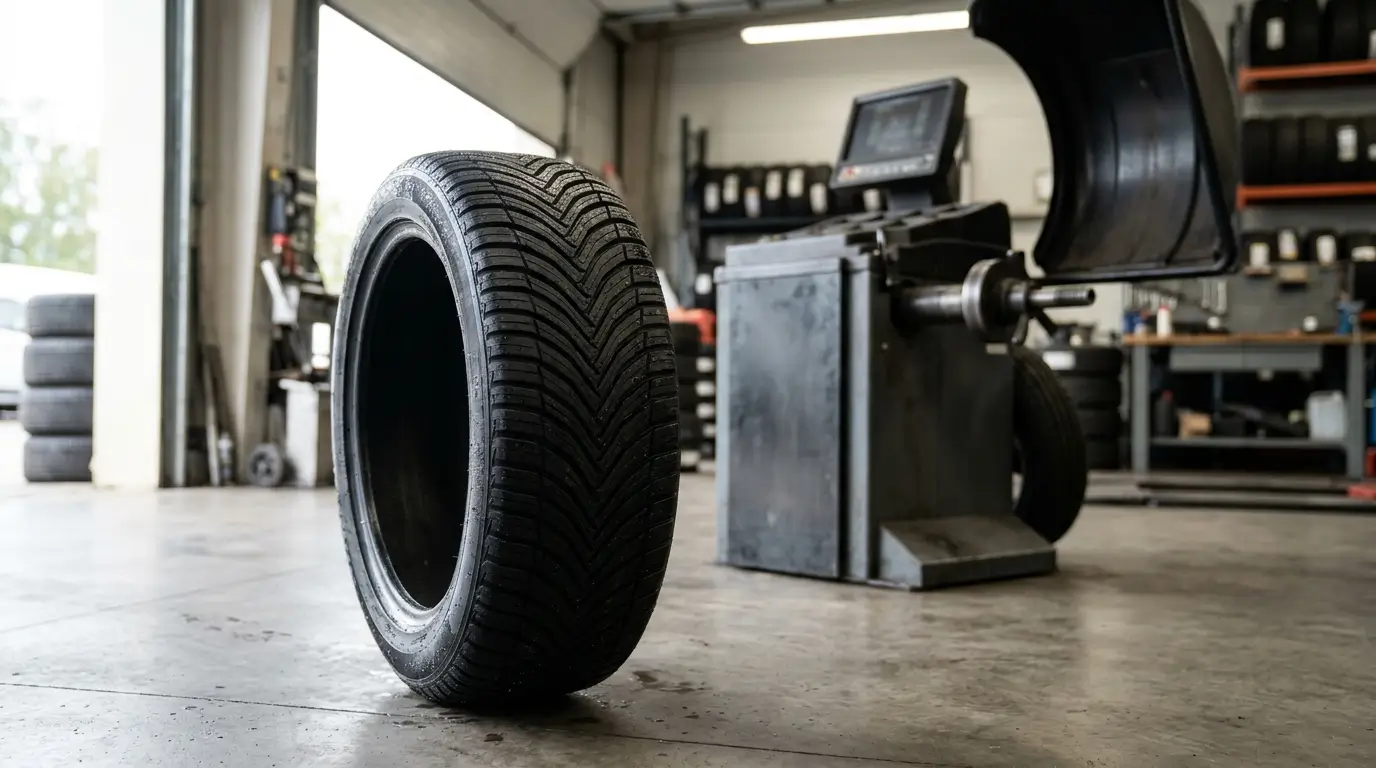
Directional tread often uses angled grooves that meet in a V-shaped pattern. In the intended rolling direction, those channels help move water away from the contact patch. Running backwards can reduce that drainage capability and the hydroplaning resistance it provides. Continental explains directional tread design.
Hydroplaning occurs when water separates the tire from the road, reducing steering and braking control. Tread depth, water depth and speed also affect the risk, so correct mounting is only part of wet-road preparation. Bridgestone's hydroplaning guide
Possible Changes in Noise and Vibration
Continued reverse-direction use may increase road noise inside the vehicle or produce vibration. Neither symptom is guaranteed, and a quiet, smooth ride does not confirm correct mounting. ETRTO lists these as possible effects of continued use against the marked direction. ETRTO passenger-car recommendations
Possible Uneven Wear
Extended use in reverse may also contribute to irregular tread wear. It does not mean every backward tire will develop the same pattern. ETRTO's directional-tire guidance
Inflation, alignment and suspension problems can cause uneven wear too. Have the cause assessed instead of attributing all visible wear to tread direction. Michelin's wear guidance
Dry-Road Performance May Seem Normal
On a dry road, there is no water layer for the grooves to clear. That helps explain why a driver may notice little difference during ordinary dry driving even when the tire is backwards. A normal feel on dry pavement therefore does not demonstrate that the tire will deliver its intended wet-weather performance. Continental's explanation of water displacement
Is It Safe to Drive With Directional Tires Mounted Backwards?
ETRTO's passenger-car guidance does not generally classify reverse mounting alone as an immediate unsafe condition. It nevertheless discourages the practice and treats it as temporary. That general guidance should not be read as a guarantee of unchanged wet grip. ETRTO passenger-car recommendations
Arrange correction promptly. Until then, reduce speed in rain, leave extra following distance and avoid standing water. There is no universal safe distance or speed: the tire's condition and road conditions matter. Bridgestone's wet-road precautions
Does Backward Mounting Damage the Tire?
Incorrect direction alone does not normally cause immediate tire damage. Continental gives that general reassurance while noting that other mechanical issues can change the situation. Continental mounting guidance
Continued use, existing wear and underinflation still need attention. Tell the technician about low-pressure driving and any new symptoms; have the tire inspected before remounting, including its interior if it is removed. Michelin's inspection guidance and tire-care FAQs
How to Confirm That a Directional Tire Is Backwards
Look for the molded ROTATION or DIRECTION arrow on the sidewall. On the upper half of the tire, the arrow should point toward the front of the vehicle. Check each tire separately. Continental's illustrated arrow guidance
INSIDE and OUTSIDE identify asymmetric mounting orientation, rather than forward rotation. Follow every applicable molded marking; tread appearance alone does not determine correct fitment. Michelin's pre-mounting checks
How to Correct a Directional Tire Mounted Backwards
When Complete Wheel Assemblies Can Be Swapped
If compatible left and right wheel-and-tire assemblies were simply installed on the wrong sides, exchanging them may correct both arrows without removing the tires from the wheels. This follows from the way crossing an assembly to the opposite side reverses its rolling direction relative to the car. Continental's rotation explanation
The installer must confirm that the complete assemblies fit their intended positions and that every sidewall marking is satisfied. Do not cross a correctly installed directional tire as a routine rotation shortcut.
When the Tire Must Be Demounted and Remounted
If the tire is incorrectly oriented on its wheel and a compatible assembly swap cannot correct it, a professional must demount and remount it. Continental's correction guidance
Staggered front/rear sizes, wheel specifications or side-specific markings can restrict exchanges. Staggered sizes do not automatically prevent a compatible left/right swap on the same axle. A tire with both asymmetric and directional requirements must satisfy both; flipping a tire cannot make the wrong side-specific version suitable. Michelin's directional-tire FAQ and wheel-fitment guidance
Is Balancing Required?
Balance the assembly after the tire has been removed and remounted. Michelin recommends balancing tires when mounted on wheels. Michelin tire-care FAQs
A simple position swap does not itself change an intact assembly's weight distribution. It therefore does not automatically require rebalancing if the assembly was already balanced and no vibration, damage or missing balance weights are present. Have new symptoms checked and follow manufacturer guidance. Michelin's explanation of assembly balance
Does the Tire Need to Be Replaced?
Replacement is not automatic. The assessment depends on remaining tread, uneven wear, bead damage and sidewall damage. Tell the technician how long the tire ran backwards; that history helps the inspection but is not a fixed replacement deadline. A damaged or excessively worn tire may need replacement even after its direction is corrected. Michelin's inspection guidance and wear guidance
FAQ
Can I drive to a tire shop with the tire backwards?
Reverse direction alone does not automatically rule out a trip for correction, but ETRTO treats it as temporary. Contact the shop about tire condition and weather before setting out; do not assume a particular distance is safe. ETRTO recommendations
Will reversing the tire fix existing uneven wear?
No. Correcting orientation cannot replace rubber already worn away. The technician should assess the remaining tread and any underlying cause before deciding whether reuse is appropriate. Michelin on irreversible wear
Can I correct it by rotating the tires?
A routine front-to-rear move on the same side preserves the existing direction, so it will not fix a backward tire. A compatible left/right assembly exchange can help only in the misplaced-assembly situation described above. Michelin's directional rotation guidance
Are asymmetric tires the same as directional tires?
No. Asymmetric tires have different inner and outer tread zones; directional tires specify a rolling direction. Some combine both designs and require side-specific fitment. Follow all markings. Michelin's tread-design FAQ
Bottom Line
Backward directional tires may appear normal on dry roads but lose part of their intended wet-road and hydroplaning performance. Confirm the sidewall arrow and correct the installation promptly. Replacement is usually unnecessary unless inspection finds damage or unacceptable wear. Bridgestone tread guidance and Continental mounting guidance