Wondering whether your no-start problem comes from the battery or alternator? Start with the symptoms and a few measurements before buying either part.
This guide covers conventional combustion-engine vehicles with a 12V lead-acid battery and a belt-driven alternator. Use your vehicle's service instructions for the exact test conditions; this is not a hybrid or high-voltage repair procedure.
What the battery and alternator each do
The battery stores the energy that powers the starter to crank the engine. Once the engine runs, the alternator supplies electrical power and replenishes the battery. The battery can still supplement the alternator when electrical demand exceeds its output. That relationship explains why a charging fault can eventually look like a dead battery. See Interstate's starting-system explanation and DENSO's alternator overview.
Read the symptoms before reaching for parts
If the charging warning light comes on while driving, pull over safely and follow the owner’s manual. Do not assume the vehicle can keep running on battery power. If you notice burning smells, smoke, overheating, sudden steering difficulty, or a damaged drive belt, stop safely, switch off the engine, and arrange roadside assistance. Do not restart the engine to continue testing. Mazda warning-light guidance, Hyundai overheating guidance, Interstate battery-overheating guidance.
Slow cranking or repeated jump-starts: begin with battery charge and condition. A successful jump-start does not identify why the battery became discharged. If the engine cranks normally but never fires, ignition or fuel problems may need investigation instead. Interstate explains these different no-start patterns.
Dimming headlights or accessories malfunctioning while driving: these move the charging system higher on the checklist. A radio that cuts out or electrical equipment that slows down deserves investigation alongside the battery lamp. Bosch Car Service lists these charging-related symptoms.
Whining, growling or grinding near the front of the engine: have the noise localized before ordering an alternator. Bearings, the belt drive and other alternator faults can create abnormal noise; sound alone cannot identify the failed component. DENSO's diagnostic guidance and Gates' tensioner bulletin both point to overlapping causes.
A battery light that stays on after a new battery: arrange charging-system diagnosis. Replacing the battery does not repair a belt, wiring, regulator or alternator fault. DENSO recommends checking those causes before replacing another component. DENSO fault diagnosis.
Burning rubber or electrical-wire smell: stop the test and arrange inspection. Belt tension loss can create heat, and charging connections can overheat or melt. Treat the smell as a reason to stop, rather than proof that the alternator itself failed. Gates belt-drive guidance, DENSO charging-connection checks.
How to check the battery and charging system with a multimeter
1. Make the test area safe
Wear suitable eye protection, remove metal jewelry, and keep sparks, flames, and cigarettes away from the battery. Prevent tools or probes from bridging the positive terminal to the vehicle body or the opposite terminal. Do not charge or jump-start a frozen, leaking, swollen, visibly damaged, or unusually hot battery; stop and seek professional help. NOCO battery safety instructions, Interstate battery-overheating guidance.
Park securely, select Park or Neutral as appropriate and apply the parking brake. Keep hands, clothing and test leads clear of belts and fans. Use undamaged leads and a meter you know how to operate. Fluke's vehicle setup guidance.
Perform running-engine checks outdoors. Never run a vehicle in an attached garage, even with the door open: exhaust can cause carbon monoxide poisoning. CDC guidance.
A smoking or hissing battery is a stop condition. Move clear and seek professional help instead of continuing measurements or trying another jump-start. OPTIMA explains the hazards of a smoking battery.
2. Inspect with the engine off
Look for loose or corroded battery connections, damaged wiring and obvious belt damage. Include the serpentine-belt tensioner in the inspection, especially when noise accompanies the charging complaint. Gates recommends checking the tensioner when replacing an alternator because tensioner faults can damage other components. Keep mechanical belt and pulley checks within the vehicle's service procedure. Gates tensioner inspection bulletin.
3. Set up the meter correctly
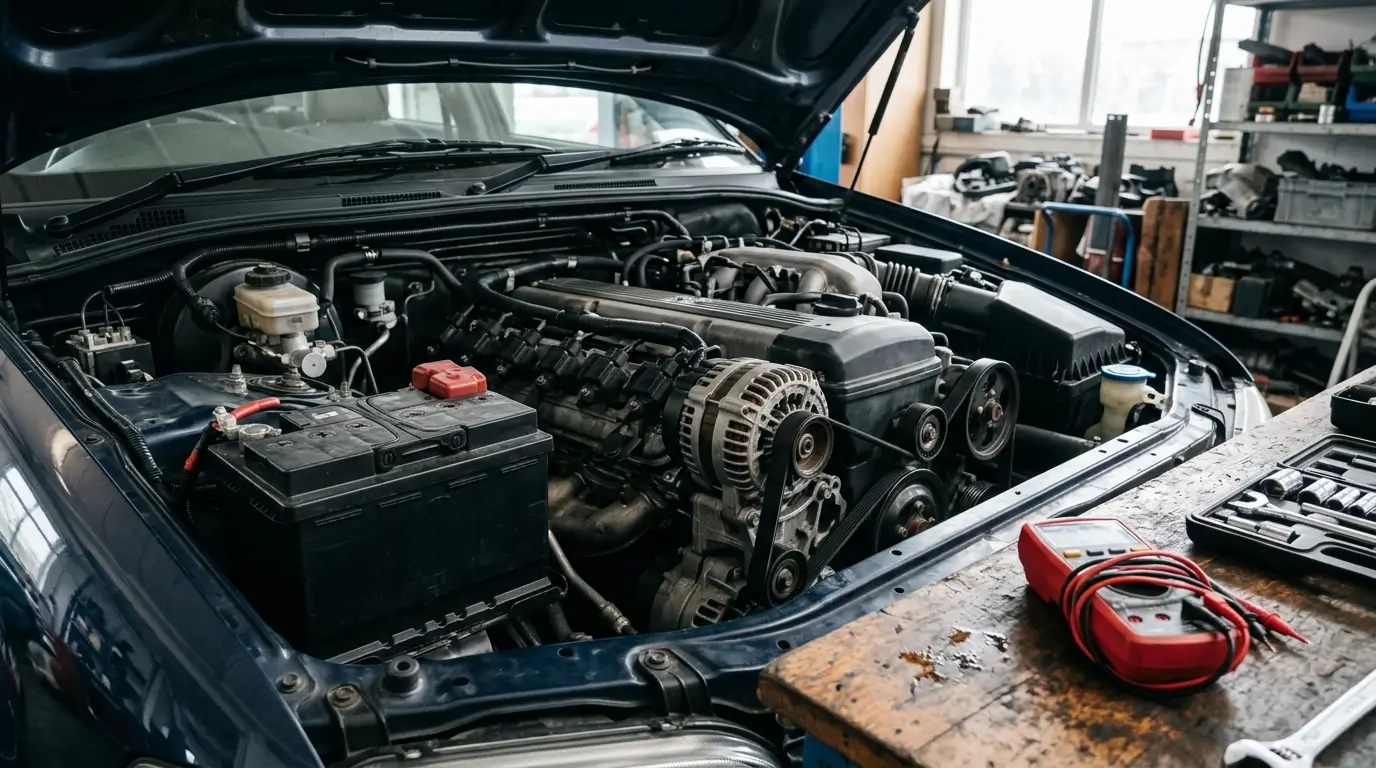
Select DC volts. Put the black lead in COM and the red lead in the V/Ω voltage socket. With the engine and accessories off, touch red to the positive battery post and black to the negative post. Never attempt this voltage measurement with a lead in the amperage socket. Fluke battery-voltage instructions, Fluke automotive meter manual.
4. Record resting battery voltage
About 12.6V is a useful fully charged reference for a conventional lead-acid battery. Recent charging or driving can leave surface charge; follow the battery's test instructions. Fluke describes switching the headlights on for about a minute, then off, before measuring. Fluke voltage guide.
A low reading means the battery needs attention, not automatic replacement. Charge it appropriately and have its condition tested if starting remains weak. Even a reassuring resting reading cannot prove that it will deliver adequate cranking power: open-circuit voltage primarily indicates charge state. OPTIMA battery testing advice, Fluke meter manual.
5. Compare the running reading
If the engine starts and the leads can remain safely clear of moving components, measure across the battery again. 13.8–14.4V can be consistent with charging, but do not make those two numbers a universal pass/fail boundary. Fluke gives a broader normal-condition reference of approximately 13.7–14.7V. Fluke charging-voltage guidance.
Smart charging systems complicate the picture: control modules can request the alternator's charging voltage. A single idle reading outside a familiar range therefore needs comparison with the vehicle's specified test procedure. HELLA explains electronically managed charging.
6. Check the response to electrical demand
Record what happens when headlights and the cabin blower are switched on. Note whether the charging warning returns or the lights dim. Do not condemn the alternator from an idle voltage dip alone; proper output testing uses vehicle-specific engine speed, load and limits. If voltage remains abnormal or symptoms persist, a technician can test cable voltage drop, alternator current output and diode ripple. DENSO charging-system test guidance.
Bring your readings and conditions to the diagnosis: engine off, engine running, accessories on, and whether the warning light appeared. This is more useful than reporting only that the battery “seems fine.”
Decide what needs repair
- Battery discharged: recharge it, then assess its health before replacing it.
- Battery fails a proper condition test: replace it with the vehicle-specified type and investigate repeat discharge.
- Battery tests adequately but charging remains faulty: check the drive belt, grounds, wiring and control system before condemning the alternator.
- Basic readings look normal but the complaint returns: request testing while the symptom is present; an intermittent fault may escape a single check.
These decisions follow OPTIMA's charge-then-test advice and DENSO's symptom-led diagnosis.
How to choose a replacement alternator
Start with the vehicle application and OE part reference. Then confirm:
- Required current-output capacity.
- Regulator and charging-control compatibility.
- Pulley type, diameter and rib count.
- Mounting dimensions, connector position and terminal arrangement.
A similar-looking housing is not enough, and a lower-output unit is not an acceptable substitute for a higher-output requirement. DENSO's selection checklist explains these matching criteria.
Quality-Built alternators to consider on FixGo
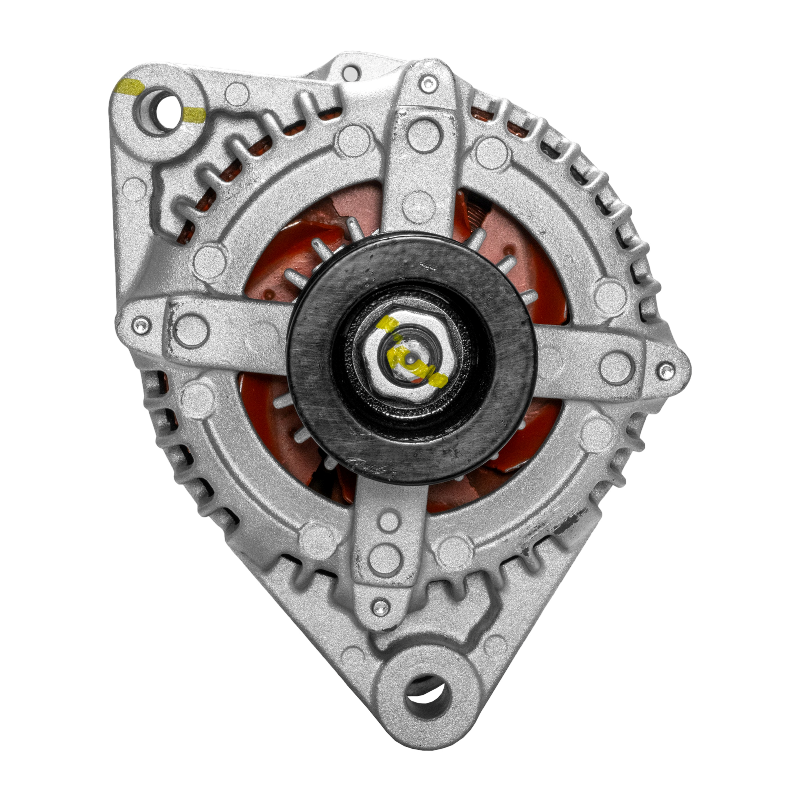
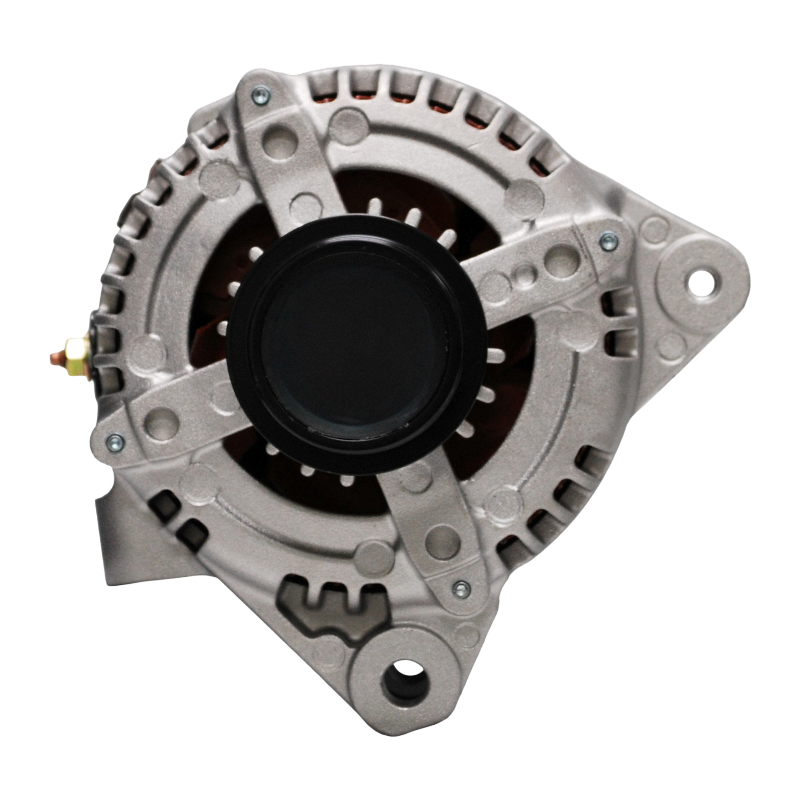
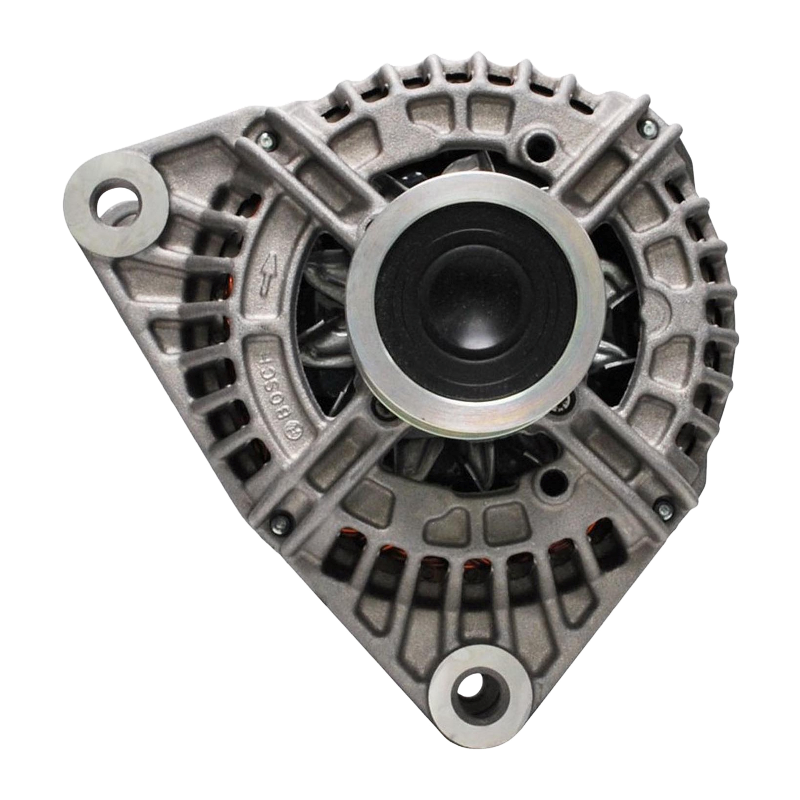
These new alternators are separate part-number options. Choose only after confirming the exact application; the list is not a set of interchangeable upgrades.
- Quality-Built 10106N New Alternator.
- Quality-Built 11201N New Alternator.
- Quality-Built 11239N New Alternator.
Match the part number and vehicle requirements before ordering, then check the product page for the current purchase options.
Before alternator replacement
With the engine and ignition off, follow the vehicle's shutdown procedure and disconnect the negative battery cable before removing the alternator. DENSO's general replacement guide specifies waiting at least 90 seconds after disconnection; follow any additional vehicle-specific precautions. Never disconnect a battery cable while the engine runs as a diagnostic trick—it can damage the alternator and electronics. DENSO replacement manual.
Check the belt, tensioner and wiring as part of the job. Use the specified belt tension and fastener torque, confirm alignment, and retest the charging system after assembly. If access or the isolation procedure is unfamiliar, have a qualified technician perform the replacement. DENSO installation guidance.
FAQ
Does 12.6V mean my battery is good?
It is a useful charge-state reference, not a cranking-capacity certificate. A load or battery-health test answers the condition question more directly. Fluke automotive meter manual.
Should I replace the alternator if voltage is below 13.8V?
Do not use that number alone. Confirm the battery condition and your vehicle's charging strategy, then test under the specified conditions. HELLA charging-system checks.
Can a new battery leave the warning light on?
Yes. A replacement battery does not resolve a fault elsewhere in the charging circuit. Check the belt, wiring and regulation system before another parts purchase. DENSO diagnostic guidance.
Bottom line
For a battery-or-alternator complaint, measure first, confirm the failed component, and order the matching replacement. Keep a record of the symptoms and test conditions so the next step is a diagnosis rather than another guess.
Once alternator replacement is confirmed, compare the Quality-Built options on FixGo above and check the exact application before checkout.