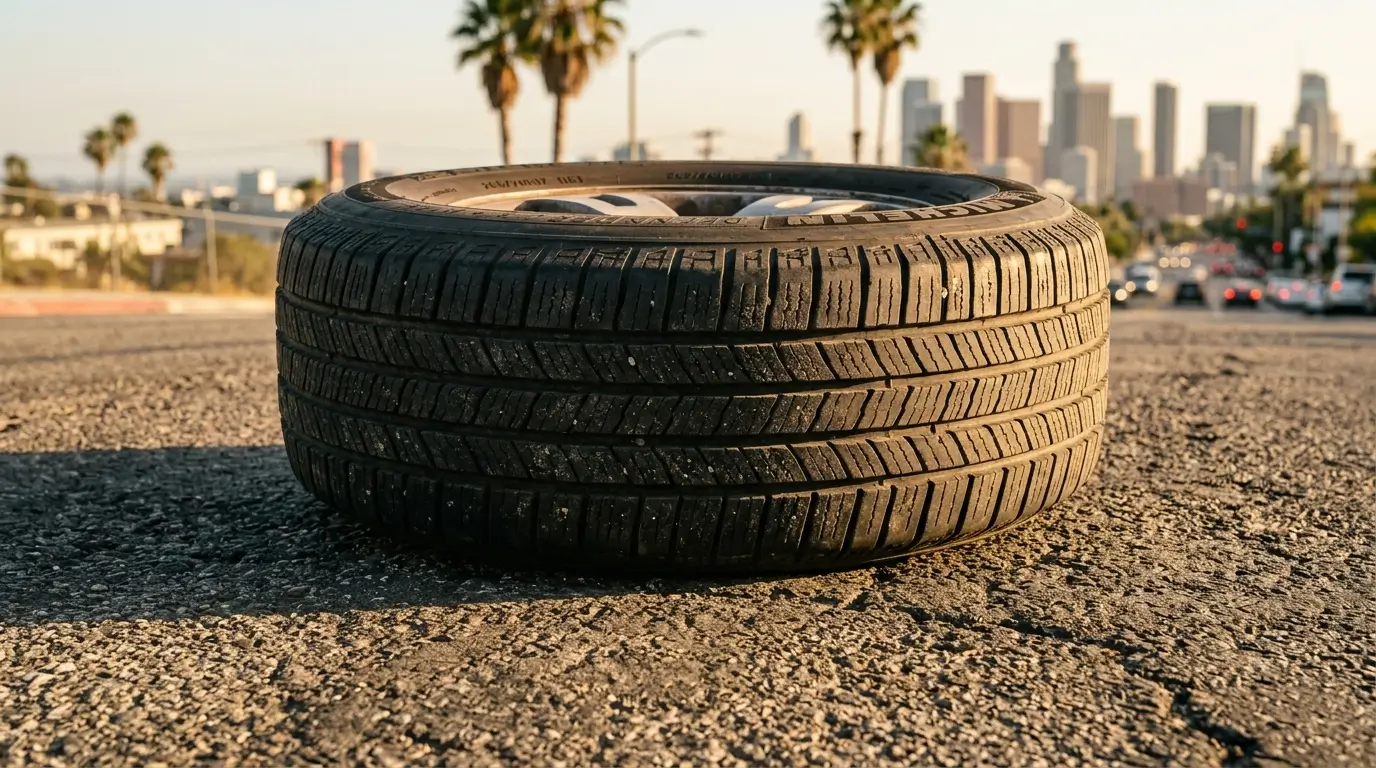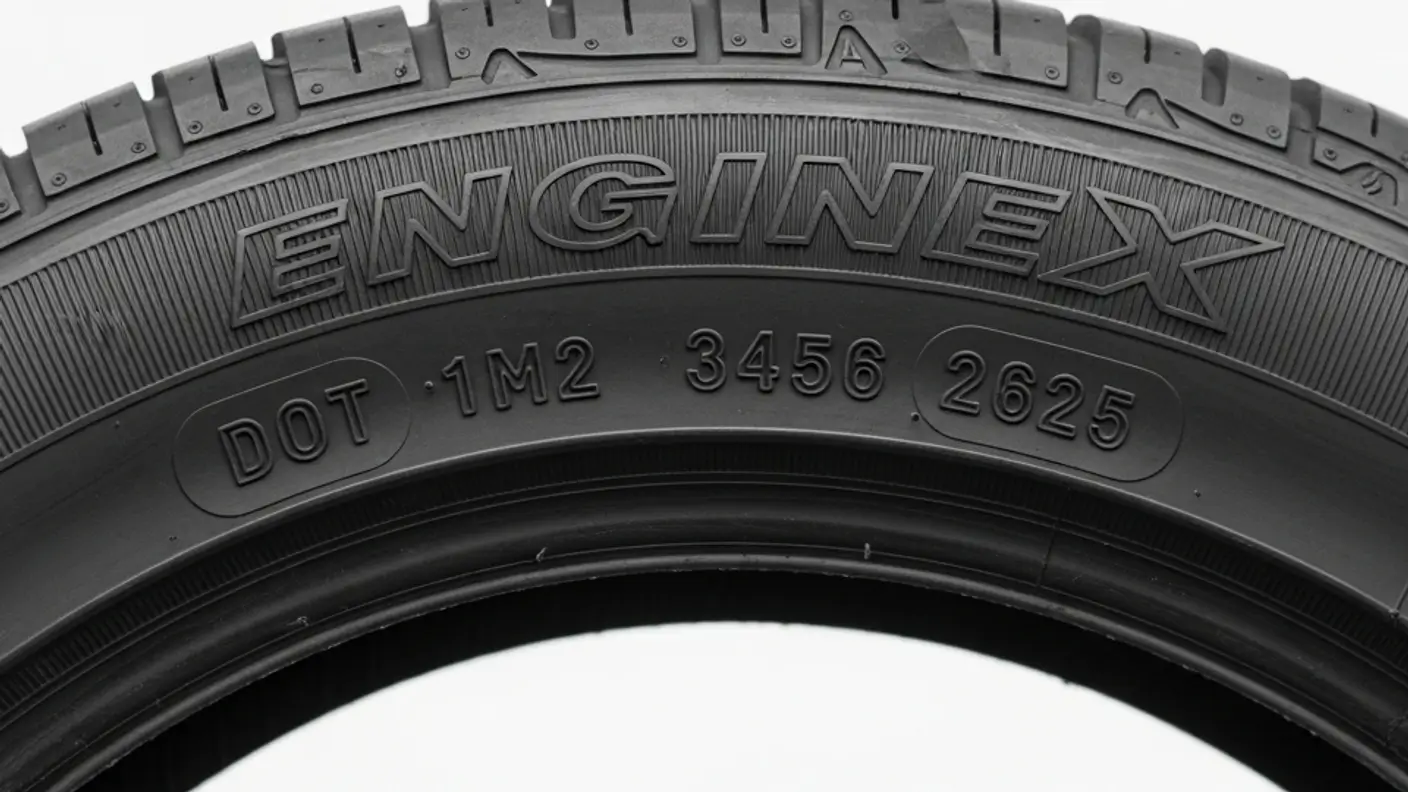
A tire problem self-diagnosis can help you spot changes worth reporting, including air loss, worn tread, visible damage, and unusual vibration. It is a useful routine check, but it cannot rule out internal damage or replace a professional assessment of a tire that may be unsafe.
How to check pressure and tread
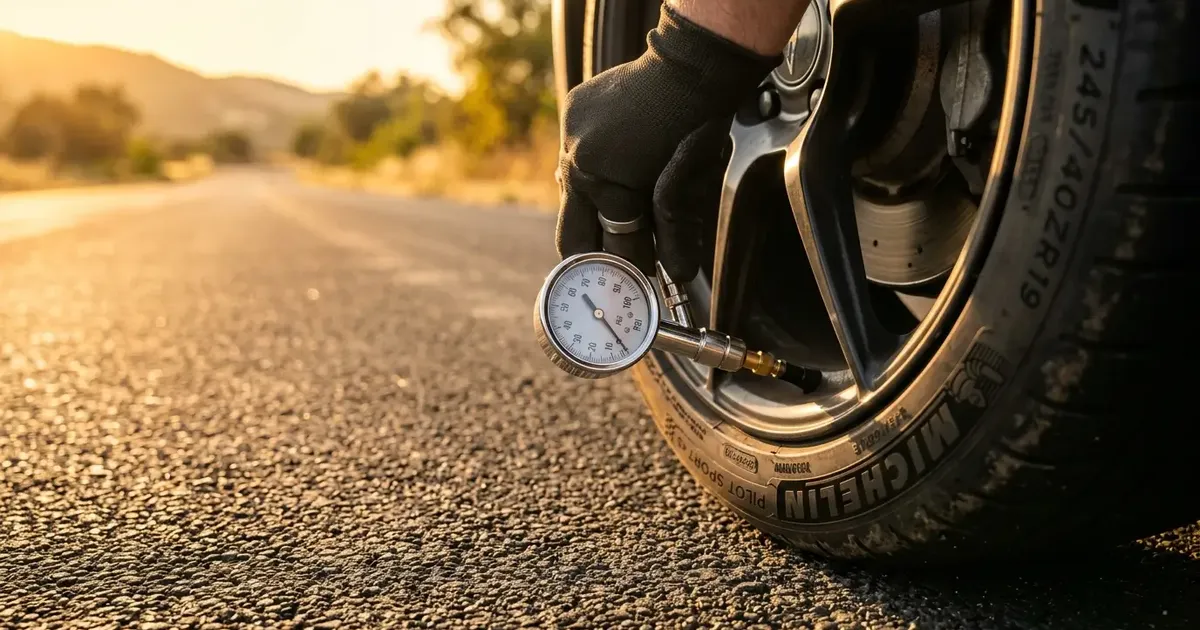
Use a pressure gauge and check the tires cold, including the spare. NHTSA recommends monthly checks and defines cold tires as those not driven for at least three hours. The target pressure is on the vehicle placard or in the owner's manual, rather than the maximum pressure on the tire sidewall.
Record repeated pressure loss instead of simply topping the tire up indefinitely. A TPMS warning calls for attention, but the absence of a warning does not replace a gauge check.
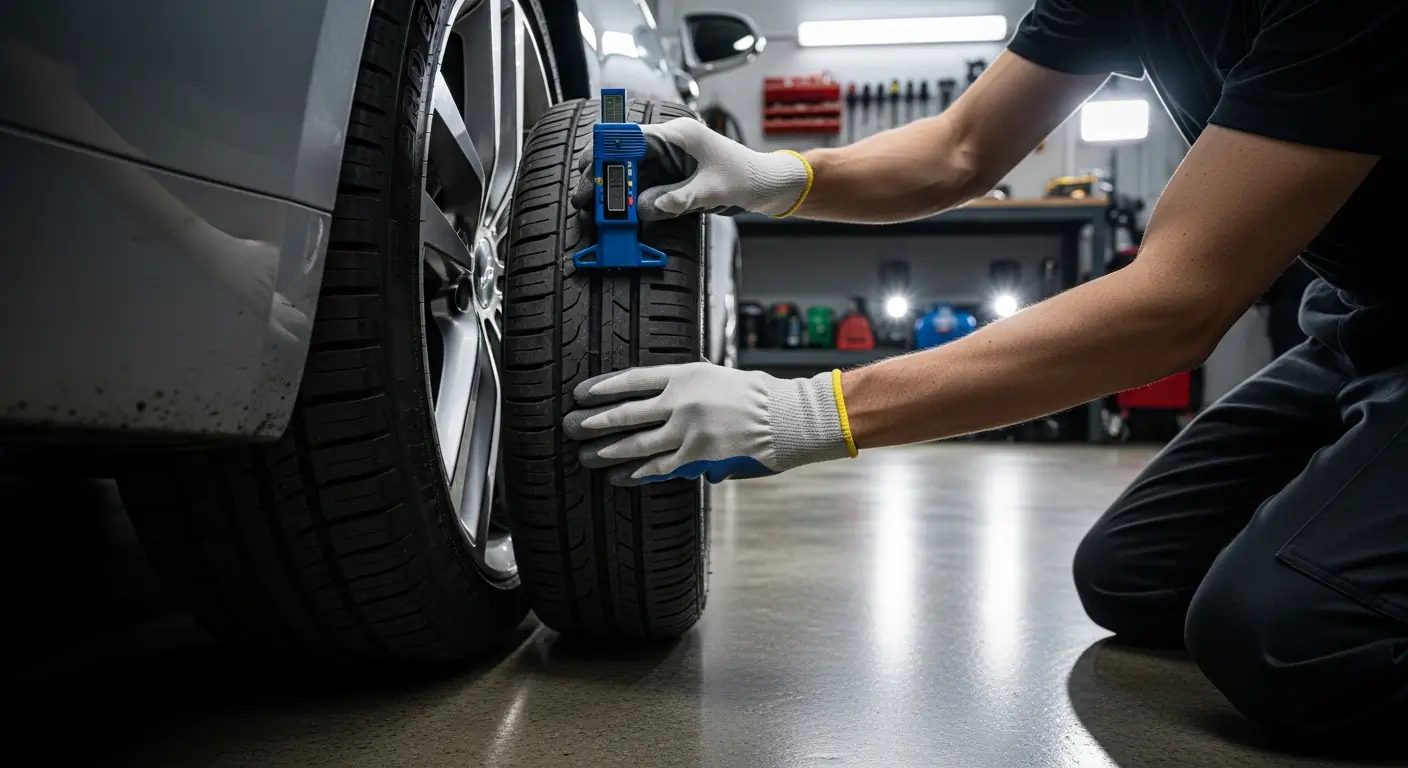
Check tread across the width and around each tire. NHTSA recommends replacement when tread reaches 2/32 inch; this is safety guidance, not a statement of every state's legal minimum. If the tread has reached its wear indicators, arrange replacement. Uneven wear needs investigation even when deeper tread remains elsewhere.
Look at visible damage
In a safe, parked location, look for cuts, exposed cords, cracks, and outward bulges. Do not crawl under an unsecured vehicle or reach into damaged rubber to inspect it.
Michelin distinguishes outward bulges from normal inward sidewall indentations. A confirmed outward bulge indicates damaged internal cords and requires replacement. Stop using a tire with a bulge, exposed cords, or rapid air loss, and arrange assistance rather than continuing the commute.
For less obvious marks or cracking, ask a tire professional to determine whether the tire remains serviceable. Appearance alone cannot show every internal problem.
Describe wear and handling changes without guessing the repair
Tell the technician what you notice: scalloped tread, a repeating vibration, pulling, a new noise, or a symptom that began after an impact or tire change. Record whether it occurs while braking, turning, or driving straight.
Bridgestone identifies several possible contributors to cupping, including alignment, tire balance, and worn steering or suspension components. One pattern does not automatically identify one failed part. Correcting an underlying problem also cannot restore tread that has already worn away.
Use our uneven wear guide to help describe the pattern, rather than selecting a replacement tire model as a cure for a mechanical fault.
A visible puncture still needs inspection
USTMA permits consideration of repair only for qualifying tread-area punctures up to 1/4 inch (6 mm), after the tire is removed and inspected. Shoulder and sidewall damage are excluded. Internal damage and manufacturer restrictions may make even a small puncture unrepairable.
FAQ
Can a quick check guarantee that my tires are safe?
No. It can identify warning signs and changes, but it cannot certify the tire's internal condition. New or worsening handling symptoms deserve prompt inspection.
Should I wait until my normal service appointment?
Do not wait with a flat, rapid air loss, an outward bulge, exposed cords, or a vehicle that is difficult to control. Seek assistance. For other changes, contact a qualified professional promptly and describe the symptoms so urgency can be assessed.
Does a new tire fix uneven wear?
A replacement provides new tread, but the cause of abnormal wear still needs attention. Check the cause before repeating the same damage on a new set.
Bottom Line
Use your checks to notice and describe problems early, not to declare a damaged tire safe. If inspection leads to replacement, FixGo offers competitive tire pricing and installation through its Southern California partner network. Choose the vehicle's required size and an eligible installation shop when ordering.