TPMS sensor replacement is easier to plan when you understand what the warning light means and what work overlaps with a tire change. This guide helps you decide whether to correct pressure, investigate a sensor fault, or discuss replacing aging sensors while new tires are being installed.
Warning lights: check pressure before blaming the sensor
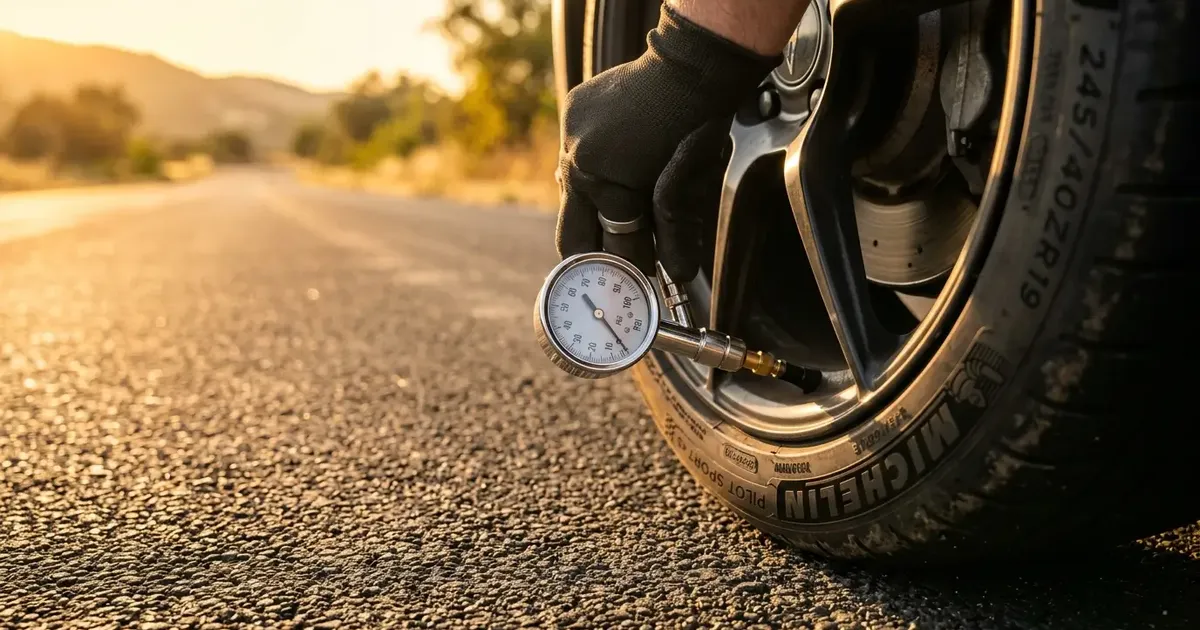
Use a gauge and your vehicle's recommended cold pressures from the door placard or owner's manual. NHTSA defines cold tires as tires on a vehicle that has not been driven for at least three hours; the tire sidewall's maximum pressure is not the everyday target. Keep checking pressure monthly even when the dashboard is clear. See NHTSA's tire guidance.
Pay attention to the light's behavior:
- Steady low-pressure warning: inspect the tires and measure pressure promptly.
- A warning on a cold morning that later disappears: pressure may have crossed the warning threshold as temperature changed. Check it rather than assuming the problem resolved itself.
- Flashing for 60–90 seconds, followed by a steady light: a combined TPMS warning can indicate a system malfunction that needs inspection.
Those distinctions come from NHTSA's TPMS explanation. Note which pattern occurs and whether it began before or after tire service. Our tire inflation pressure guide explains pressure checks in more detail.
Direct vs. indirect TPMS: do you have sensor batteries?
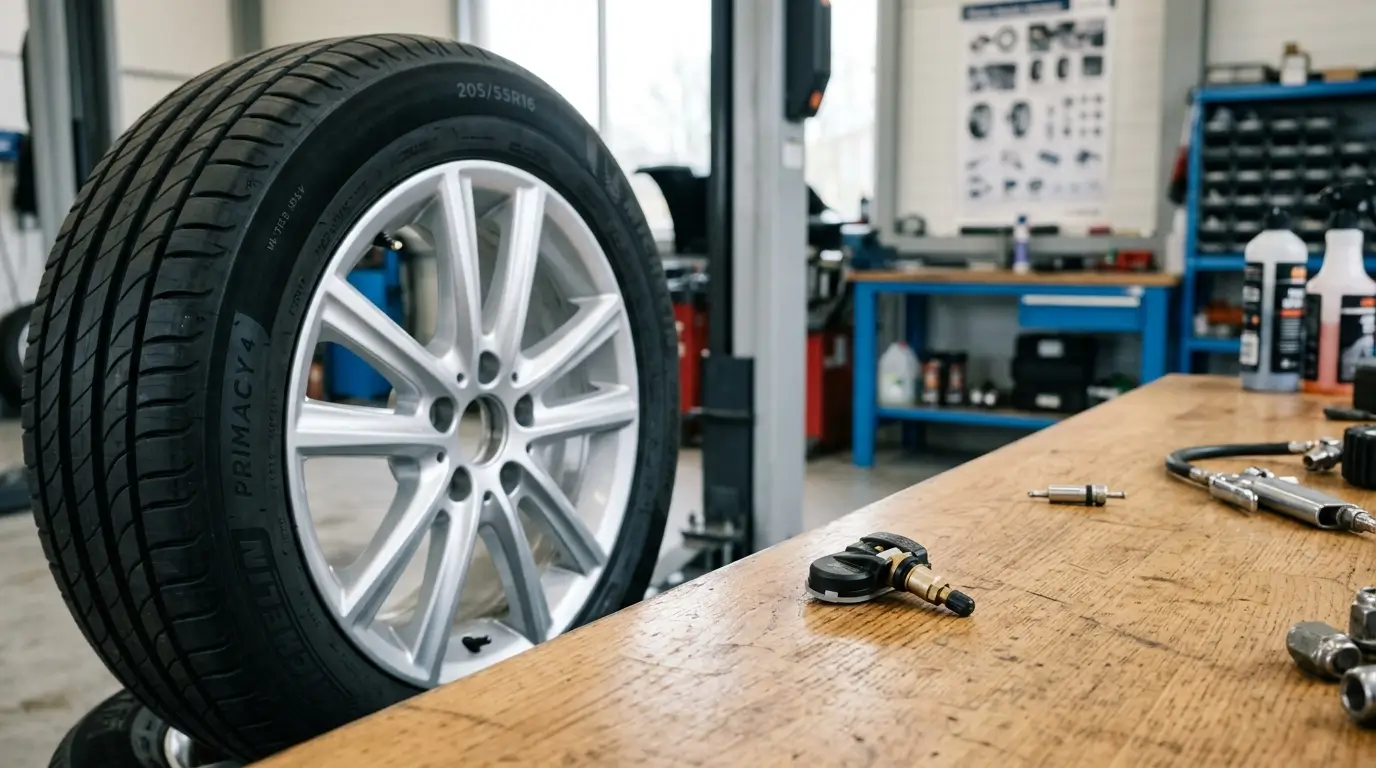
Direct TPMS measures pressure with battery-powered sensors inside the wheel-and-tire assemblies and sends readings wirelessly to the vehicle. Indirect TPMS uses information from the vehicle's ABS wheel-speed sensors to detect pressure-related changes. It does not use a dedicated pressure sensor inside each tire. Continental explains both systems.
This distinction changes the repair discussion. A direct system can need a replacement pressure sensor; an indirect system calls for the appropriate pressure check, calibration or fault diagnosis. Start with the owner's manual for your exact vehicle instead of assuming every TPMS warning means four new sensors.
Battery life: what does the 5–7-year range mean?
Five to seven years can be a useful point to review sensor condition, but it is not a universal expiration date. For example, Cerebrum's FAQ gives approximately 5–7 years for its sensors in traditional TPMS use at an average of 15,000 miles annually. That estimate changes with usage and advanced features. REDI-Sensor describes a broader typical lifespan of 5–10 years, depending on sensor type, vehicle use and conditions.
The battery supplies energy for measurements and transmissions. More transmissions while driving use more energy; sensor operating modes and temperature extremes also affect life. A weak battery may produce intermittent communication before it stops transmitting. These sealed batteries are not serviceable, so depletion calls for sensor replacement. A reset cannot replenish a depleted battery. REDI-Sensor battery guidance.
Ask for a sensor check rather than a prediction based only on age. Some TPMS tools can report battery status, but diagnosing remaining battery condition can be difficult, and a communication problem does not by itself establish battery failure. Bring previous replacement records if you have them.
How to decide when to replace TPMS sensors with new tires
If the sensors work normally
Ask for their condition to be checked before the tire change. Replacing every electronic sensor is not automatically necessary. Continental notes that even when one sensor fails, replacing all four is not always required. The decision should consider the remaining sensors and their age. Continental's replacement guidance.
If a sensor has a weak or failed battery
A tire-change appointment is a useful time to discuss replacement. REDI-Sensor's technical bulletin specifically recommends considering all four sensors when a bad or weak battery is found during new-tire service. The initial bill increases, but the approach can avoid future charges for another mounting-and-balancing visit. REDI-Sensor technical bulletin.
Treat that as a decision to compare, not an automatic four-sensor purchase. Ask for the reasons to replace each sensor and how much labor overlaps with the tire job. Do not postpone investigating an active warning solely to combine appointments.
If the estimate says “TPMS service kit”
A service kit renews applicable valve and sealing hardware, such as the cap, valve core, grommet and nut. It is different from a new electronic sensor. Schrader recommends renewing the appropriate sealing components during tire service and checking the system afterward. Ask which components the estimate includes. Schrader's TPMS service explanation.
Planning TPMS replacement with new tires: identify overlapping work
The potential saving comes from avoiding a second mounting-and-balancing job. When a weak or failed direct TPMS sensor is replaced during new-tire installation, the work can share the tire-change appointment. Waiting for a later standalone replacement can mean paying again for mounting and balancing. REDI-Sensor's technical bulletin identifies these future repeat charges as a reason to consider replacing weak or failed sensors while fitting new tires. The sensor, applicable hardware and electronic setup remain separate cost considerations.
FixGo's prepaid tire-installation fee covers standard tire demounting, mounting and balancing. TPMS sensors, sealing service kits and vehicle-specific programming are separate items configured as needed and transparently itemized by FixGo partner shops. Compare those additional items with the standard tire work already covered by your prepaid installation.
Ask for an itemized estimate identifying:
- The number of sensors being replaced and the reason for each.
- The applicable valve or sealing service kits.
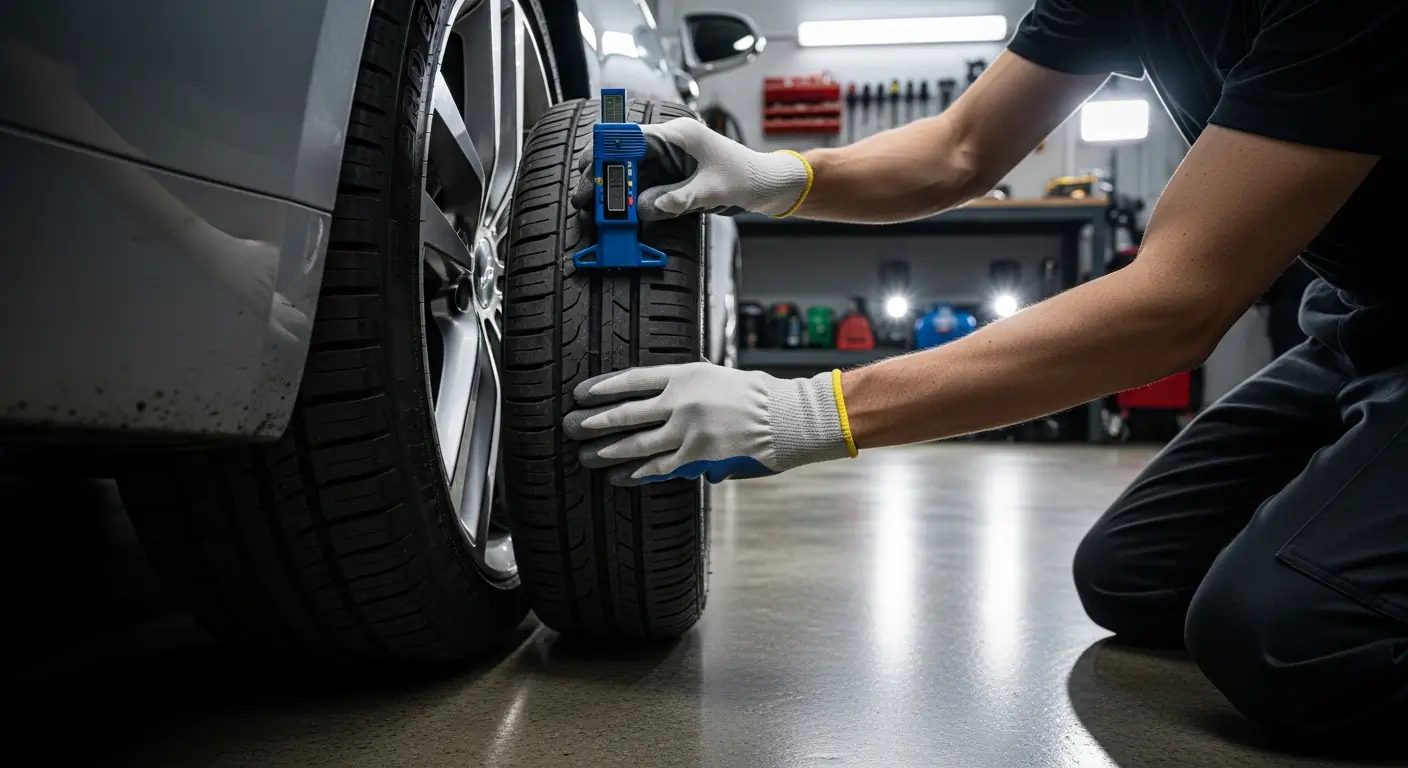
- Wheel removal, tire access, mounting and balancing labor.
- Sensor programming, if needed, and the vehicle's relearn procedure.
- The final system check.
Schrader describes TPMS service as involving parts, tools and additional checking/reset time. Its service overview explains why these items deserve separate attention.
For a clear comparison, request a tire-only estimate, an estimate adding the recommended sensor work, and an estimate for the same sensor work at a later standalone appointment. Have the shop identify the repeated mounting-and-balancing labor for each affected wheel. That comparison shows the repeat labor you can avoid by combining the work; it does not make every TPMS-related charge disappear. Compare the same number of sensors and the same scope of work; a valve-kit renewal and a complete sensor replacement are different jobs.
Reset, programming and relearn: three different tasks
A reset or calibration establishes the system's reference after the required pressure or tire changes. Programming configures a programmable replacement sensor for its application. A relearn lets the vehicle register sensor identities. Schrader's TPMS playbook describes three common direct-system relearn methods:
- Automatic: the vehicle learns the sensors during a specified drive.
- Stationary: the vehicle enters learn mode and registers transmissions from the sensors, commonly with an activation tool.
- Through the diagnostic port: a suitable TPMS tool reads the sensors and registers their IDs through the vehicle's diagnostic connection.
Use the procedure for the exact vehicle. A generic button sequence or a short drive is not a substitute for the required method.
For an indirect-system example, Honda's 2020 Clarity Fuel Cell instructions require calibration after adjusting pressures, rotating tires or replacing tires. Cold pressures must be set first; calibration starts through the vehicle settings and finishes while driving. Follow your own manual's prerequisites and completion instructions. Honda's model-specific TPMS instructions.
Planning a FixGo tire installation in Southern California
FixGo offers a transparent prepaid tire-installation network across Southern California through partner shops. Keep the prepaid standard tire work beside the separately itemized TPMS sensors, sealing service kits and vehicle-specific programming. Confirm the required relearn and final system check, and review any additional work before authorizing it.
That makes the labor comparison useful: you can see which tire-installation work is already covered and what the proposed sensor work adds. The FixGo installation guide explains the tire-installation process.
FAQ
Can I replace just one TPMS sensor?
Yes, replacing all four is not always necessary. Compare the condition and age of the others before deciding on a set, as Continental advises.
Will new tires automatically fix the TPMS warning?
Have the warning diagnosed and the system checked after service. Tire replacement can require calibration or relearning, and the warning may reflect a separate sensor problem. Schrader's service checklist includes checks before and after the work.
Is it safe to ignore a TPMS malfunction if pressure looks normal?
Visual appearance is not a pressure measurement. A malfunctioning system may not warn of low pressure as intended, so arrange an inspection and maintain pressure checks with a gauge. Honda's TPMS explanation.
Bottom line
Start with a pressure measurement and identify the system your vehicle uses. If direct sensors are aging or failing, compare replacement during new-tire installation with the work a later visit would repeat. Request an itemized estimate and confirmation that the required relearn or calibration and final system check are included.