Knowing when to replace tires involves tread, damage, age and the tire's service history. A tire with substantial tread can still need replacement, while a date code by itself cannot describe everything that has happened to it.
How to evaluate: begin with tread and condition
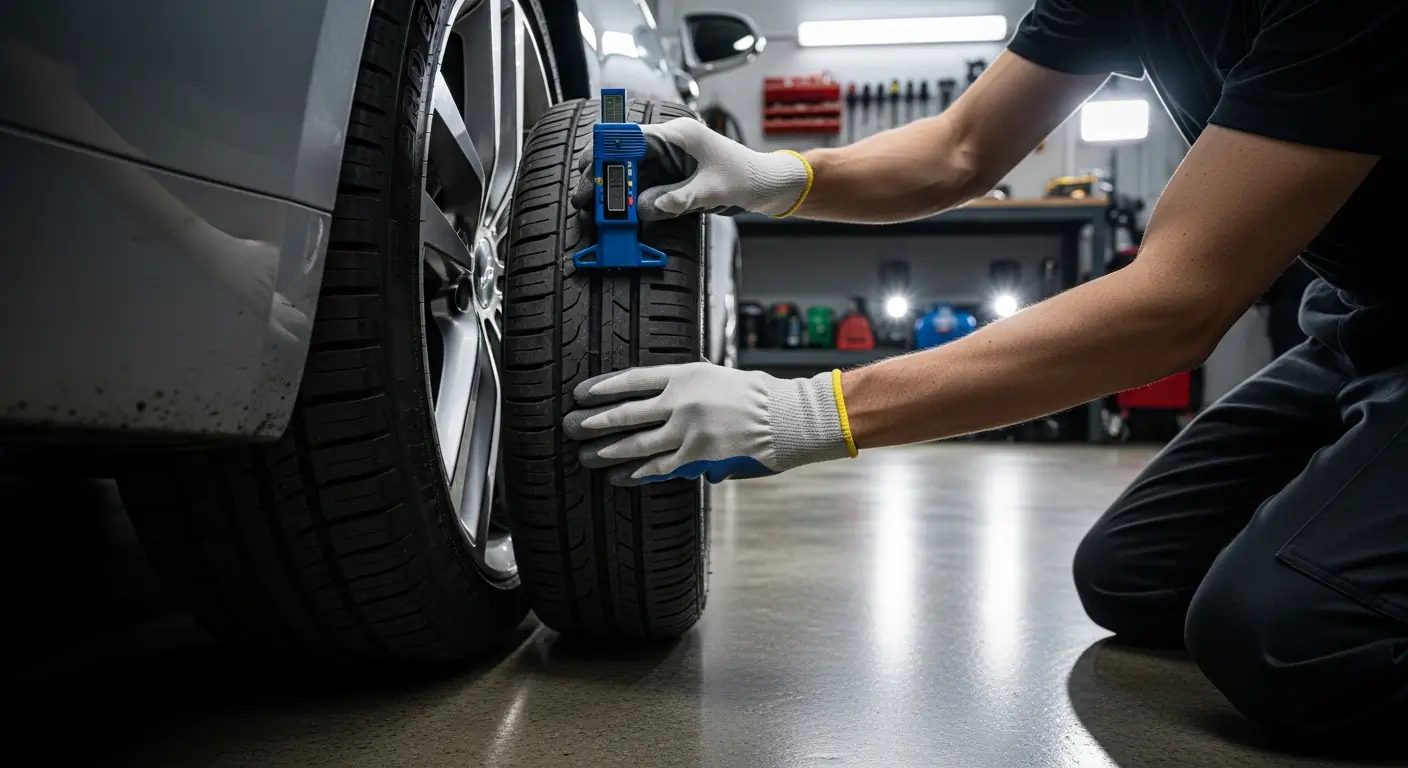
NHTSA recommends replacing tires worn to 2/32 inch. Check the main tread grooves and the built-in wear indicators, and look across the tire for uneven wear. This is a safety recommendation; it is not a claim that every California legal tread requirement is identical.
Use a tread-depth gauge to record the condition of each tire. If you cannot inspect part of the tread safely, have a tire professional check it. Do not crawl beneath an unsupported vehicle or assume the visible outer edge represents the entire tire.
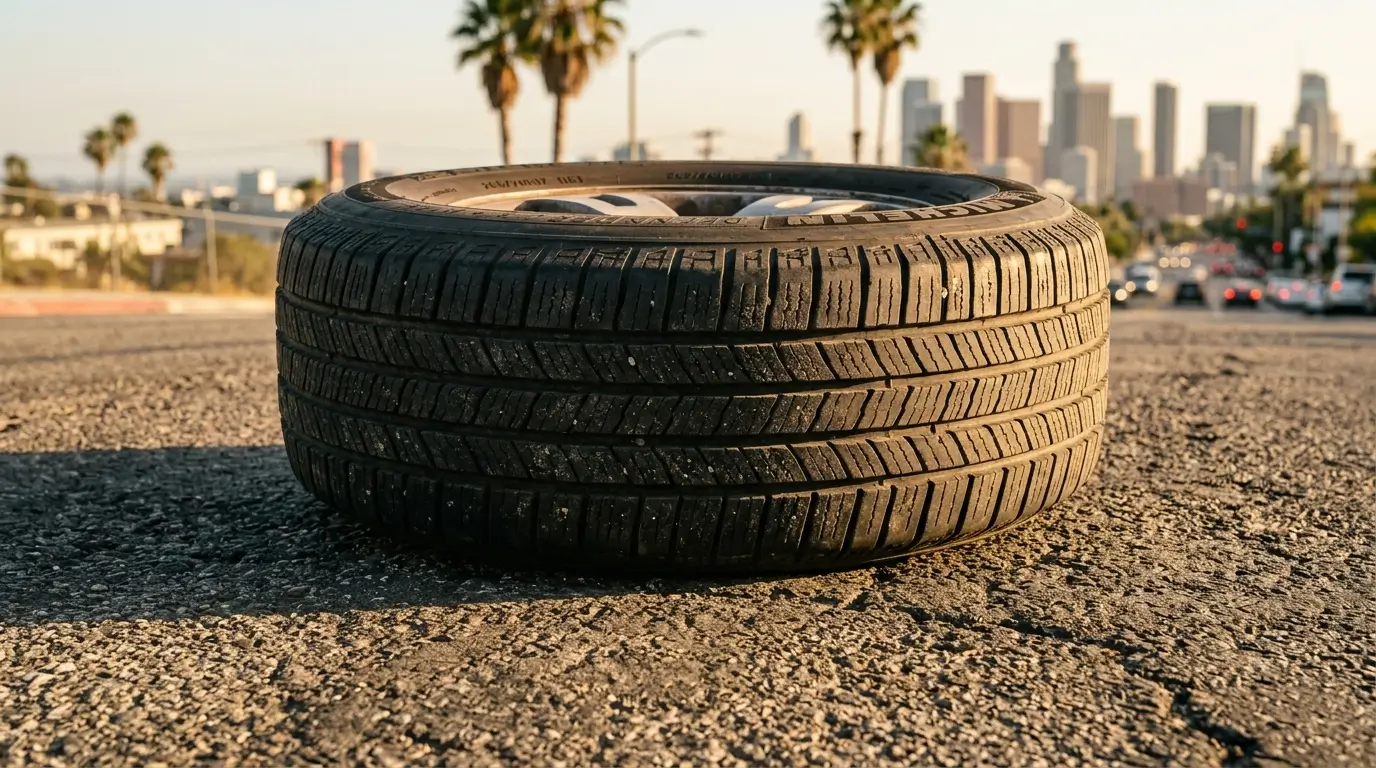
Damage also matters. Look for cuts, cracks, exposed cords, abnormal swelling and recurring pressure loss. A visual walkaround cannot clear a tire of internal damage. Tell the shop about any recent curb or pothole impact, even when the outside does not look badly damaged.
Treat sidewall bulges seriously
Michelin distinguishes normal inward sidewall indentations from outward bulges. An outward bulge can indicate damaged cords and requires tire replacement. Do not continue driving on a bulged tire; arrange assistance and follow the vehicle's spare-tire instructions where applicable.
A puncture is a separate inspection question. Repair eligibility depends on its location, size and the tire's internal condition. Do not assume that every leak requires a new tire, or that every tread puncture can be repaired.
Check age against the manufacturer's guidance
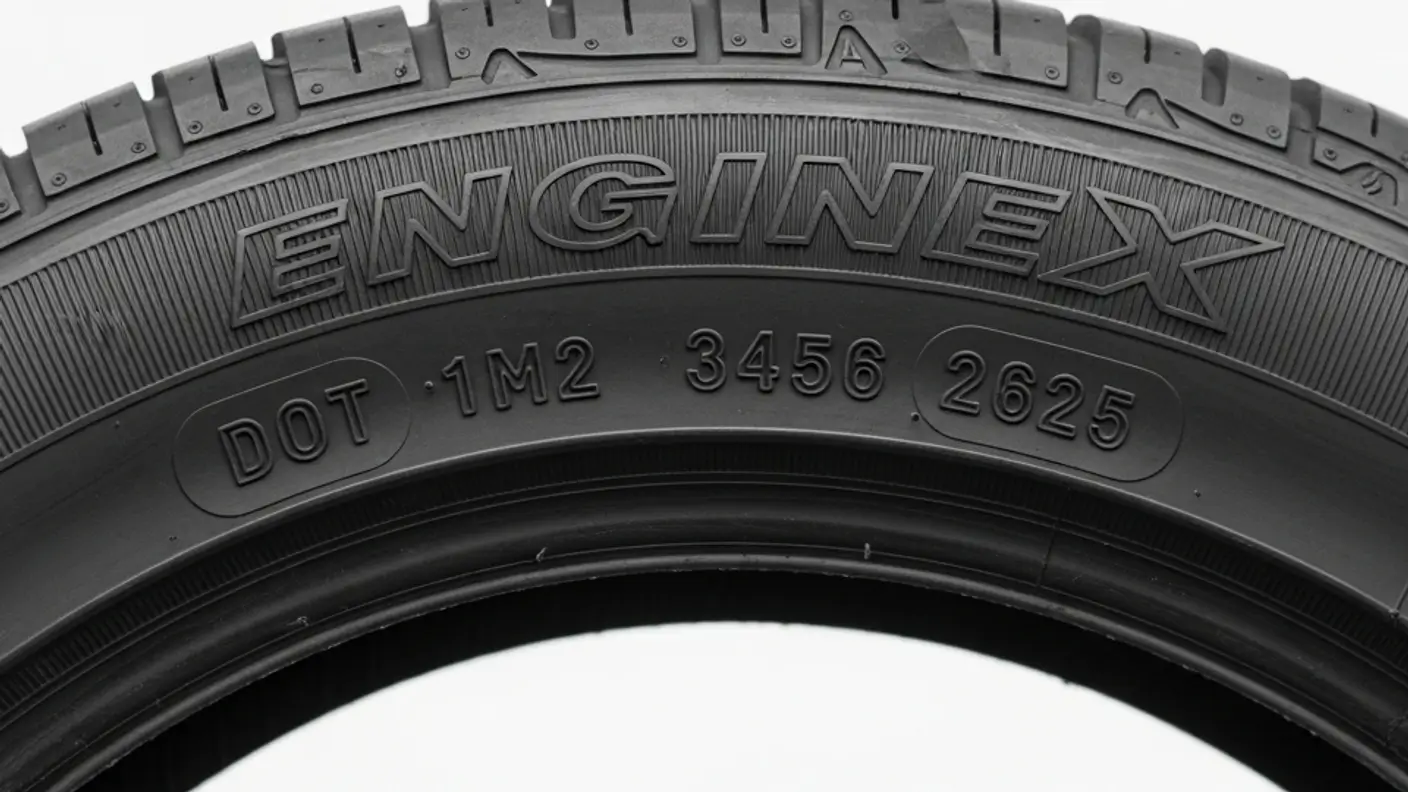
The last four digits of a modern tire's DOT date code identify its production week and year. For example, 3521 means week 35 of 2021. Record the dates and check the tire and vehicle manufacturers' age guidance, including instructions for spare tires.
NHTSA notes that some manufacturers recommend replacement at six to ten years regardless of treadwear. That range describes differing manufacturer recommendations; it is not a universal rule to wait until year ten. An age limit does not override earlier replacement required by damage or wear.
If the date code is inaccessible or unclear, have the shop read it. Age, storage and service history belong together in the inspection conversation. Avoid treating an apparently unused tread as proof that an older tire remains suitable.
Respond to symptoms before the next long trip
Recurring pressure loss, vibration or irregular wear deserves investigation. Share when the symptom occurs and what changed recently. The installer needs that history to assess the tire and related components.
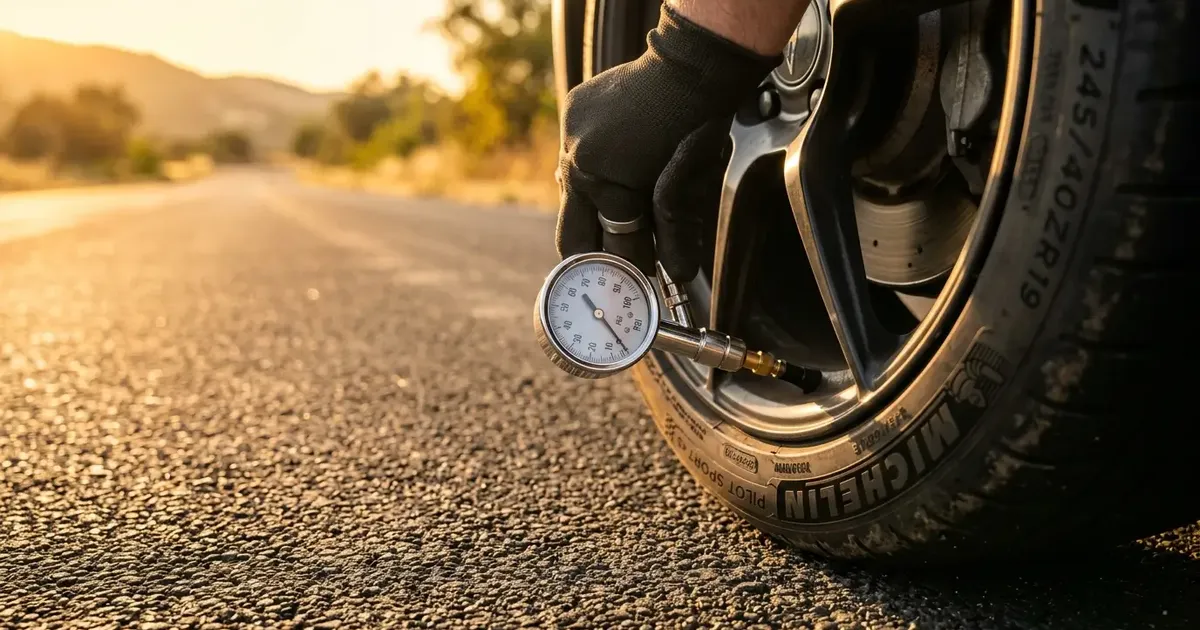
Keep pressure at the vehicle's specified cold setting, using a gauge rather than relying on appearance. High temperatures are one reason to take tire care seriously, but a regional climate label cannot diagnose a particular tire or predict its remaining life.
Choose replacements by specification
Use the vehicle's approved size and required load and speed ratings. The old installed tire is a useful reference only after confirming that it was correct.
Read how to choose tires for your car to organize the purchase. Compare documented features and current installation terms once suitable products have been identified.
FAQ
Should I wait for the tread to reach 2/32 inch?
No. Damage, pressure loss or manufacturer age guidance can require action earlier. The tread threshold does not establish that everything above it is safe.
Does a tire that looks new need an age check?
Yes. Record the DOT date and follow the applicable manufacturer guidance. Appearance alone does not establish its condition.
Can new tires solve uneven wear?
Have the cause investigated before installation. New tread does not correct an underlying pressure, alignment or component issue.
Bottom line
FixGo offers competitive tire pricing and partner installation through 200+ shops in greater Los Angeles and 20+ in San Diego. Tire delivery is usually 1–3 days in greater Los Angeles and 3–5 business days in San Diego. Use the website locator for designated pickup points and warehouses, and confirm installation timing with the selected partner shop. Compare suitable replacements at FixGo.com.